Inland Empire tap water runs high in calcium and total dissolved solids. Left unchecked, that mineral load stains tile, scales your heater, and clouds water that should be clear. Blue Line Pool treats the source problem, not just the symptom.
We serve Rancho Cucamonga, Ontario, Corona, and Riverside with weekly maintenance, chemical balancing, tile cleaning, and equipment care. Call 805-870-5019 for a straight answer and a free quote.
Learn more about pool tile cleaning calcium removal Los Angeles →
Learn more about heat pump pool heater repair Los Angeles in Orange County →
Hard water is the defining challenge here. Every service we offer accounts for it.
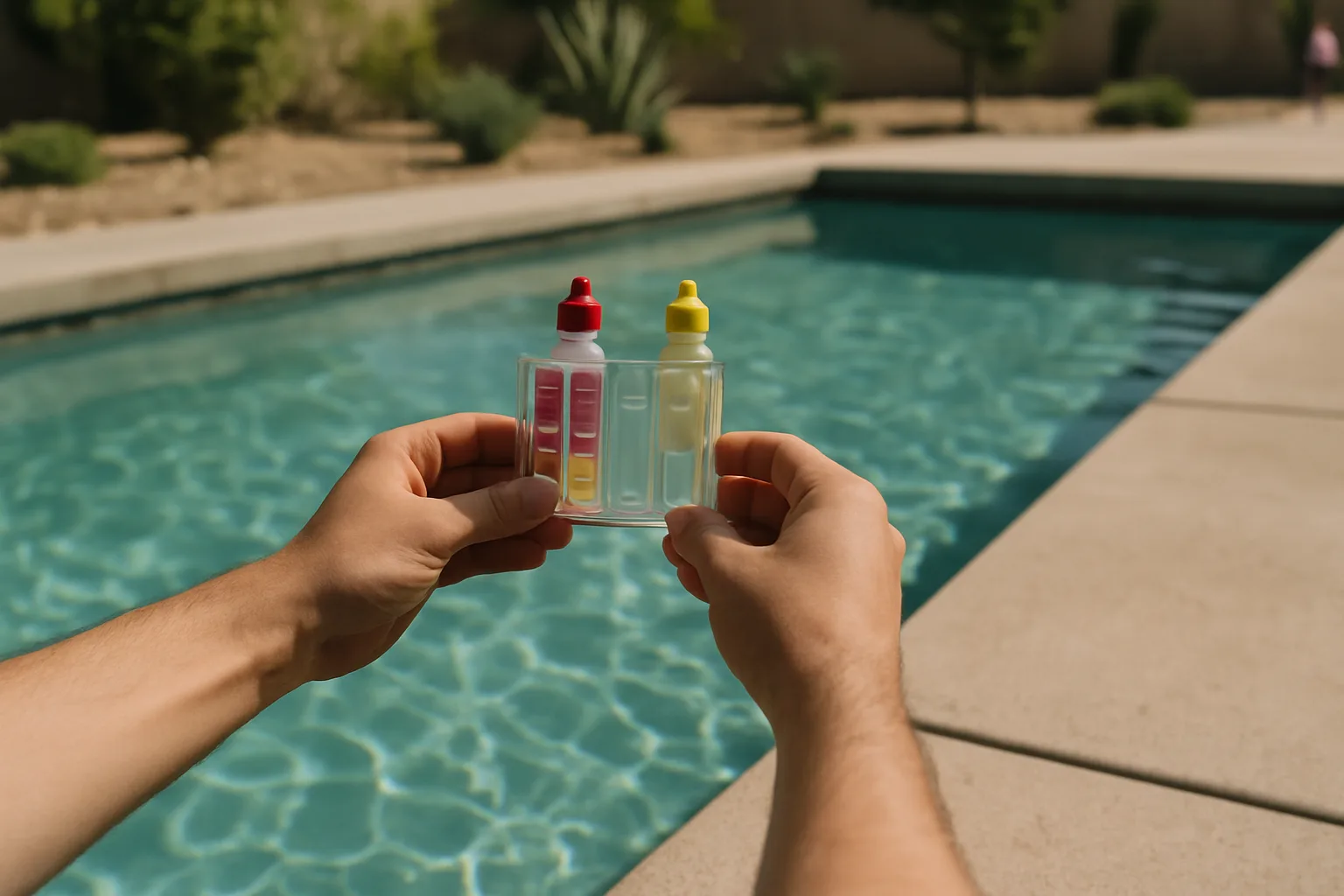
Inland Empire municipal water typically comes in around 300 to 500 ppm calcium hardness, well above the 200 to 400 ppm target range for pools. We test every chemical parameter on each visit and adjust accordingly. Most imbalances that cause green water or scale can be caught before they cost you money.
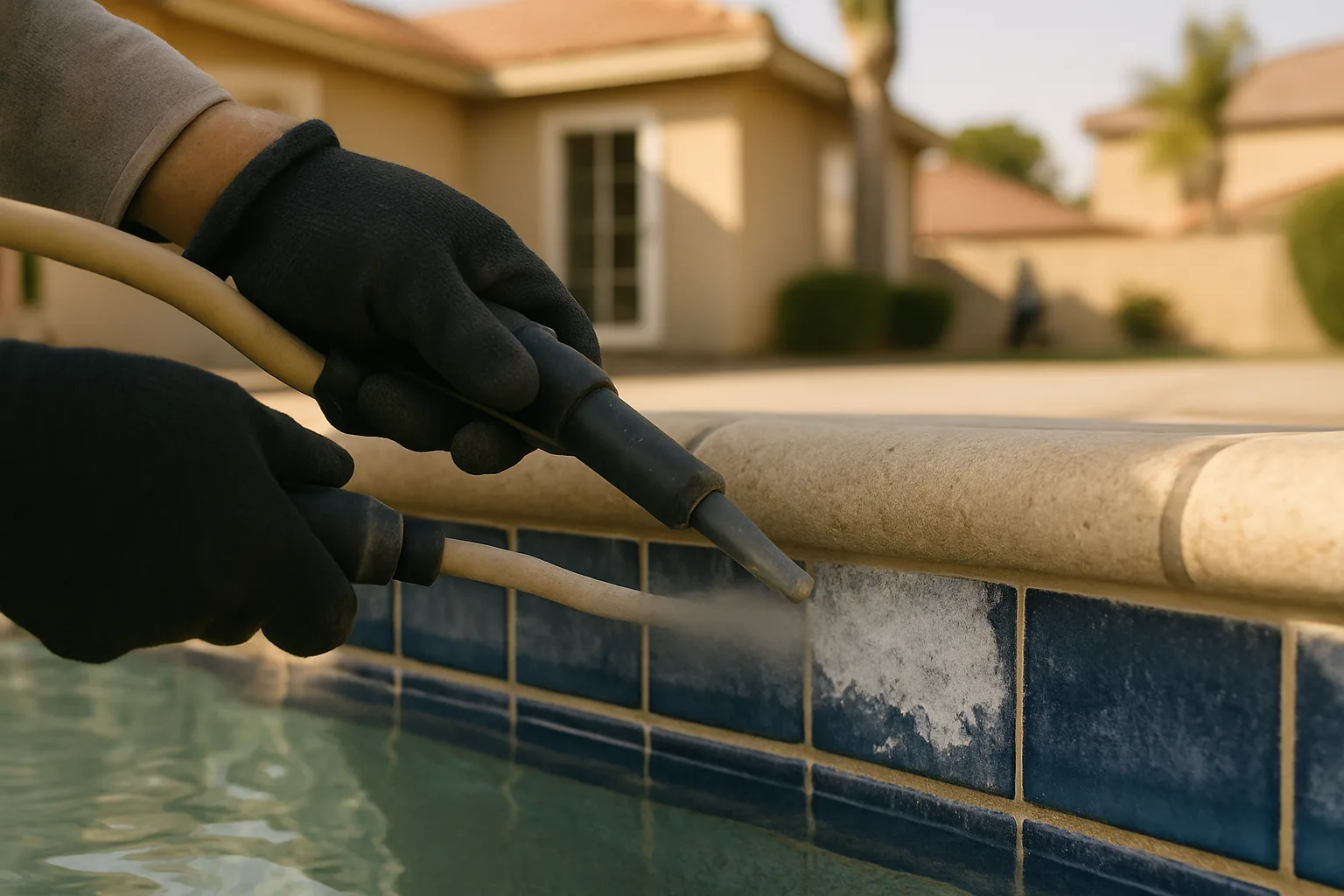
The white crust that builds up at the waterline is calcium carbonate. In the Inland Empire heat, evaporation accelerates that buildup significantly. We use bead blasting or hand descaling depending on the tile type. Ignoring it leads to permanent etching and expensive retiling.
Cartridge, DE, and sand filters all accumulate calcium deposits over time in this region, reducing flow and straining your pump. We clean and inspect filters on a schedule based on your pool size and bather load. A clogged cartridge filter can drop flow by 40 percent before most owners notice.
Pumps, heaters, and automation systems fail faster when scale builds inside them. We diagnose the equipment problem and the water chemistry problem together. A heater repair that ignores calcium buildup in the heat exchanger will fail again within months.
California law requires variable-speed pumps on new and replacement installations. They run quieter, use significantly less electricity, and are easier on your plumbing. We handle the full swap and can walk you through what the California variable-speed pump law requires for your situation.
Saltwater pools still need careful calcium management, especially in hard water regions. We convert pools and then continue monitoring the salt cell and calcium levels. A salt cell clogged with scale stops generating chlorine, and most owners don't realize it until the water turns green.
An algae bloom in the Inland Empire summer heat can turn a pool completely opaque in 48 hours. Recovery typically takes 3 to 5 days of aggressive shocking, brushing, and filter cleaning. We document the baseline chemistry and the endpoint so you know exactly what happened and how to avoid it next time.
One visit per week covers skimming, brushing, vacuuming, chemical testing and adjustment, filter pressure checks, and equipment observation. In the Inland Empire, where dust, pollen, and Santa Ana winds load pools heavily, skipping weeks has real consequences. Consistent weekly service keeps those consequences away.
Blue Line Pool has served the Inland Empire since 2020, handling everything from routine weekly maintenance to hard water rehabilitation and equipment repair. We are based in Los Angeles and work across Los Angeles, Orange County, and the Inland Empire.
Every account gets a single point of contact. That means when something is off with your pool, you call the same person who was there last week. No explaining the history to a dispatcher, no waiting to find out which crew is available. You know who is coming and when.
The Inland Empire's hard water situation is not a niche problem -- it affects nearly every pool in the region. Cities like Rancho Cucamonga, Ontario, and Corona pull water from sources that are naturally high in calcium and magnesium. That water goes into your pool and, over months and years, deposits its minerals onto tile, inside equipment, and into the plaster itself. Knowing exactly how to offset that accumulation is a core part of what we do here, not an add-on service.
We carry a team of 15 or more crew members to handle the full service load without cutting corners. Year-round service availability means we are there in January when a heater fails, and in August when an algae bloom hits during the hottest week of the year. Read more about how Blue Line Pool works and what to expect from a first visit.
Understanding what you are dealing with is the first step to treating it correctly.
Typical calcium hardness in Inland Empire tap water. The ideal pool range is 200 to 400 ppm, but the supply starts high, leaving almost no buffer before scale forms.
How fast an algae problem turns a pool opaque in Inland Empire summer heat. Temperatures in Riverside and Ontario regularly exceed 100F in July and August, accelerating every biological process.
Typical green pool recovery time when treated promptly. Wait longer and the algae bonds deeper into plaster, adding brushing time and chemical cost.
The Inland Basin is land-locked, hot, and dry. That combination means pools evaporate faster than in coastal LA, concentrating minerals more quickly. A pool in Ontario can lose an inch of water per week in summer, pulling in replacement tap water that adds more calcium with every fill cycle.
Santa Ana wind events layer fine desert dust and debris into open pools. Our guide to wildfire ash and Santa Ana wind pool recovery covers what to do when that happens and how quickly the chemistry changes.
Calcium scale on a heat exchanger can cut heating efficiency in half before the unit fails entirely. Regular water chemistry management is significantly cheaper than the heater replacement it avoids. The same logic applies to filters, salt cells, and pool plaster.
Compare the real numbers: our pool service vs DIY breakdown walks through what most homeowners actually spend when they try to manage hard water chemistry on their own.
Inland Empire winters are mild. Most pools stay active through December and January. That means calcium accumulation, filter maintenance, and equipment wear continue year-round. We service pools on the same weekly schedule in February as in July.
Commercial pool operators in Riverside and San Bernardino County have the added requirement of meeting county health code inspection standards. Our commercial pool service covers documentation, chemical logs, and inspection prep.

The most visible sign is white or gray scale along the waterline tiles. Inside the equipment, you may notice reduced heater output or a salt cell that stops generating chlorine on schedule. A water test that shows calcium hardness above 500 ppm means you are already in damage territory. We can run a full chemistry panel on a first visit.
You can lower calcium hardness by draining and partially refilling with softer water, but Inland Empire tap water is already high in calcium, so you have a limited ceiling. Products like sequestering agents slow scale formation but do not remove calcium. Without consistent testing, most homeowners end up chasing the problem rather than staying ahead of it. Read the full DIY vs professional comparison for honest context.
Weekly service is the standard for residential pools here. The combination of heat, dust, high evaporation rates, and hard water means that two-week gaps create real chemistry drift. For pools with heavy bather load or during Santa Ana wind events, more frequent visits may be warranted. Commercial pools typically require service multiple times per week.
Each weekly visit covers skimming the surface, brushing walls and steps, vacuuming the floor, emptying pump and skimmer baskets, checking filter pressure, and testing water chemistry with adjustments made on-site. Equipment is visually inspected every visit. Any issue we flag gets reported to you directly, not buried in an app notification you might miss.
Most residential tile cleaning jobs take 2 to 4 hours. Pools with years of neglected buildup, or pools with delicate tile that requires hand scraping rather than bead blasting, can take longer. We assess the scale thickness and tile material before quoting so there are no surprises on the day. See our pool tile cleaning service for more detail.
Yes. Wildfire ash is alkaline and introduces phosphates and other contaminants that fuel algae and throw off chlorine demand significantly. The cleanup process is not the same as a standard service visit. We test for ash-specific chemistry changes and treat accordingly. The full process is documented in our post-wildfire pool cleanup service.
Yes. Spas and hot tubs concentrate chemicals faster than pools because of the heat and smaller water volume. Hard water scale appears more aggressively in spa environments. We service standalone spas and spa-pool combinations. Learn more about our spa and hot tub service.
Call 805-870-5019 or use our contact page. Quotes are free. We ask a few questions about pool size, current condition, and what you are trying to solve, then give you a straight number without the upsell. No pressure, no obligation.
Tell us about your pool and we will tell you what it costs. No vague ranges, no pressure. If we are not the right fit, we will say so.
Everything you need to understand why LA-area water behaves the way it does in a pool and what actually works to control it. Written for homeowners, not chemists.
Understand your pool, your costs, and your options before making any decisions.
© 2026 Blue Line Pool. Serving Los Angeles, Orange County, and Inland Empire. Privacy Policy · Terms of Service