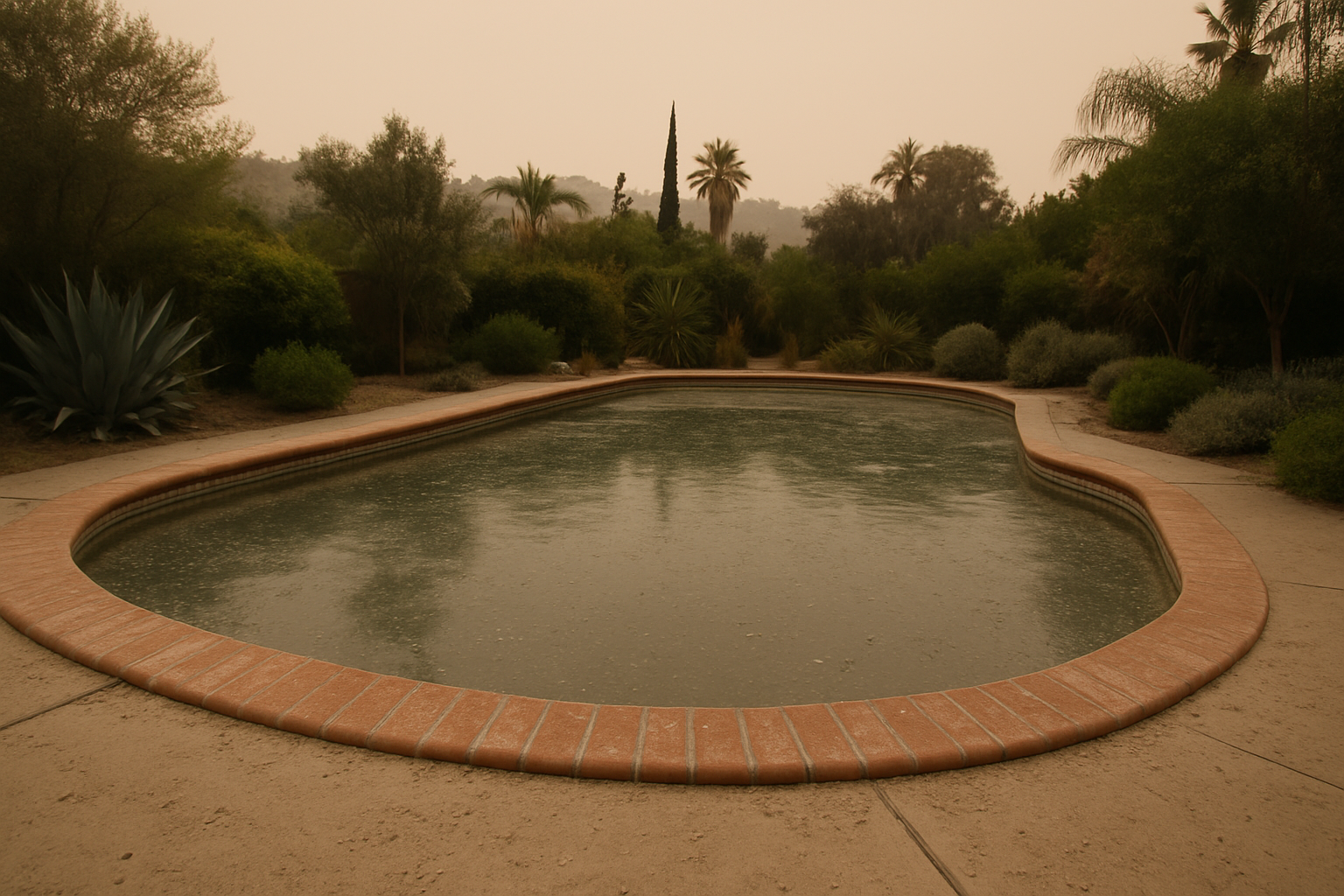
Ash contamination is a chemistry event first, a cleaning job second. We run a staged recovery built for what LA pools face after fire and wind events: pH testing first, chemicals second.
Tell us what happened, wildfire, wind, or storm. Or call 805-870-5019.
Wildfire ash and storm debris change your pool water chemistry in ways that standard shock treatment will not fix.
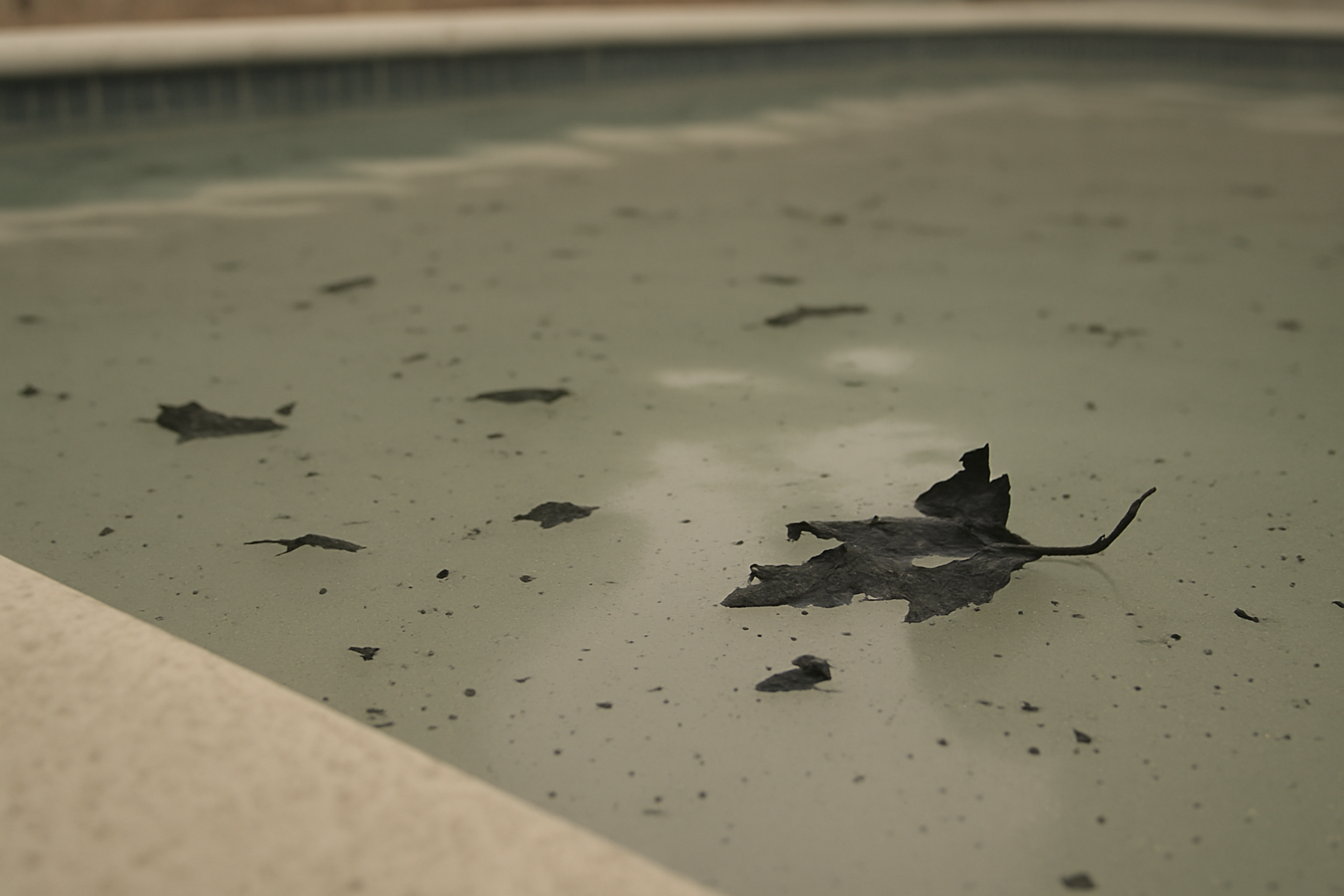
After a wildfire or major wind event, your pool is not just dirty. It is chemically destabilized. Ash from burned structures introduces dissolved carbon compounds, raises pH sharply, and loads your filter with fine particulate, all at once. You cannot shock your way out of it, and the recovery sequence matters as much as the chemicals themselves. Blue Line Pool runs a staged wildfire pool cleanup protocol built specifically for what LA-area pools face after fire and wind events, not a generic debris cleanup with a new name. If you are wondering why standard green pool treatment is not the same process, it comes down to the chemistry event that ash creates before any visible algae growth begins.
Blue Line Pool dispatches crews from Thousand Oaks, inside the same fire corridors that send ash into LA-area pools.
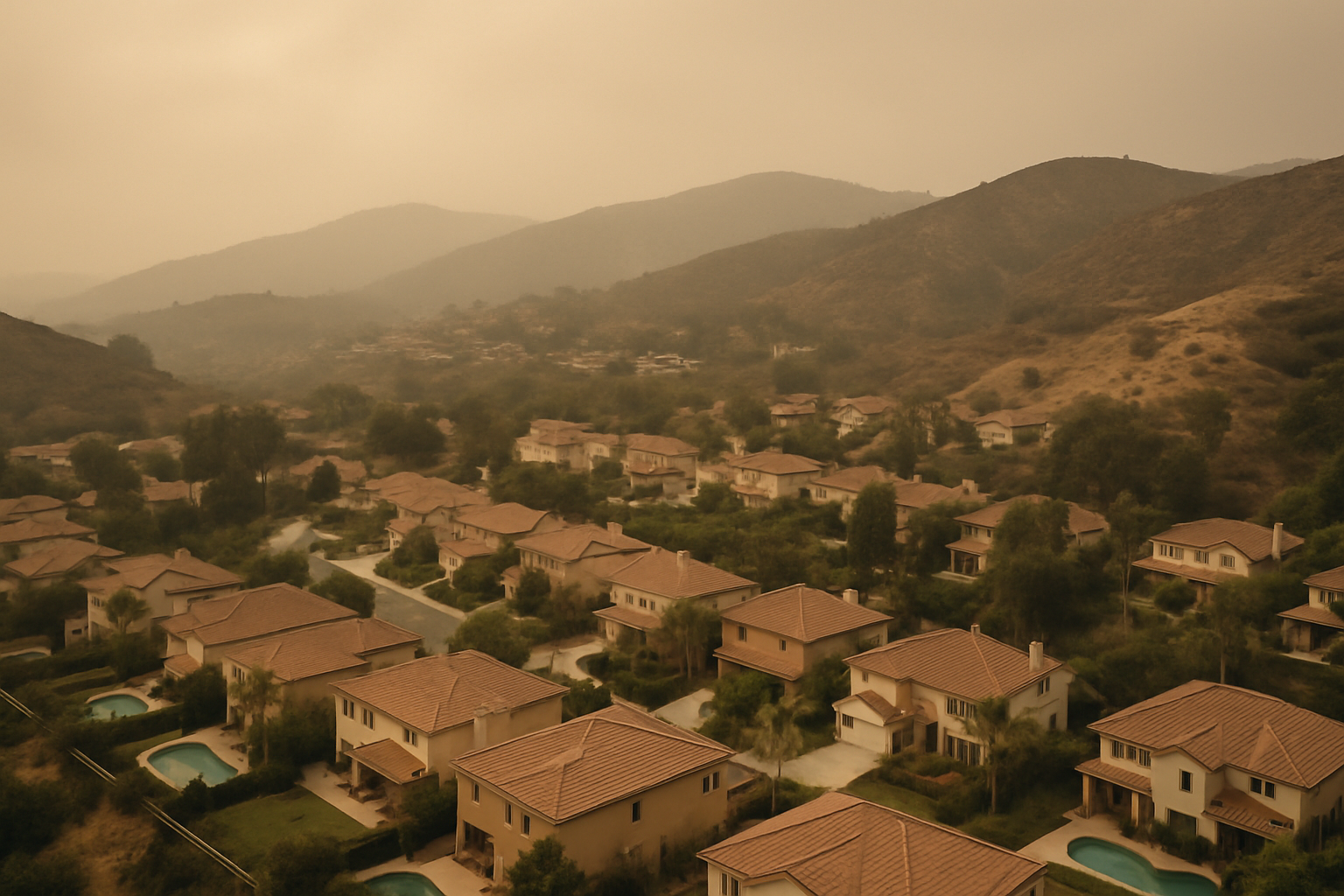
Our Thousand Oaks dispatch location sits directly inside Ventura County's wildfire impact zone. The Woolsey and Hill fires moved through these same hillsides. Our crews have driven through post-fire neighborhoods to reach pools covered in gray ash before customers even knew what was floating on the surface. That is geography, not a marketing angle. When Santa Ana winds sweep through the Conejo Valley and push east into the San Fernando Valley, we are already positioned to respond, and pools from Simi Valley to Burbank to the Inland Empire sit in those same wind corridors. You can review current California wildfire incident reports to track active events in these corridors. We know what the debris looks like and what it does to water chemistry when it lands.
Ash contamination is a chemistry event first, a cleaning job second. Here is what we see every time.
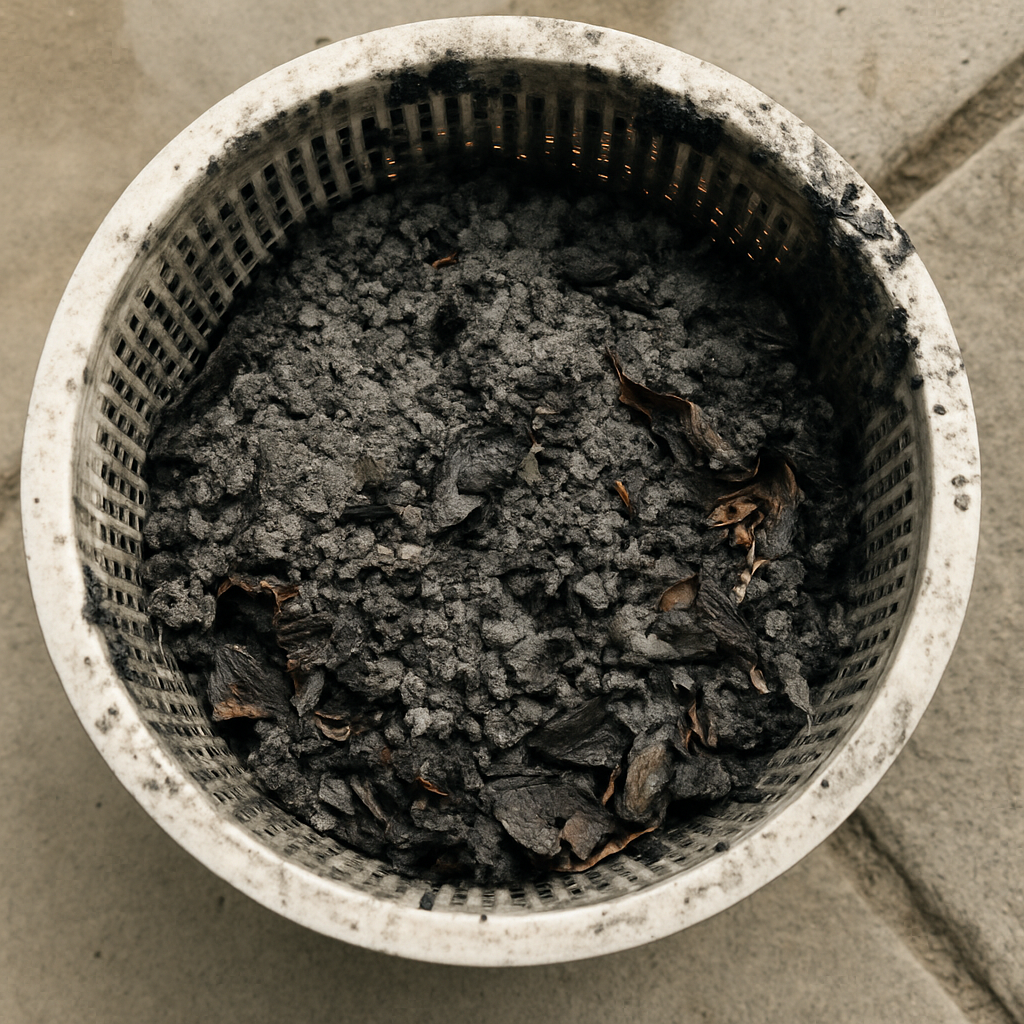
Our lead technician has assessed pool conditions after multiple LA-area wildfire events, pulling up to pools that looked like someone poured concrete water into them: gray, cloudy, skimmer baskets packed solid with ash and leaf debris. The first thing most homeowners want to do is run the pump and add chlorine. That is the wrong order, and we explain why every single time.
Here is what actually happens during a wildfire ash event. Fine ash particles bypass the skimmer baskets entirely. They are too light to sink right away, so they float and then slowly disperse through the water column. Ash from burned vegetation and structures, what we call wildfire ash contamination, pushes pool water pH above 7.8 and sometimes past 8.2. Understanding what wildfire ash does to pool water chemistry explains why that alkaline spike makes standard chlorination ineffective at these elevated pH levels, in line with the CDC's chlorine and pH guidance. For additional context on dissolved carbon compounds and pH disruption from ash fallout, the EPA wildfire resources outline the broader environmental chemistry involved.
At the same time, the filter takes a serious hit. Fine ash particles lodge in the filter media rapidly, that is filter loading, or filter saturation. Pressure climbs, flow drops, and if you add chemicals to a pool with a saturated filter, they do not circulate, they sit near the return jets while the rest of the water stays contaminated. Proper filter cleaning and replacement after ash contamination is a required first step before any chemical recovery can work effectively. Phosphate loading is another issue we test for on every post-fire visit. Organic debris from ash and wind events introduces phosphates, the primary food source for algae. Clear the ash and fix the pH but leave elevated phosphates in the water, and you will have a green pool within two weeks. The staged process works, it just has to happen in the right order.
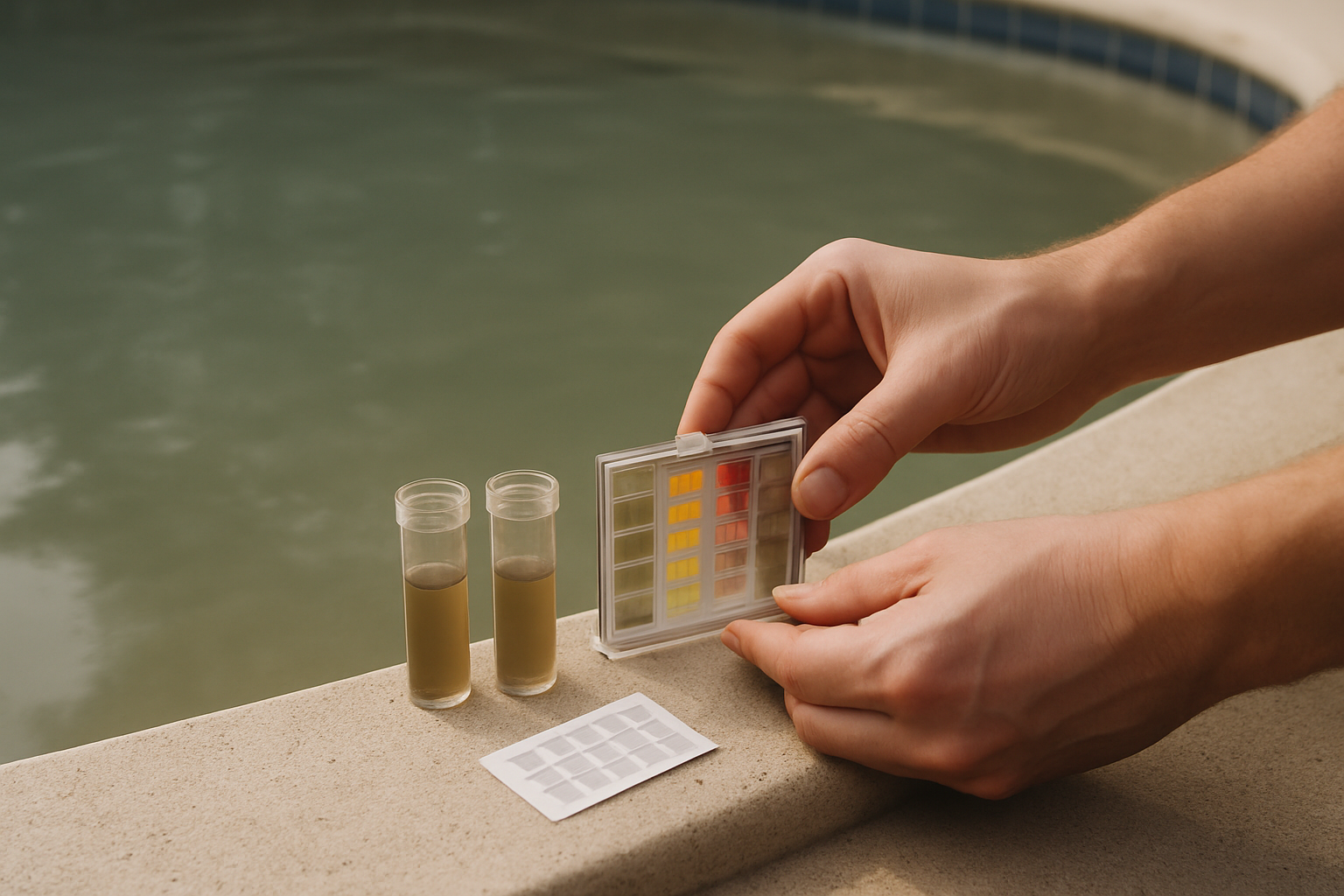
Every post-wildfire pool recovery starts with a full baseline water test, before any treatment begins. The chemistry shifts from ash contamination are not uniform. Two pools affected by the same wind event can have different pH levels, different alkalinity readings, and different phosphate concentrations, depending on pool size, filtration system, and what burned nearby. That is why we test first. We measure pH, total alkalinity, calcium hardness, cyanuric acid (stabilizer), and phosphate levels before we touch a chemical. That baseline tells us what we are correcting and in what sequence. Adding chemicals without testing means they may work against each other, or simply will not perform in the current water conditions. We test, document, and then proceed.
Post-wildfire chemical recovery follows a specific sequence. Skipping steps extends the recovery time.
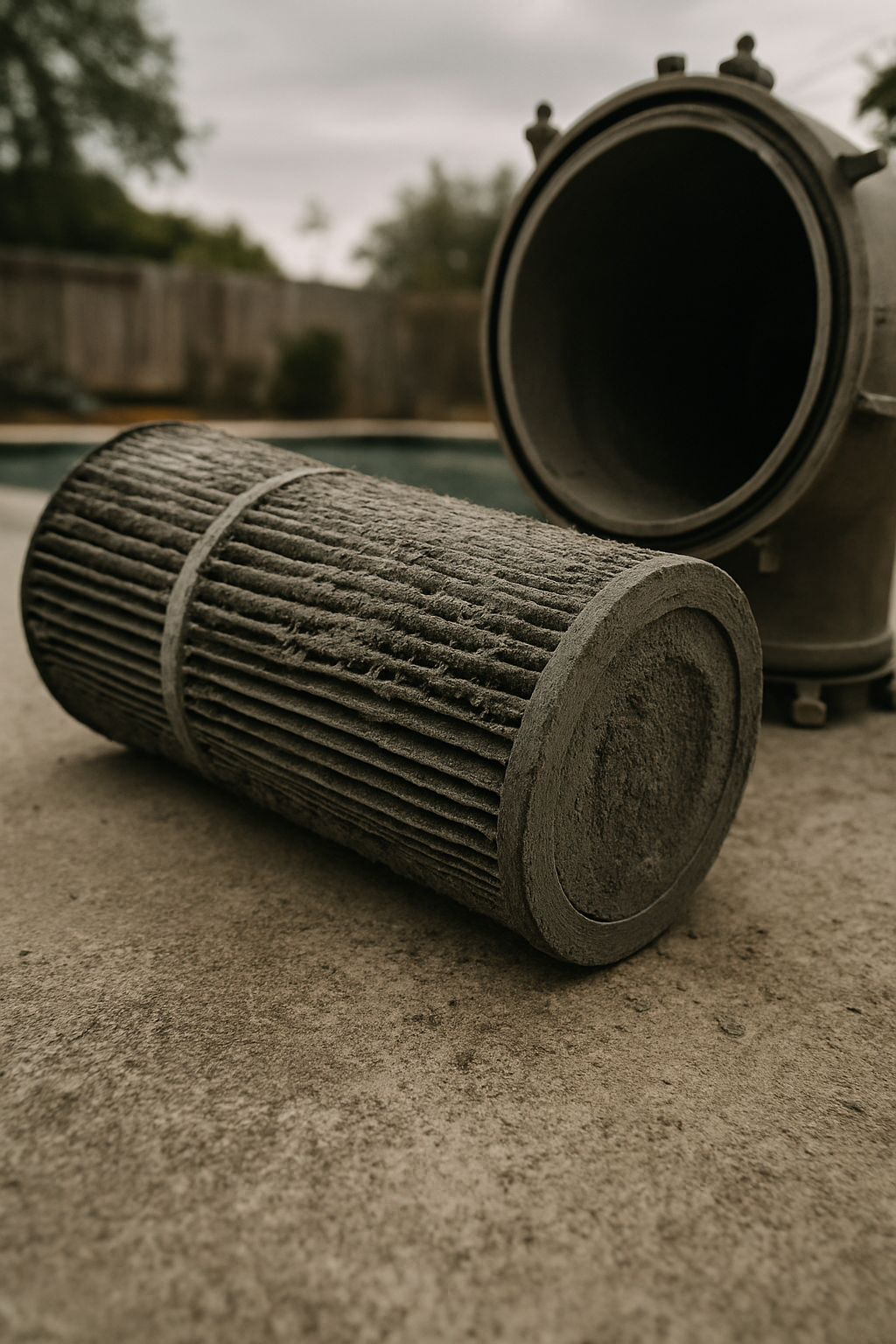
Every step runs in sequence. The order is not optional.
Santa Ana wind debris and wildfire ash create different contamination profiles, and each requires a different first step.
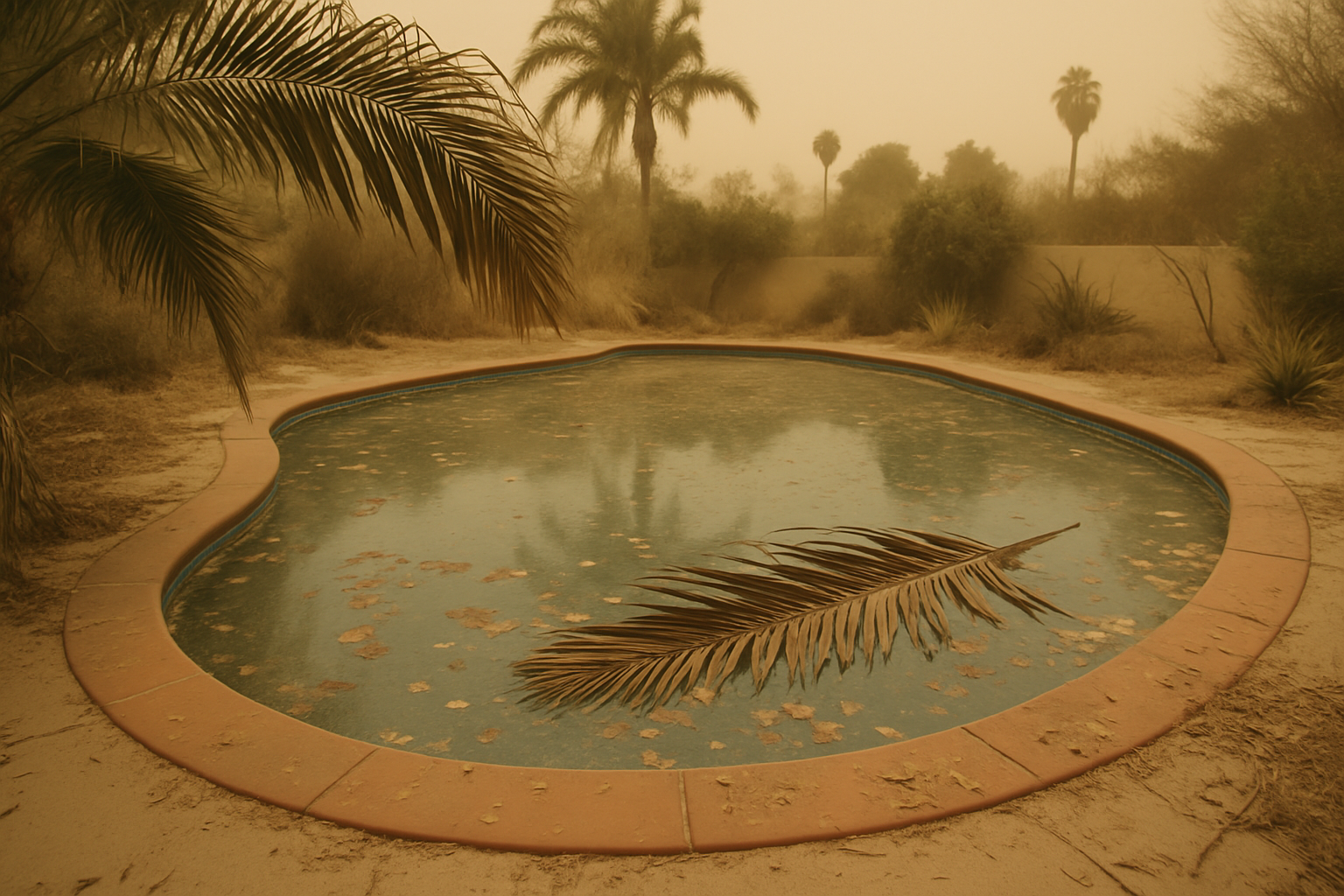
Santa Ana wind events, the seasonal high-pressure wind systems that sweep through Ventura County, the San Fernando Valley, and the Inland Empire, load pools with organic debris, dust, and phosphate-rich material. The immediate concern is filter loading and phosphate introduction, while pH impact is typically more moderate than with direct ash fallout. Our first step in a wind debris cleanup is physical removal of debris from skimmers and baskets, followed by filter inspection and a phosphate test. Phosphate removal treatment is almost always needed after a significant Santa Ana event.
Direct ash fallout from active wildfires presents a different situation. pH disruption, the alkaline spike that comes from ash compounds, is the priority concern, and an alkaline spike must be corrected before any sanitization can work. Filter saturation happens faster with ash than with organic debris, and the potential for dissolved compounds from burned structures means we test more thoroughly before clearing the pool. Pool water chemical recovery, the staged process of returning water to balanced, safe parameters, takes longer after a wildfire ash event. Plan for multiple service visits, not one.
We serve neighborhoods directly in these event zones: Thousand Oaks, Simi Valley, Santa Clarita, Burbank, Glendale, Pasadena, Los Angeles, West Hollywood, Santa Monica, Culver City, Long Beach, Torrance, Redondo Beach, Manhattan Beach, Anaheim, Irvine, Newport Beach, Riverside, Corona, Ontario, Rancho Cucamonga, and dozens of communities in between.
Call 805-870-5019 for an assessmentGet in touch before adding any chemicals. The longer ash sits in untreated, high-pH water, the more the contamination compounds. We document the condition when we arrive, test the baseline chemistry, and walk you through the recovery sequence before we start. Once your water is back in range, we can set you up with ongoing weekly maintenance to keep chemistry stable through the rest of fire and wind season.