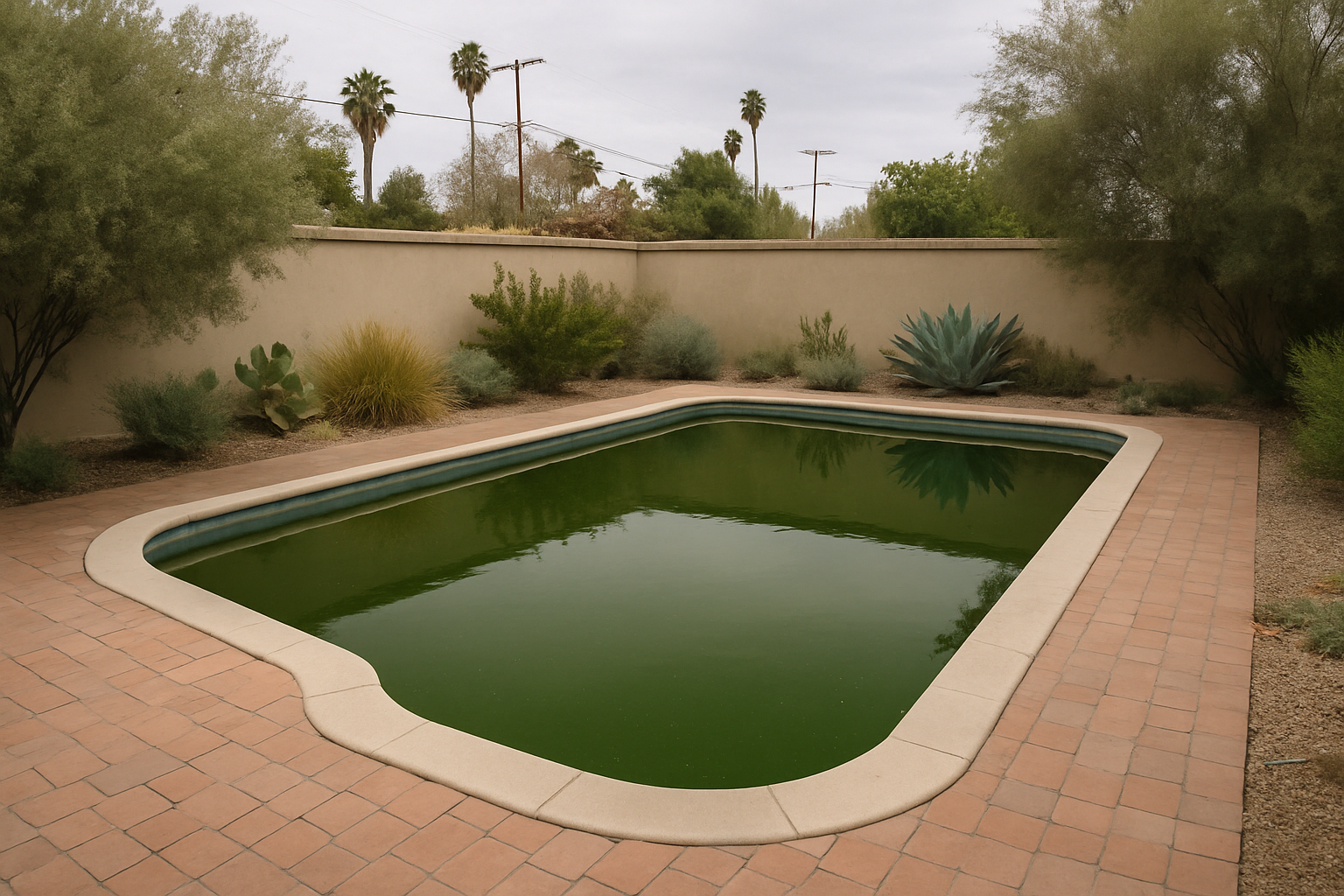
A green pool is a chemistry problem, not a lost cause. Most LA pools come back to clear, safe water without draining, and we document every step.
A green pool is a chemistry problem, not a lost cause. Most pools in Los Angeles can be brought back to clean, safe, swimmable water without draining. The process takes multiple treatment visits, continuous filter operation, and accurate chemical testing at each stage. We handle the full recovery sequence, from the first shock treatment to the final water clarity check, so you know the chemical balancing and water testing is moving in the right direction.
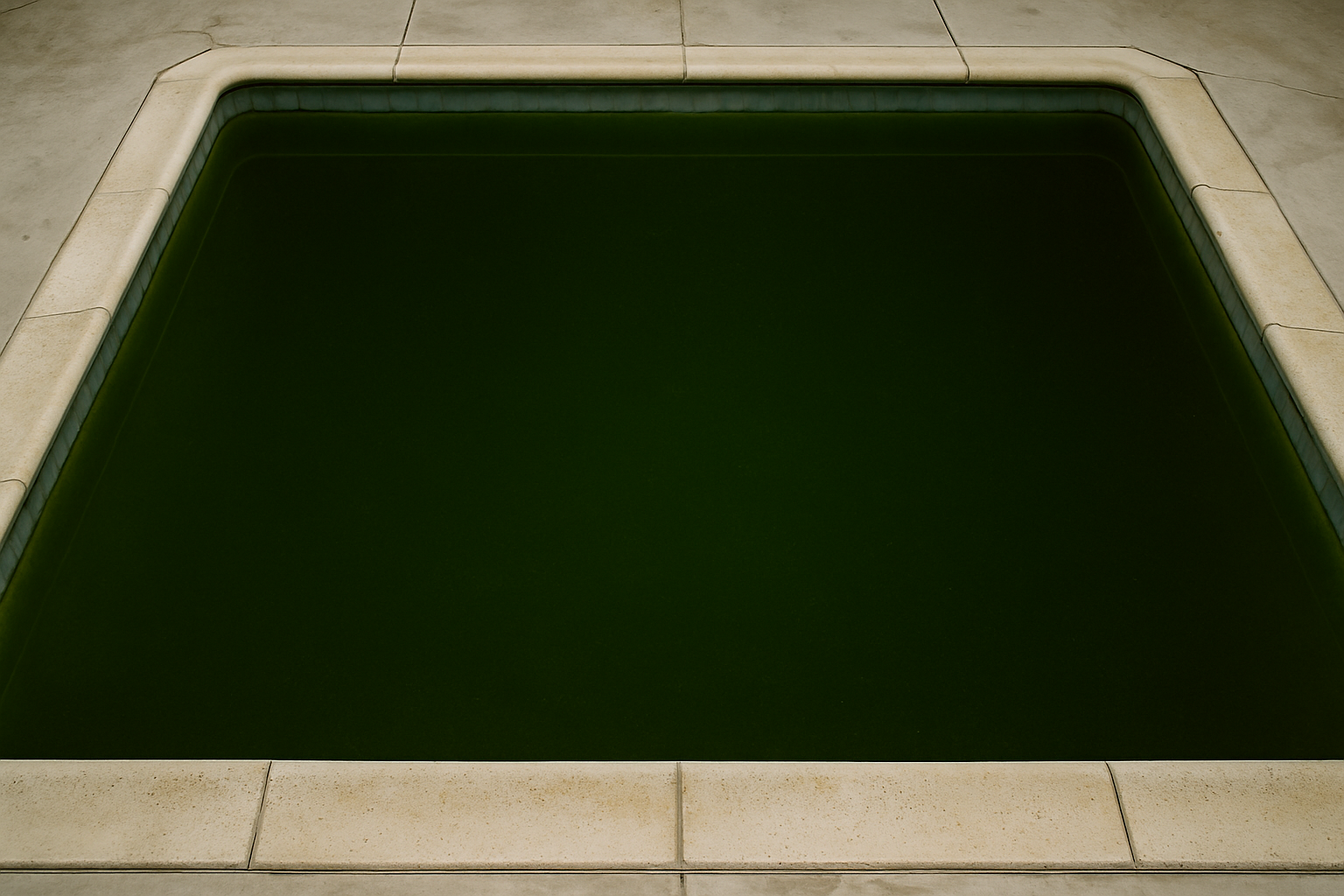
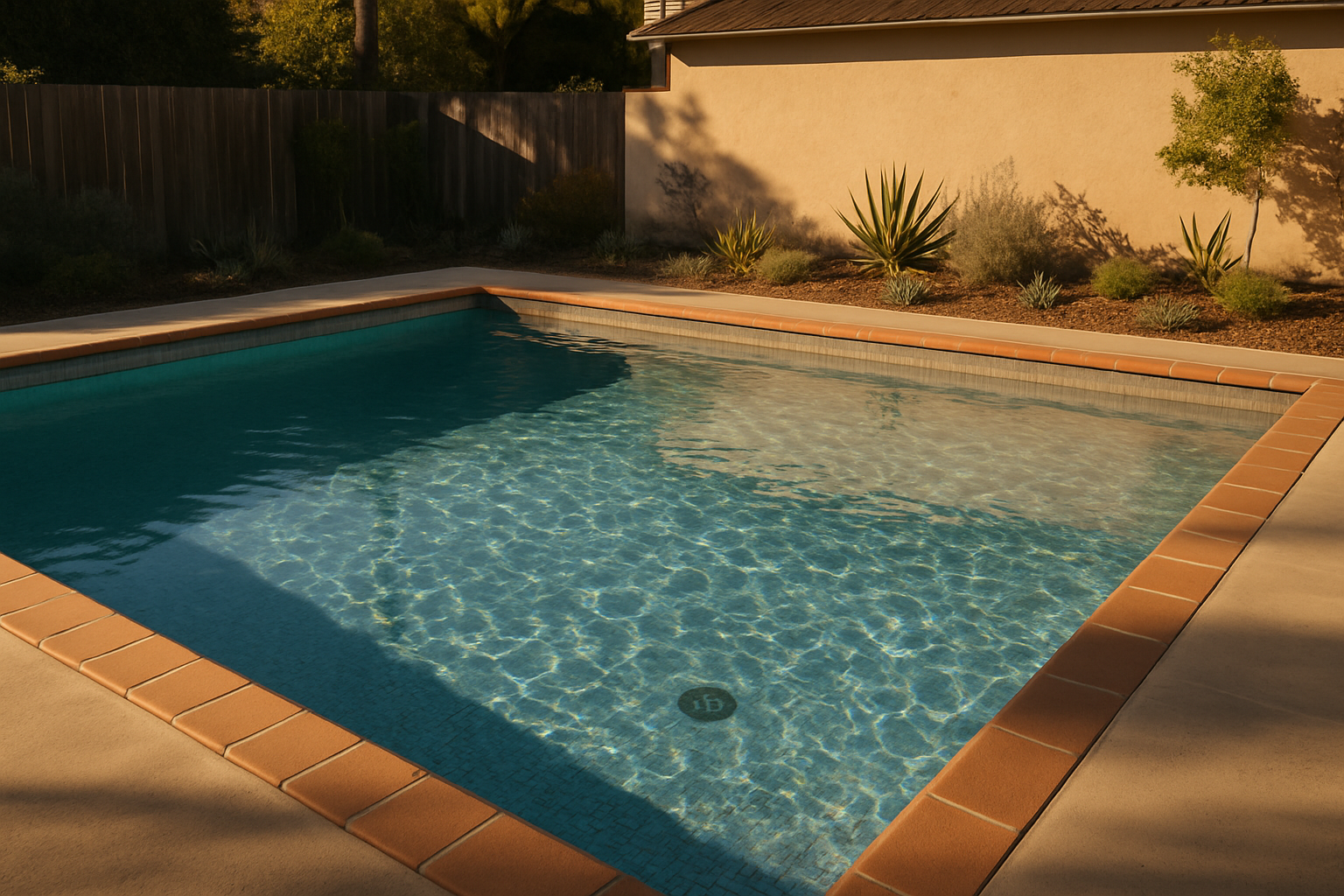
Green pool recovery is not a one-visit fix, and that is the most important thing to understand before treatment starts. A severe bloom, the kind that turns water dark green and blocks the bottom, typically requires three to five days of treatment and filter run time. A lighter case with visible walls and a blue-green tint can clear in two to three days. We tell you which category your pool falls into on the first visit.
LA's winter rain is the single biggest driver of green pool calls across our territory.
When rain falls directly into a pool, it dilutes two things immediately: chlorine and cyanuric acid (CYA), the stabilizer that protects chlorine from breaking down under UV. Without enough CYA, any chlorine added after the rain degrades within hours of sun exposure, and the pool is essentially unprotected. For a deeper look, see why LA rainy season turns pools green.
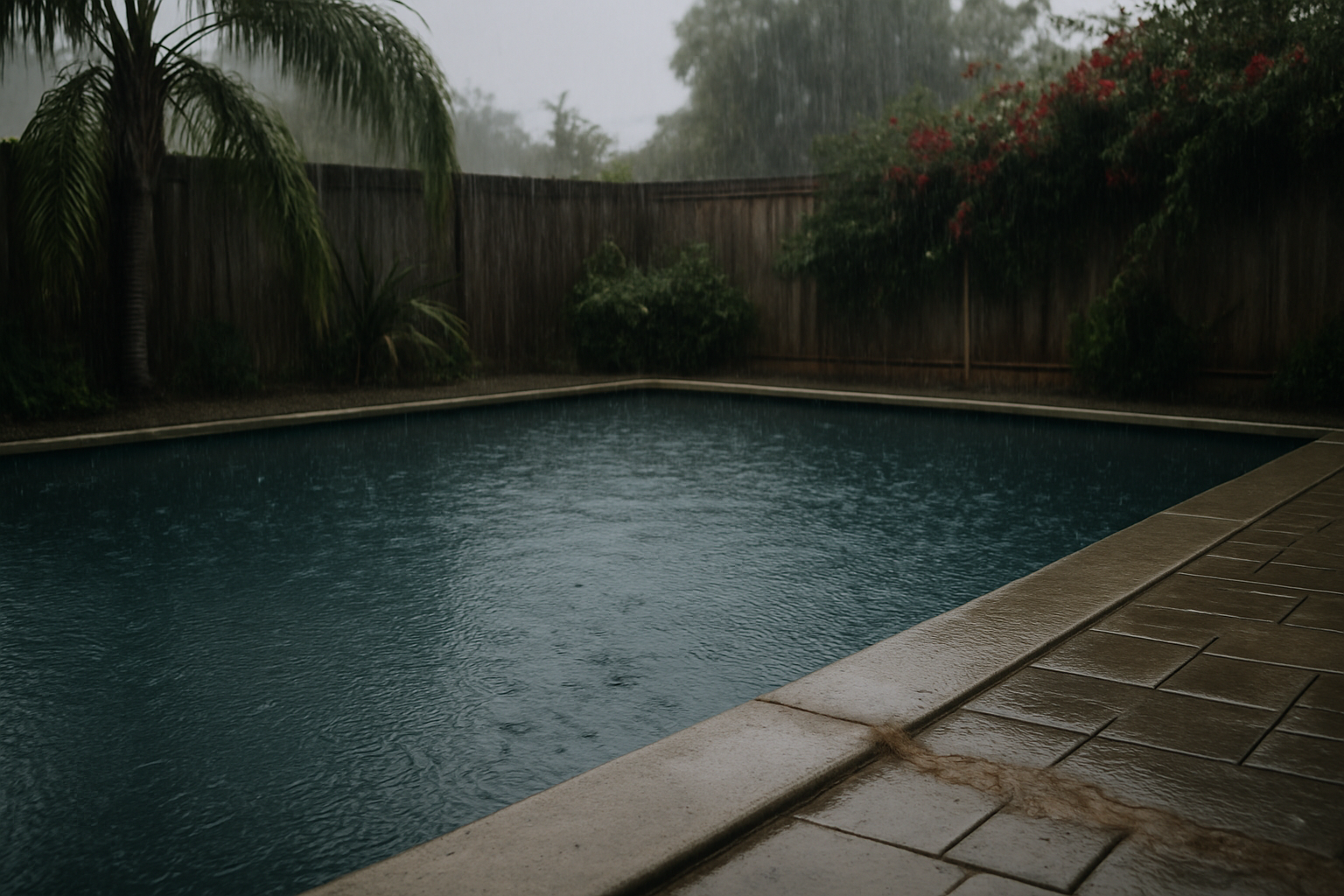
At the same time, rain runoff carries phosphates into the water. Phosphates are algae's primary food source, the nutrient that lets a tiny, invisible algae population multiply into a visible bloom within 48 to 72 hours. Los Angeles soil and landscaping debris are naturally high in phosphates, so even a moderate storm loads the pool with fuel for algae growth.
Inland areas, Pasadena, Burbank, and the San Gabriel Valley, see particularly fast blooms because daytime temperatures stay warmer even in winter, accelerating reproduction. Coastal pools in Santa Monica and Long Beach recover slightly faster because cooler marine air slows that cycle.
Pool color is a reliable diagnostic, used on every green pool call before opening a single test kit.
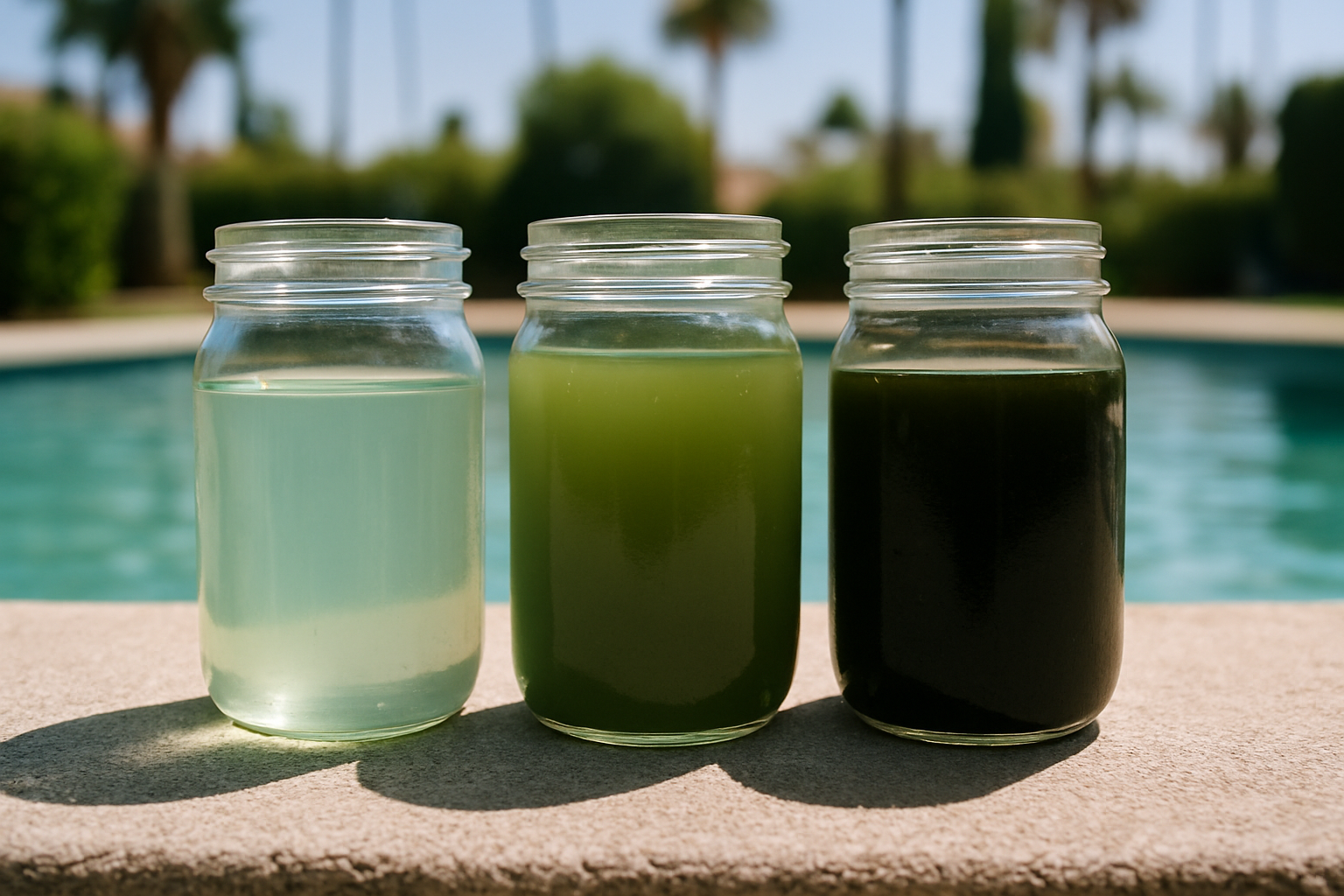
Light blue-green with the floor still visible is early stage. Chlorine dropped and algae got a foothold, but it has not colonized the walls or floor. These pools respond to a single heavy shock treatment followed by 24 hours of continuous filtration, about two to three days to clear water.
Flat, opaque green where you cannot see past a foot of water is a moderate bloom. Algae has attached to surfaces, and you will see a film on the walls when you brush. These need multiple rounds of shock, super chlorination that breaks down algae cell walls, followed by polyquat algaecide, which outperforms quaternary products. Filter runs 48 hours minimum at high speed.
Dark green to black-green with zero floor visibility is severe, what we see after three-plus weeks unserviced or a major storm on low stabilizer. These require sequential shock treatments, phosphate removal, algaecide, and filter cycles often past 72 hours, with clarity in five to seven days, made worse by LA's naturally hard water. Understanding how LA hard water worsens algae and chemical imbalance helps explain why severe cases are so common.
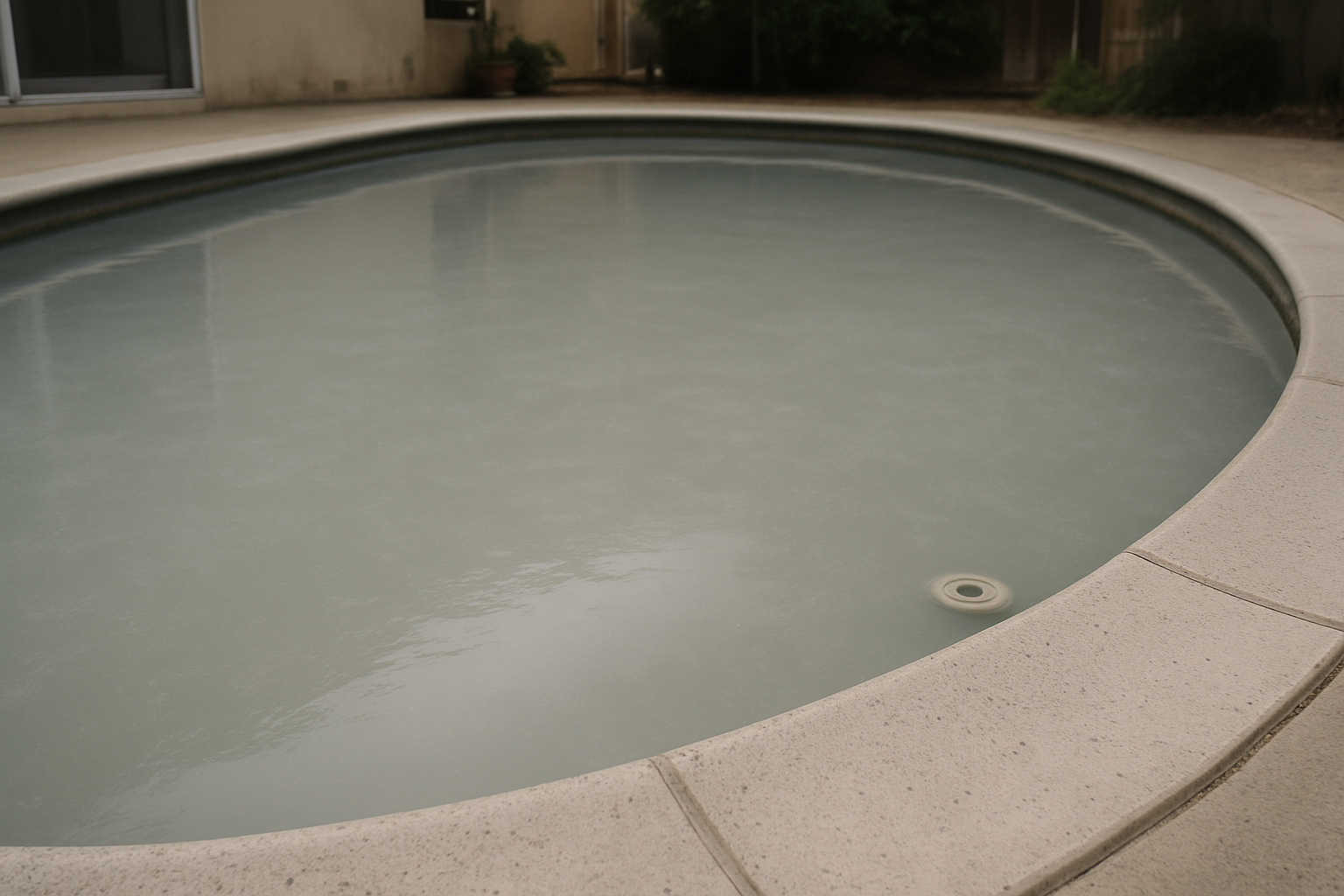
The cloudiness that follows the first shock is a sign things are working. That white-gray haze means dead algae cells are suspended in the water and the filter is pulling them out. Clearing that haze is what the extended filter cycle accomplishes.
Every green pool recovery is photo-documented at each visit. You do not have to be home.
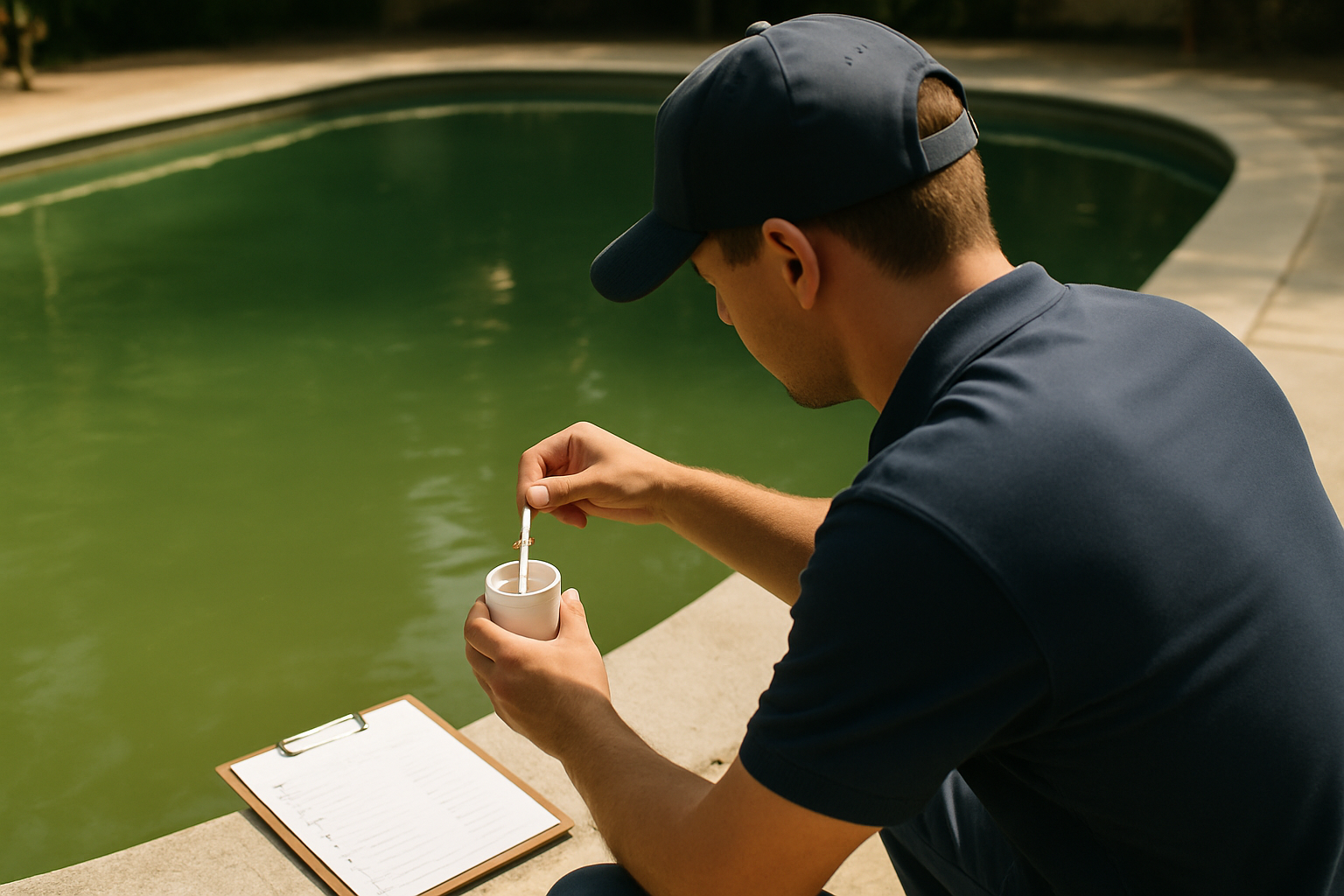
After each treatment you receive a time-stamped photo report showing the water color at arrival, the chemical readings before and after treatment, and the filter pressure status. If chlorine is rising properly, you see it in the numbers. If something is not moving fast enough, say phosphate levels are stalling the chemistry, we catch it in the report and adjust the next treatment. Many green pool calls happen after vacations or work trips, so the photo record gives you a clear picture of exactly where the water is, visit by visit. Readings we document include free chlorine, pH, total alkalinity, cyanuric acid depletion, and phosphate concentration when elevated.
Recovery follows a fixed sequence. Skipping steps is why pools go green again.
From your first call, the recovery runs in a clear sequence.
We test the water before adding anything. The numbers tell us the cause, rain dilution, service gap, or phosphate overload, and calibrate the plan. A pool with zero CYA needs stabilizer first, and extreme phosphate loading needs a phosphate remover before shock is effective.
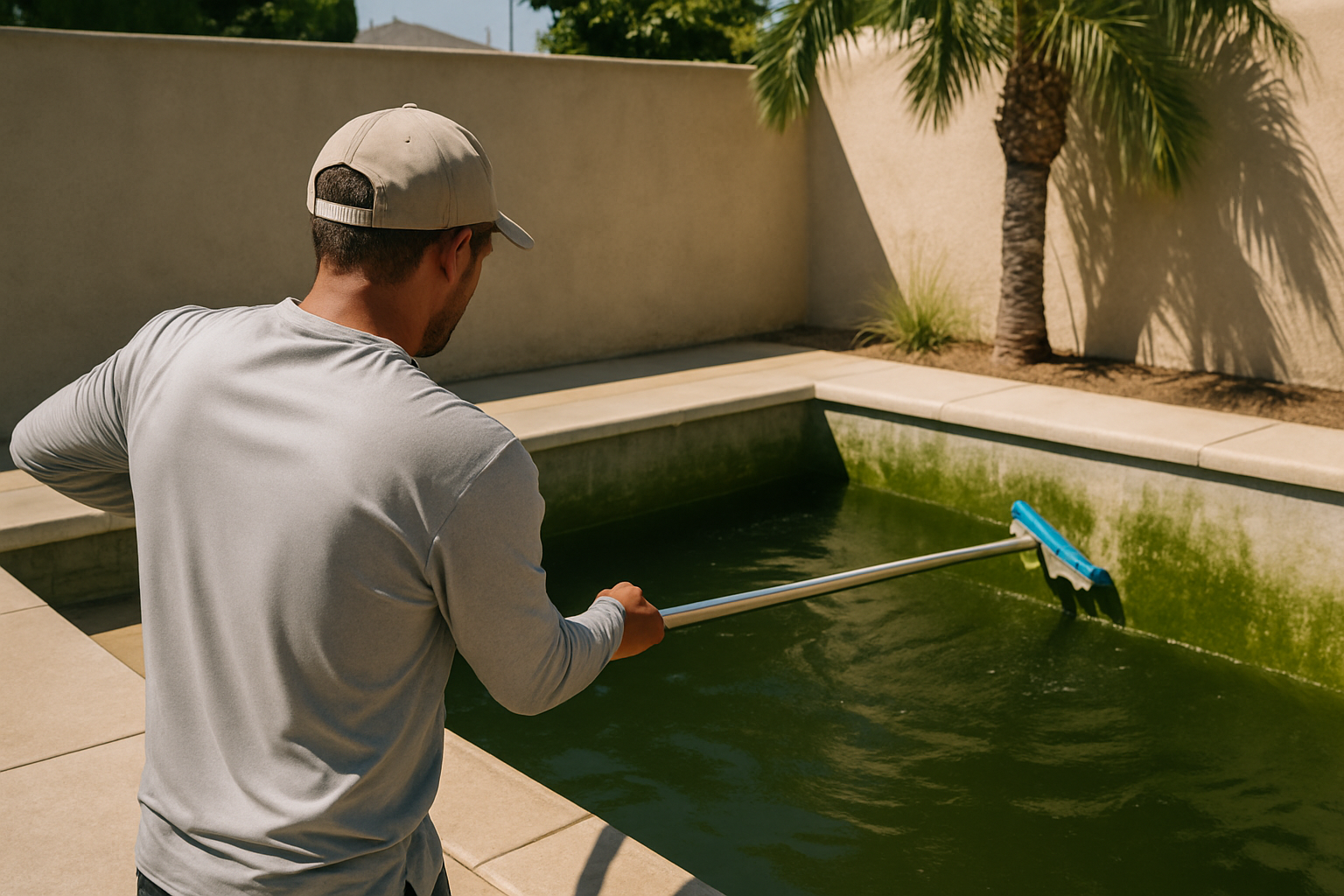
We shock first, heavy dose to volume, and brush the entire pool while the shock is active to break algae loose. Then we apply algaecide and confirm the filter is running correctly, cleaning or backwashing it first if it is already clogged so the recovery does not stall.
We return within 24 to 48 hours to confirm chlorine is holding and the water is shifting from green to a cloudy gray-white as dead algae clears. A second shock round is applied if needed, and a final visit confirms clear water and balanced chemistry before the case closes.
We handle green pool recovery in Los Angeles, Beverly Hills, West Hollywood, Santa Monica, Burbank, Glendale, Pasadena, Long Beach, Torrance, Inglewood, Compton, Culver City, El Segundo, Hawthorne, Gardena, Redondo Beach, Hermosa Beach, Manhattan Beach, and the surrounding communities. Dispatch coordinates from the nearest crew already running that area's route. Once your pool is clear, we recommend ongoing weekly maintenance to prevent future algae.
Call 805-870-5019 for an assessmentTell us the neighborhood and what you are seeing, wall visibility and approximate water color, and we will coordinate the nearest crew. Photo documentation starts at the first visit, and proper chlorine and sanitation levels follow CDC guidance.