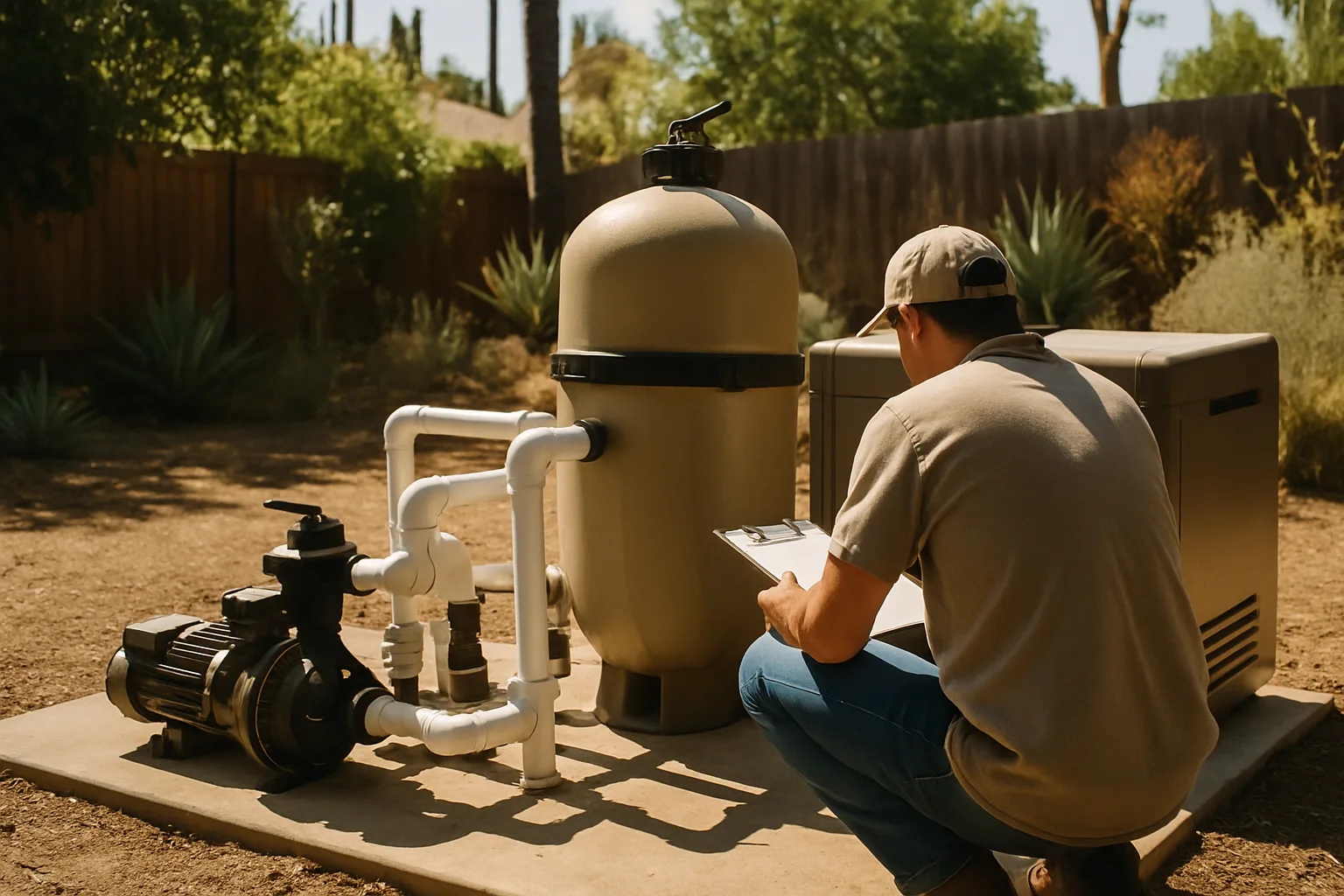
Pump, heater, filter, or automation issue? We diagnose and repair every major piece of pool equipment under one service account.
Blue Line Pool repairs and replaces every major piece of pool equipment under one service account.
That includes the circulation pump, the mechanical heart of your water system that moves water through the filter and back to the pool, as well as heaters, filters, and pool automation controllers. When something breaks, you do not need a separate repair contractor. You call the same number you already have. We diagnose the problem, source the part, and complete the installation. One company, start to finish.
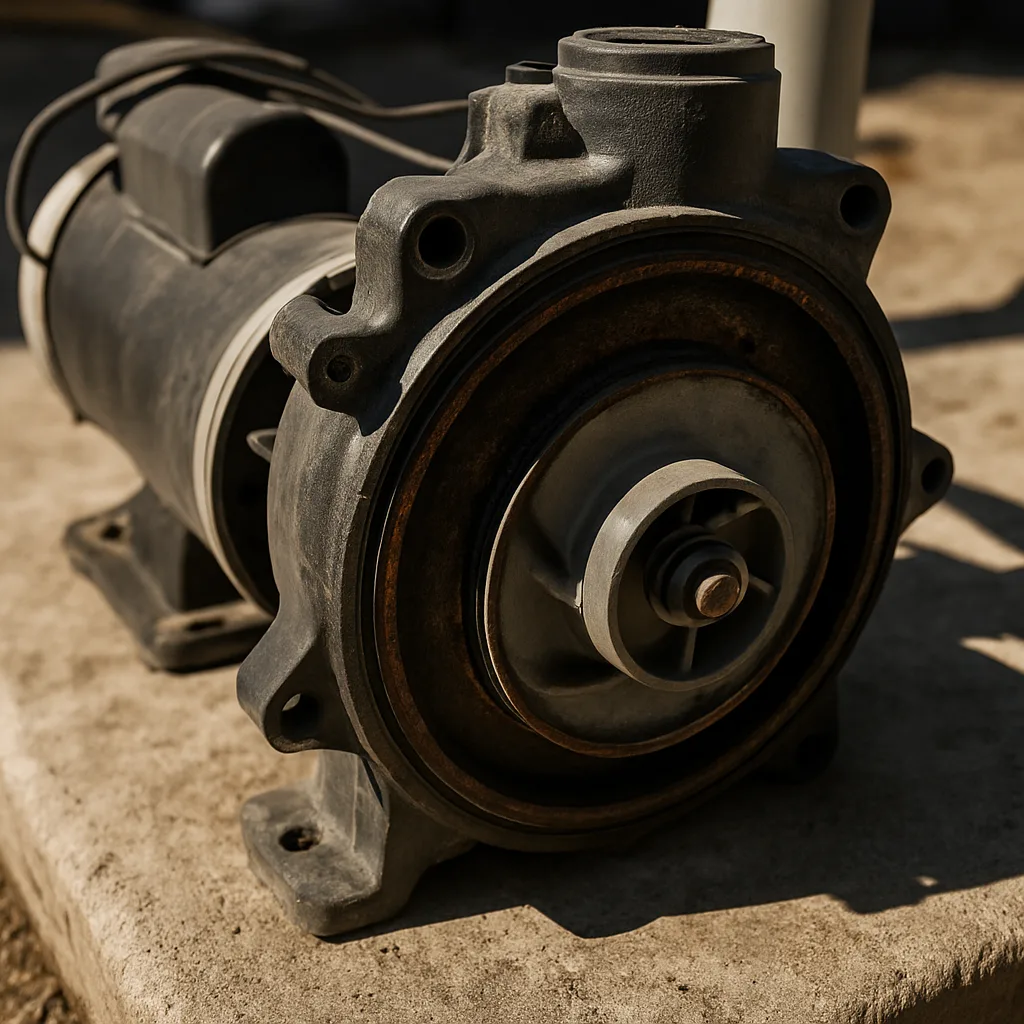
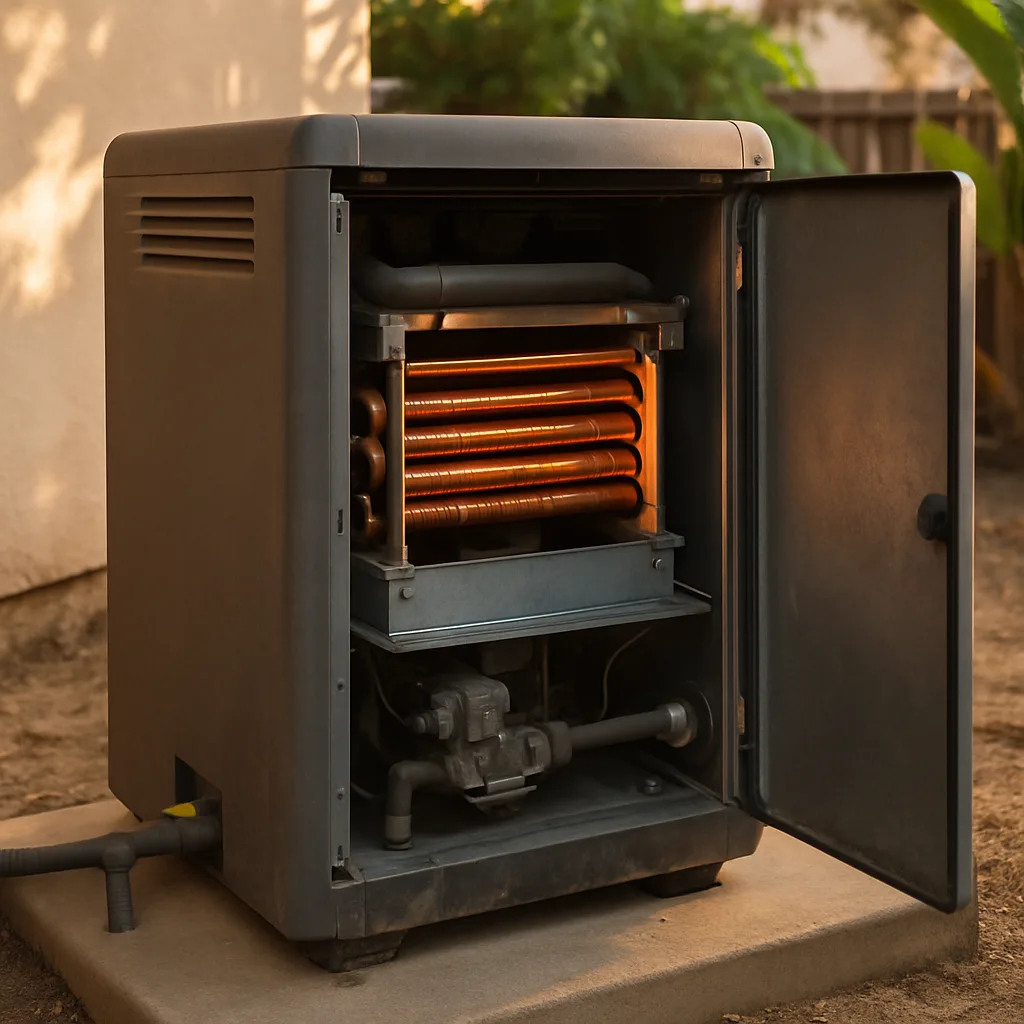
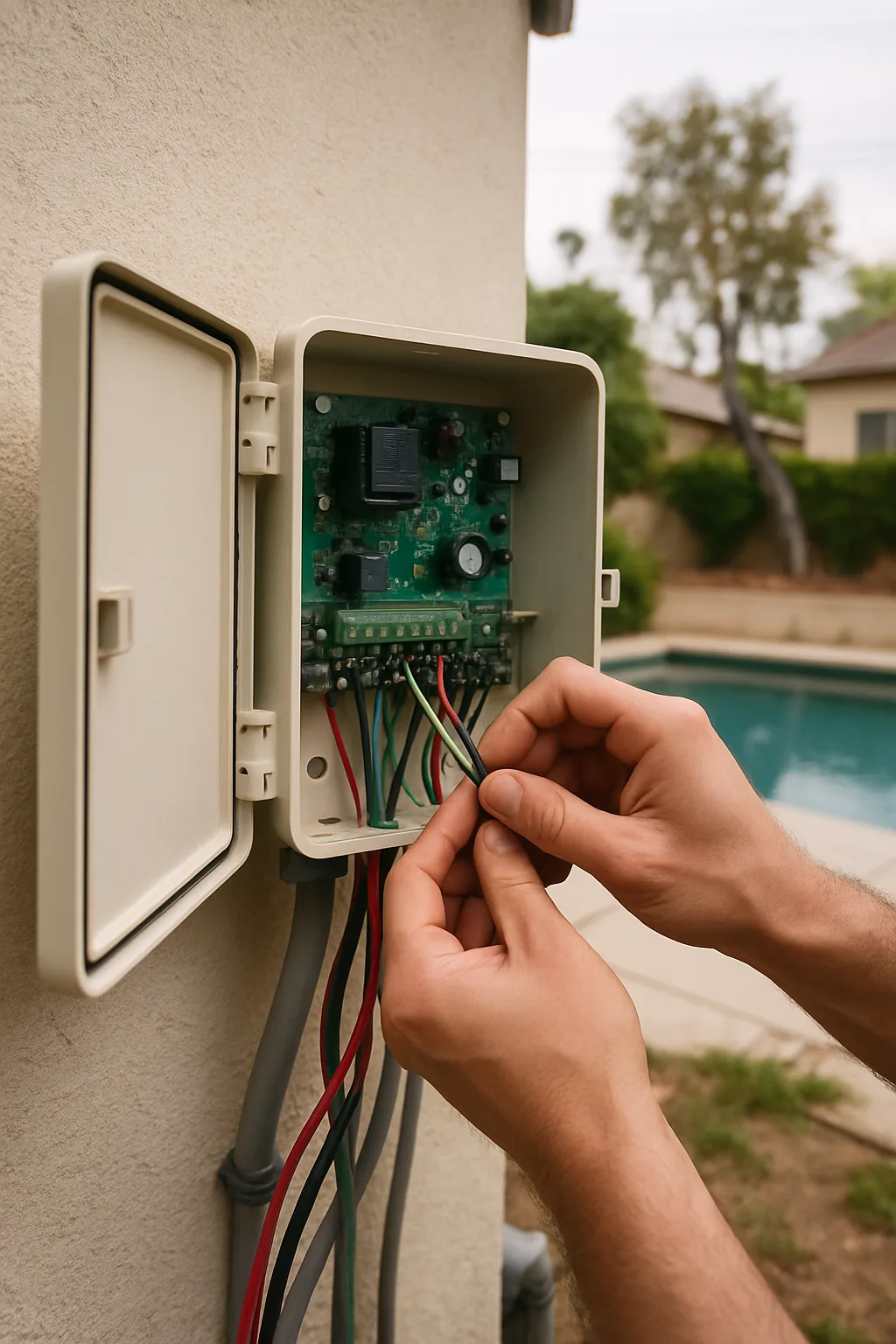
LA pool equipment works harder than almost anywhere else in the country, and wears faster because of it.
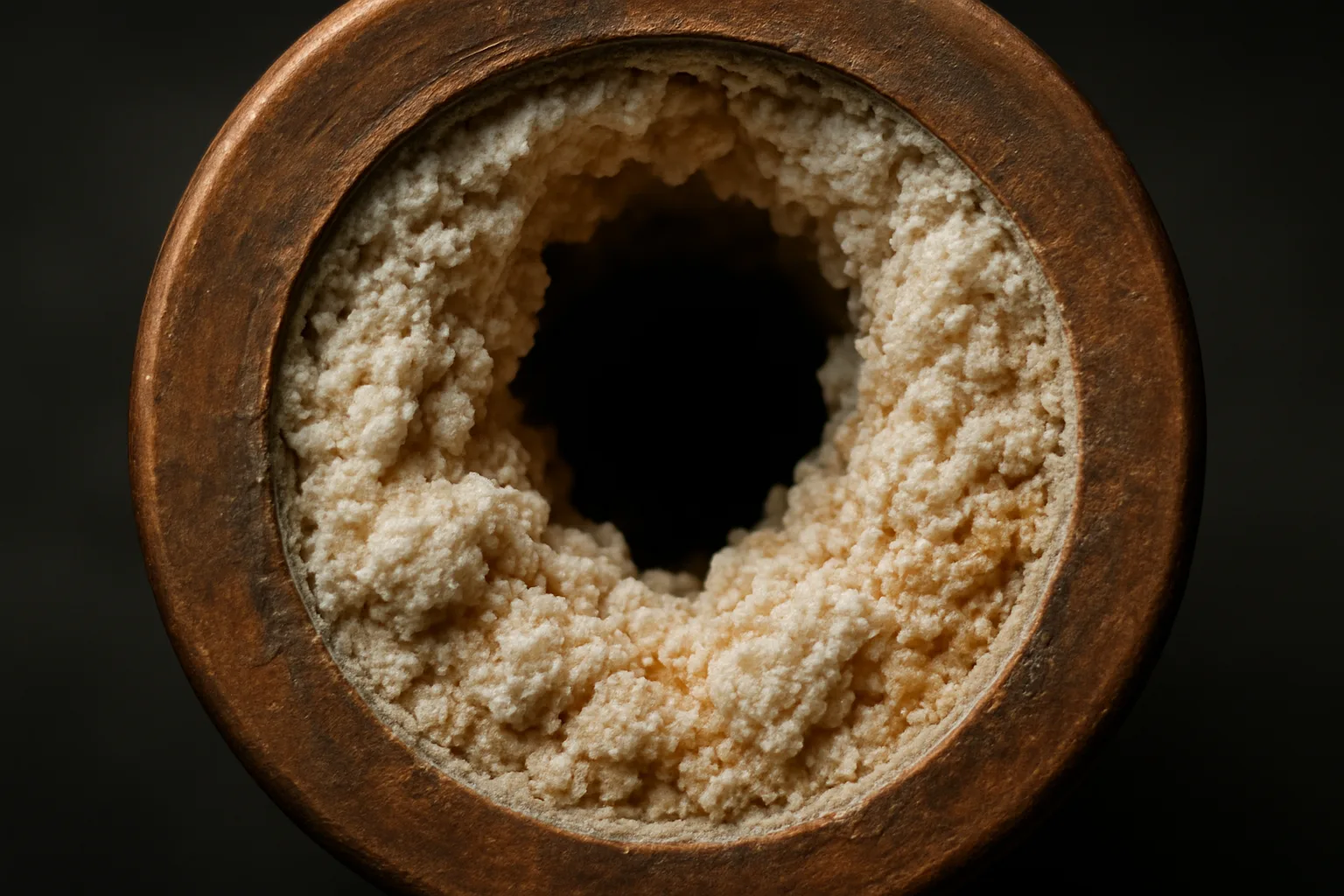
Los Angeles municipal water ranks among the hardest in the United States. That calcium-heavy water passes through your pump, heater, and filter every single day. Over time, calcium deposits coat the inside of your heater's heat exchanger, the component that transfers heat into the water, and choke it to failure. For recurring heater issues, professional pool heater repair and installation can address scaling before complete failure. The same deposits scale pump housings and clog cartridge filter elements. Understanding the full scope of Los Angeles hard water effects on pools helps with maintenance and replacement timing.
Add extreme inland heat. Pasadena, Burbank, and the Inland Empire regularly hit 100F or higher in summer. That heat accelerates chemical consumption, strains motor components, and shortens seal lifespan. Equipment that holds up for a decade in milder climates can show serious wear in five or six years here.
Most pool equipment gives warning before it fails completely, if you know what to look for.
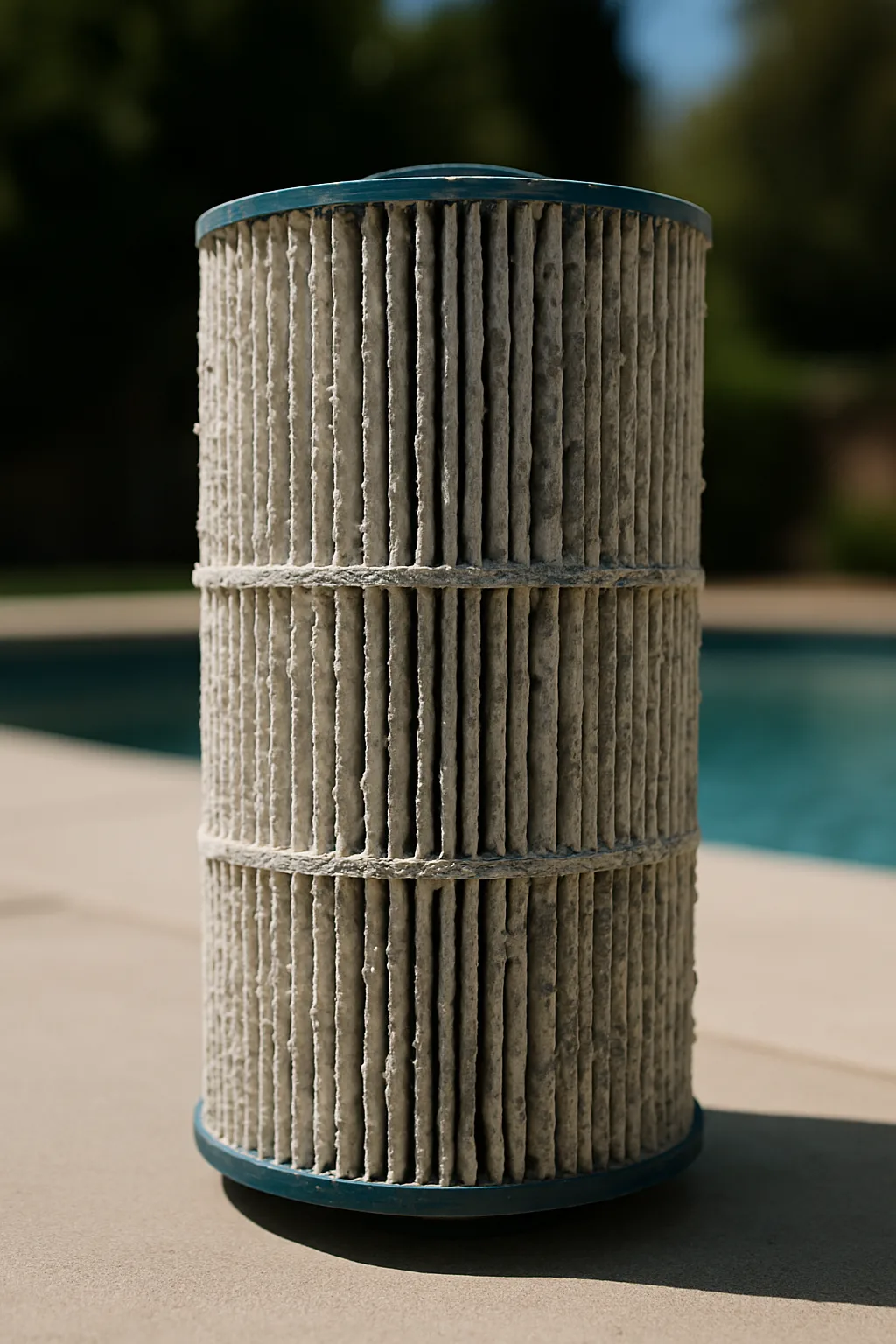
A customer in Burbank called because her pool was losing clarity even though her chemicals were balanced. When our tech arrived, the cartridge filter element was so clogged with calcium scale it was passing water at a fraction of its rated flow. Scheduling professional pool filter service and replacement at that stage could have prevented the downstream strain on the pump entirely. The pump was overworking to compensate. It had not failed yet, but it would have within a season.
That is the pattern we see constantly. A weakened filter strains the pump, a strained pump runs hot, and a pump that runs hot burns through its capacitor, the component that helps the motor start and hold speed, faster than it should. By the time a homeowner notices standing water or a dead pump, two or three smaller problems have already been building.
Catching these early is how we keep a repair at $150 instead of a replacement at $1,500.
When your pump stops working, the last thing you need is to locate a new contractor from scratch. The crew that services your pool weekly is the same team that handles equipment diagnosis and repair. They already know your system and have seen your pump's pressure readings over time. A tech seeing your equipment for the first time starts from zero. Our team starts from a history.
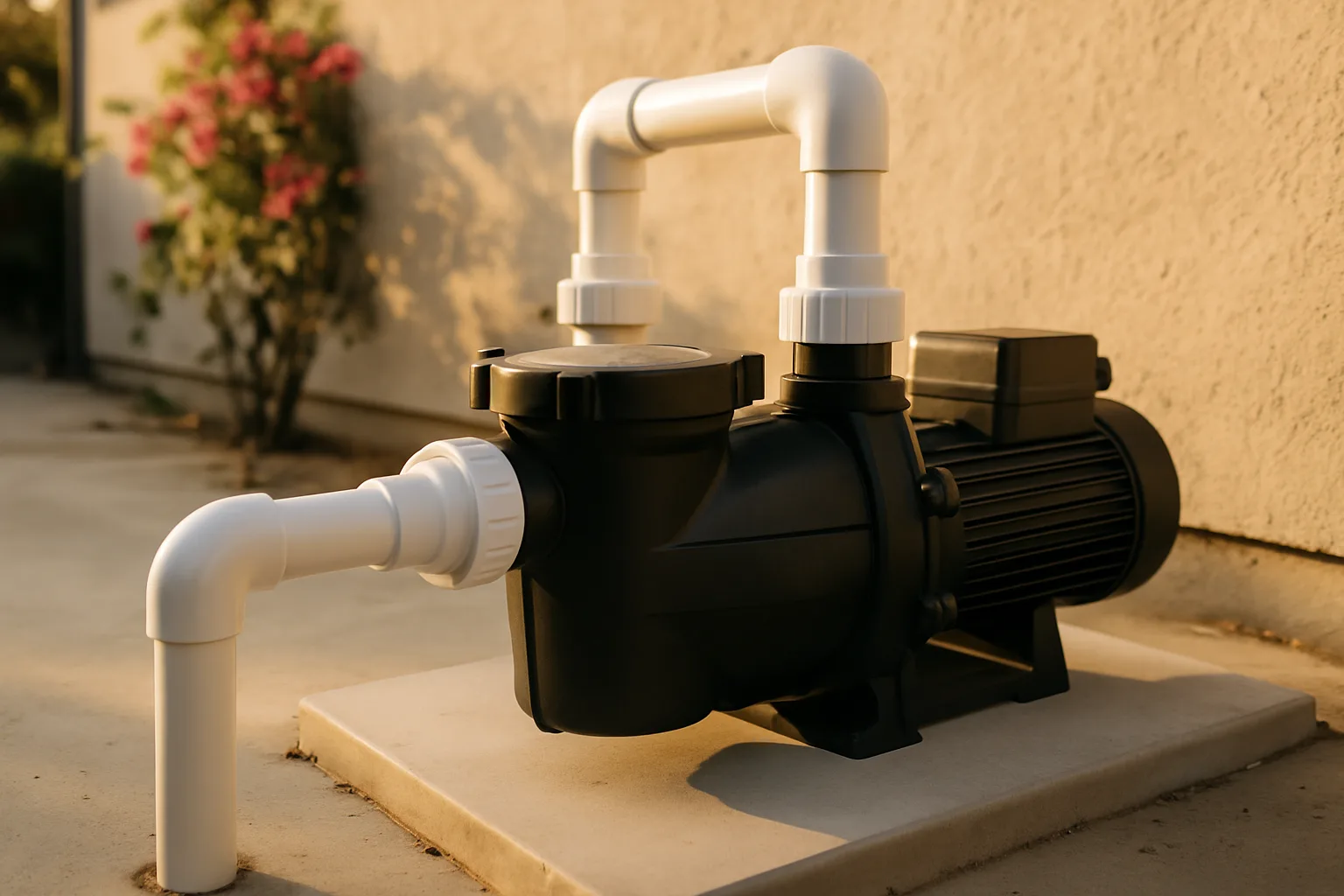
When a repair escalates to a full replacement, we handle that too, including variable-speed pump upgrades, which California's Title 20 energy standards now require for most new pump installations. A variable-speed pump runs at multiple speeds and can reduce pool electricity costs by 70% or more compared to older single-speed models, one reason the EPA WaterSense program highlights efficient pumps. We install compliant equipment and walk you through the operational difference before we leave.
We do not quote repairs until we have seen the equipment and identified the actual cause of failure.
We set a clear repair vs replacement threshold before presenting options. If the equipment is under eight years old and the repair is straightforward, repair is usually the right call. If the part is discontinued, the repair history is long, or the unit is significantly degraded, we present replacement as the better financial decision and explain exactly why.
Every repair follows a structured process, no guesswork, no unnecessary parts.
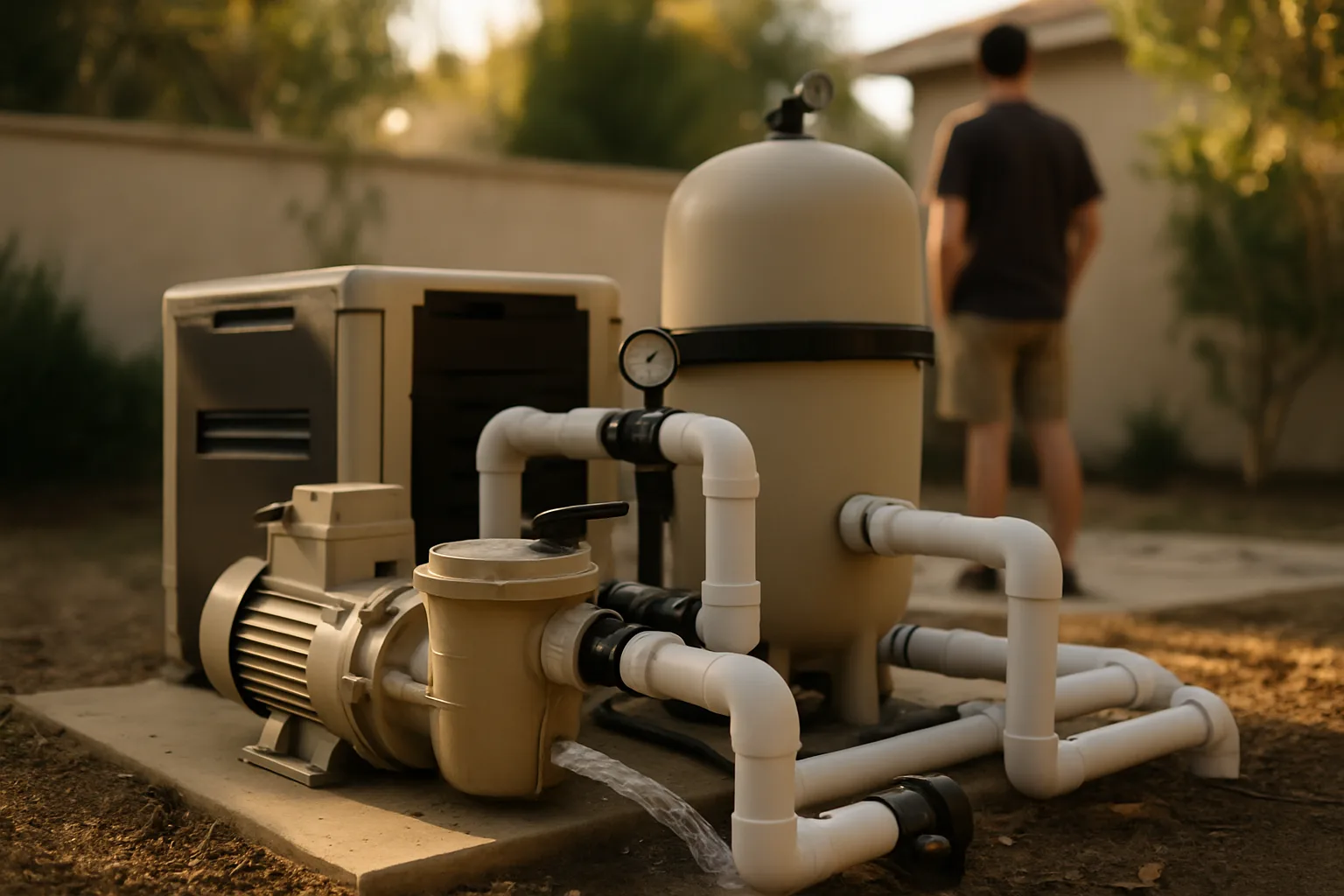
We schedule a dedicated diagnostic separate from your maintenance appointment and evaluate the full system, not just the reported symptom. You get a clear summary of what is wrong, what caused it, and what the fix involves.
Once you approve, we source the equipment or parts. Common components we stock or source quickly, and we complete the work in a single visit whenever possible. For larger replacements we confirm a two-hour window and arrive on time.
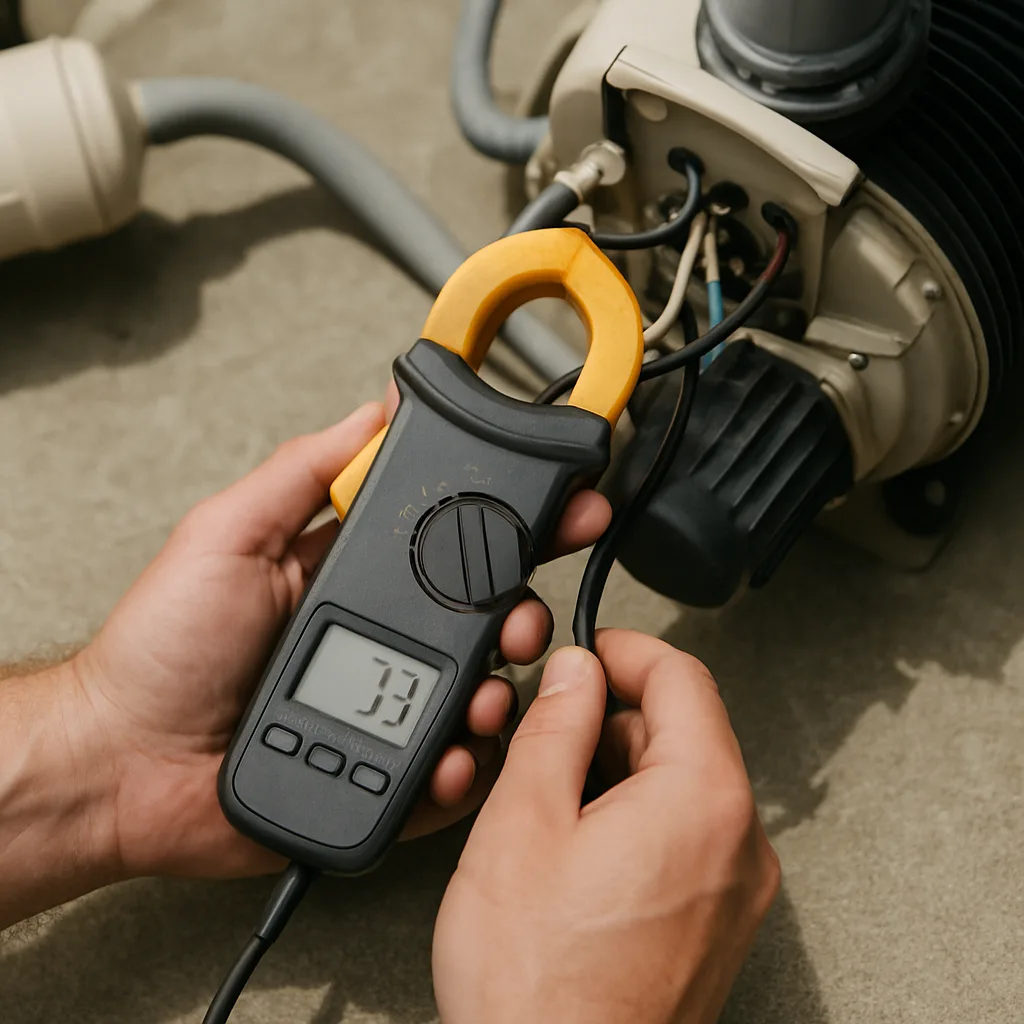
A repair is not complete until the equipment has run a full cycle under operating conditions. We verify flow and noise on pumps, confirm the delta-T on heaters, and test every function on automation, including scheduling and remote access.
We serve Los Angeles, Beverly Hills, West Hollywood, Burbank, Glendale, Pasadena, Santa Monica, Culver City, Long Beach, Torrance, Redondo Beach, Inglewood, and El Segundo. We also cover Orange County including Anaheim, Irvine, Newport Beach, Huntington Beach, and Santa Ana. Inland Empire coverage includes Ontario, Rancho Cucamonga, Riverside, Corona, and San Bernardino, and in Ventura County we serve Thousand Oaks, Simi Valley, and Oxnard.
Call 805-870-5019 to schedulePool equipment problems in Los Angeles do not stabilize on their own, and waiting makes the repair more expensive. To keep problems from developing, ask about our ongoing weekly maintenance. For general pool safety, see the CPSC pool and spa safety center.