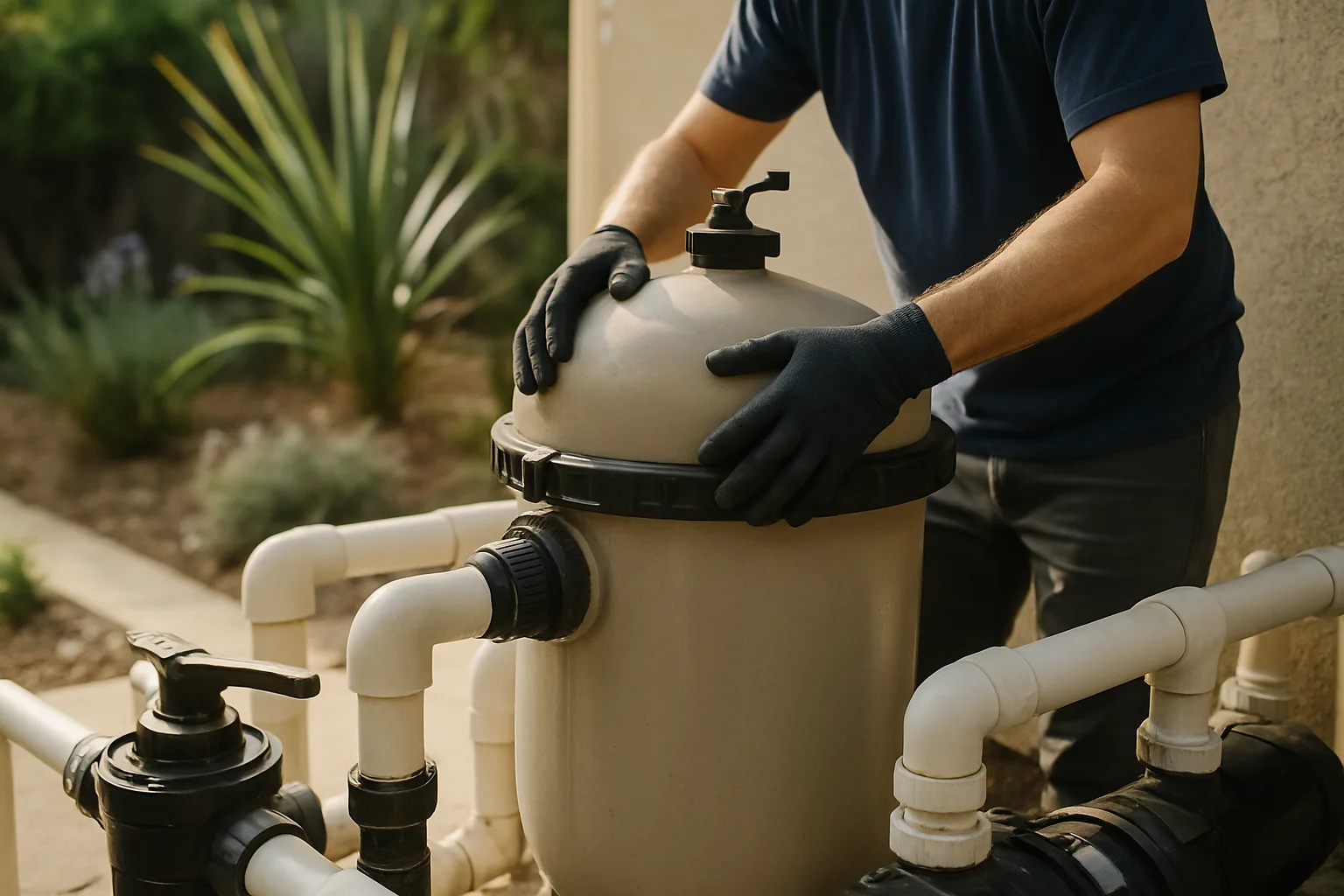
We identify your system, service it correctly, and document the pressure reading before and after. Cartridge, DE, and sand, all handled by one team. One account, no guesswork.
Pool filter service is not one-size-fits-all. Your system type changes everything about how it is cleaned.
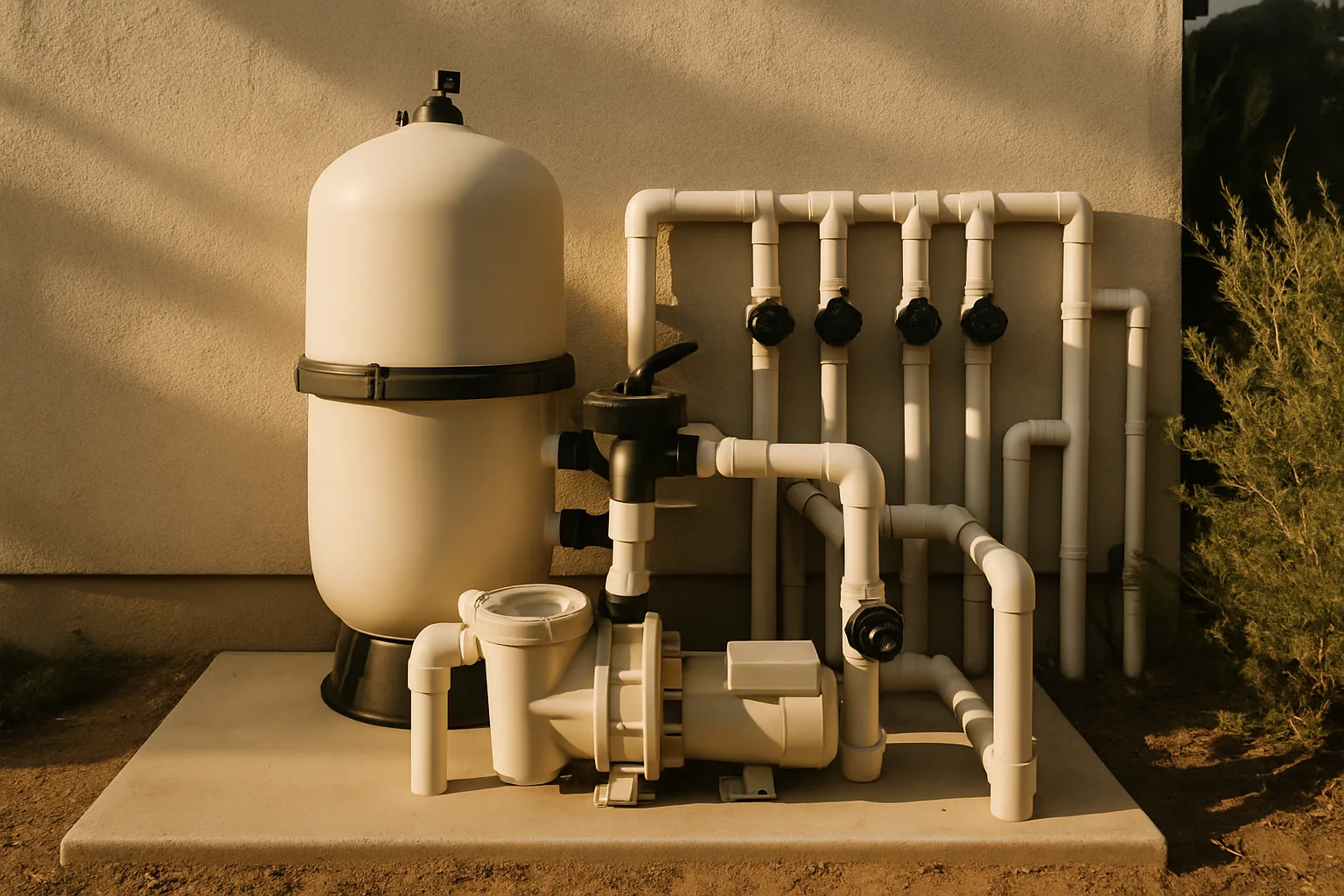
Cartridge filters, DE filters, and sand filters each work differently, and they fail differently too. Blue Line Pool services all three across Los Angeles, so you never need to figure out which system you have before calling. Our crews identify your filter type on arrival, perform the right service for that system, and document the pressure reading before and after. One account, no guesswork.
Los Angeles pool filters face conditions national service guidelines were not written for.
A single Santa Ana wind event can push weeks worth of debris into your pool in 48 hours. Palm pollen, dust, combustion particulates, and organic material hit the water fast, and your filter absorbs all of it. Staying on top of routine upkeep with weekly pool maintenance is one of the most effective ways to prevent filter overload before a major wind event hits.
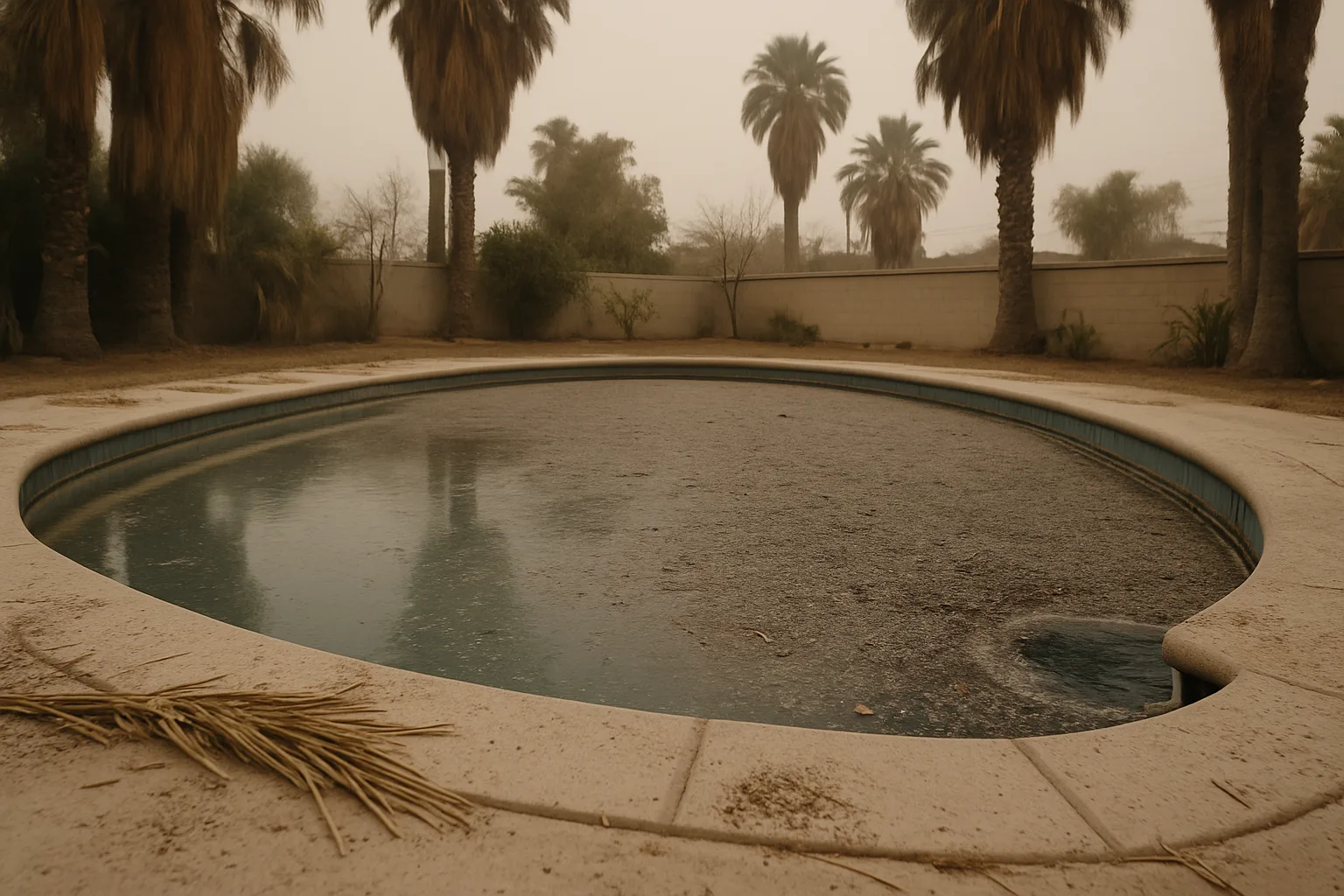
During wildfire season, which now runs much of the year across Ventura and LA counties, ash particles enter the water column. Wildfire ash is chemically active. It raises pH, overwhelms the filter media, and can permanently damage cartridge fabric if it is not flushed out quickly. To understand the full scope of what wildfire ash does to Southern California pools, the damage goes well beyond what a standard backwash can address.
Phosphate loading. The buildup of phosphate compounds that feed algae spikes during Santa Ana events, because wind carries organic debris directly into the pool. Elevated phosphates combined with a clogged filter create conditions for a green pool within days.
If your pool has already turned, green pool cleanup and algae treatment should be your first call, and once the water is clear, chemical balancing after high phosphate events helps prevent a recurrence. We route crews through the San Fernando Valley, Burbank, Glendale, and Pasadena corridors after every major wind event.
Your filter pressure gauge is the most useful diagnostic tool on your equipment pad, and most homeowners have never looked at it. Every customer should know one number: your clean baseline pressure, the reading right after a professional service. Write it down. Take a photo. It matters.
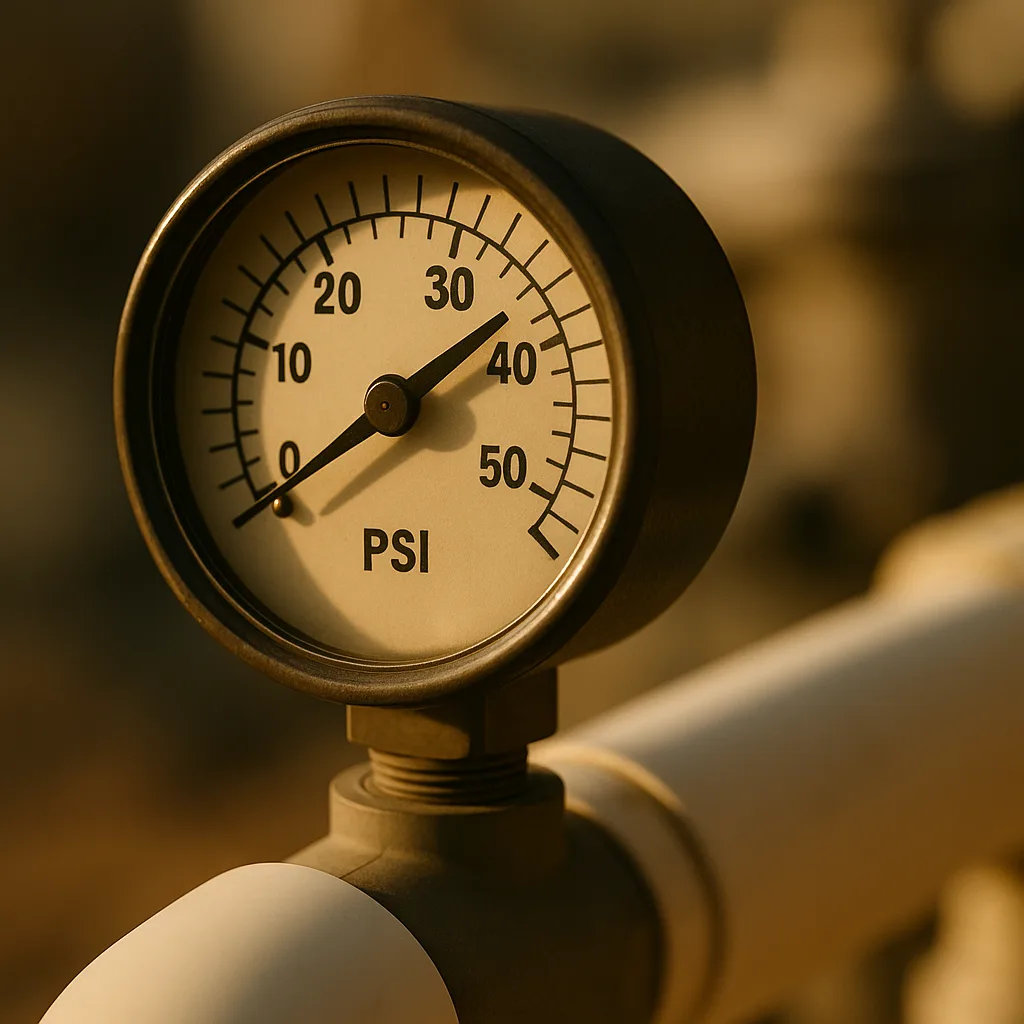
A pressure spike tells you the pump is working harder than it should, flow is dropping, and water quality is starting to suffer. Catching it early, even just texting us a photo of the gauge, helps us schedule the right service before the water turns. Homeowners can also reference pool and spa safety information from the U.S. Consumer Product Safety Commission. If the spike points to a filter beyond cleaning, our pool equipment repair and replacement covers what is needed to get the system back to full performance.
Every truck carries service supplies for all three filter types, so there are no return visits.
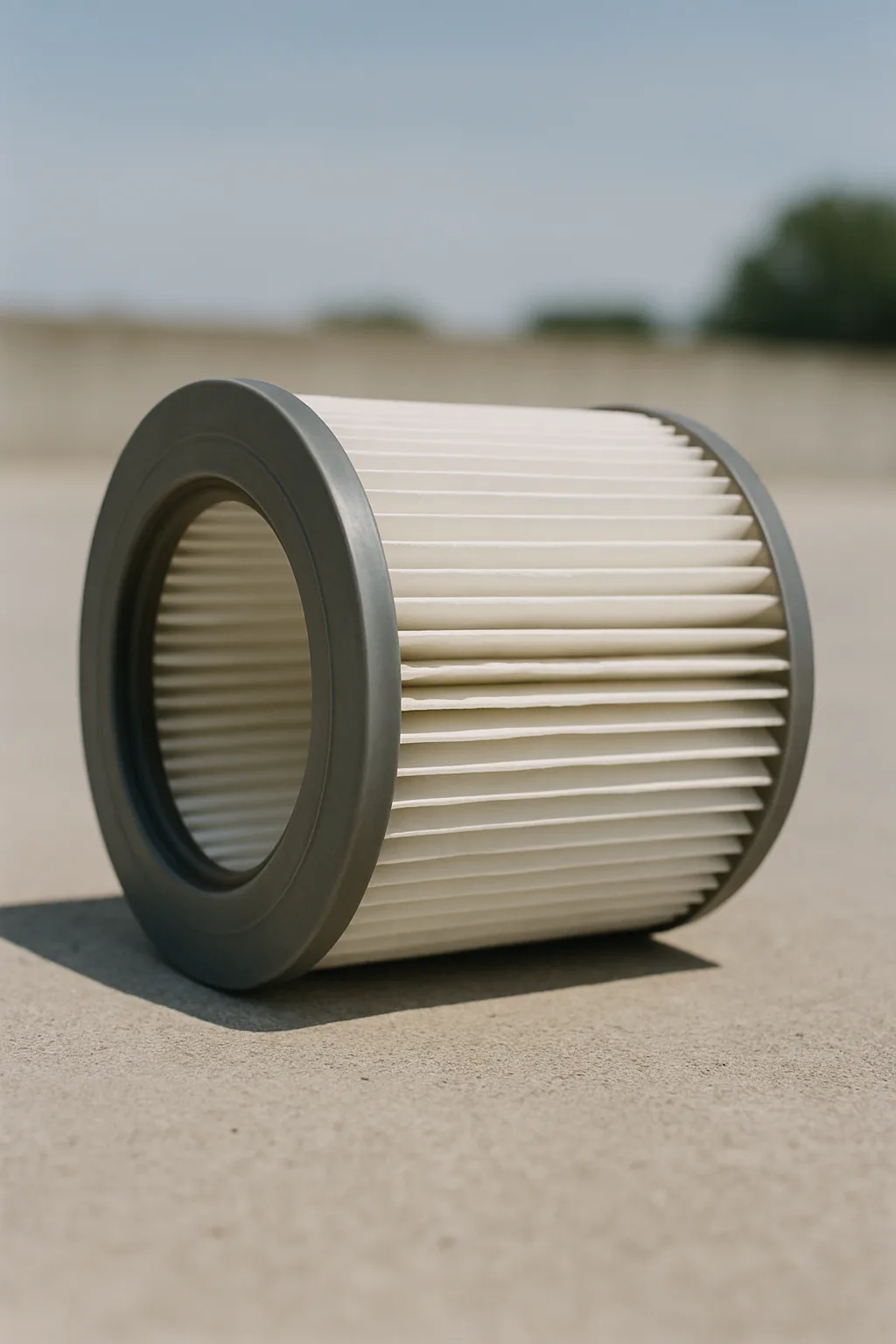
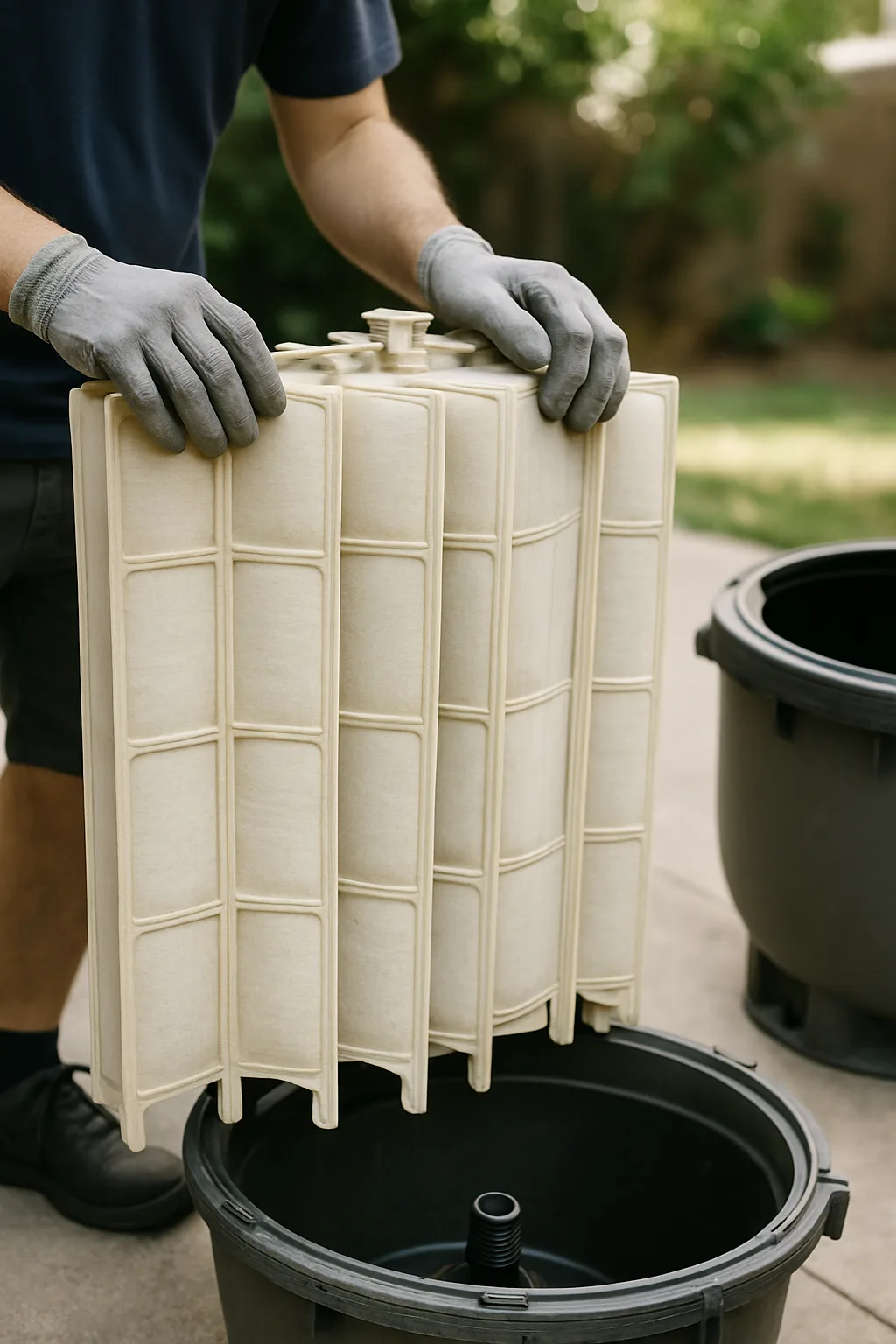
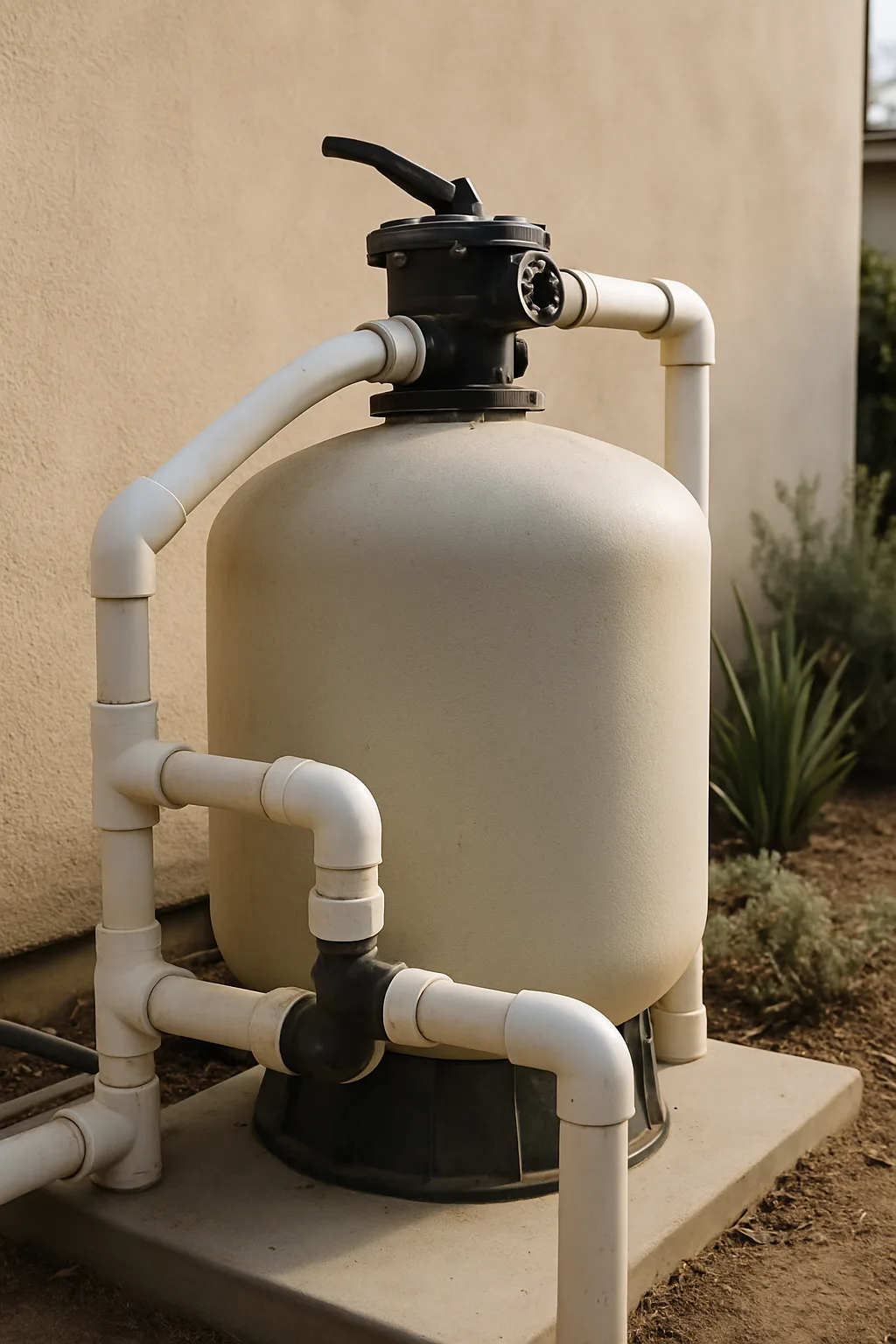
You do not need to know which system you have. We identify it, service it correctly, and explain what we found. Cartridge filters also use the least water because they are never backwashed, one reason the EPA WaterSense program highlights filter choice for pool water efficiency.
Every filter service is documented with a before-and-after pressure reading, no exceptions.
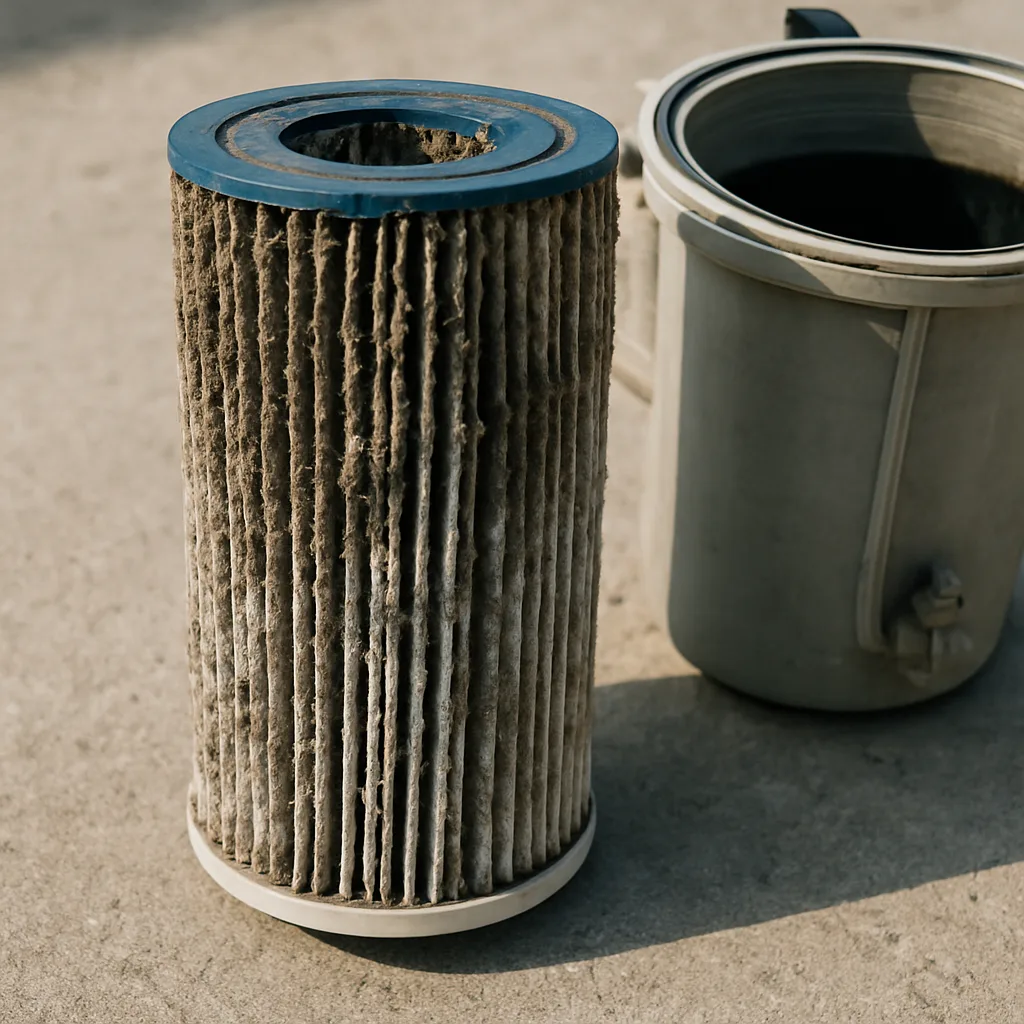
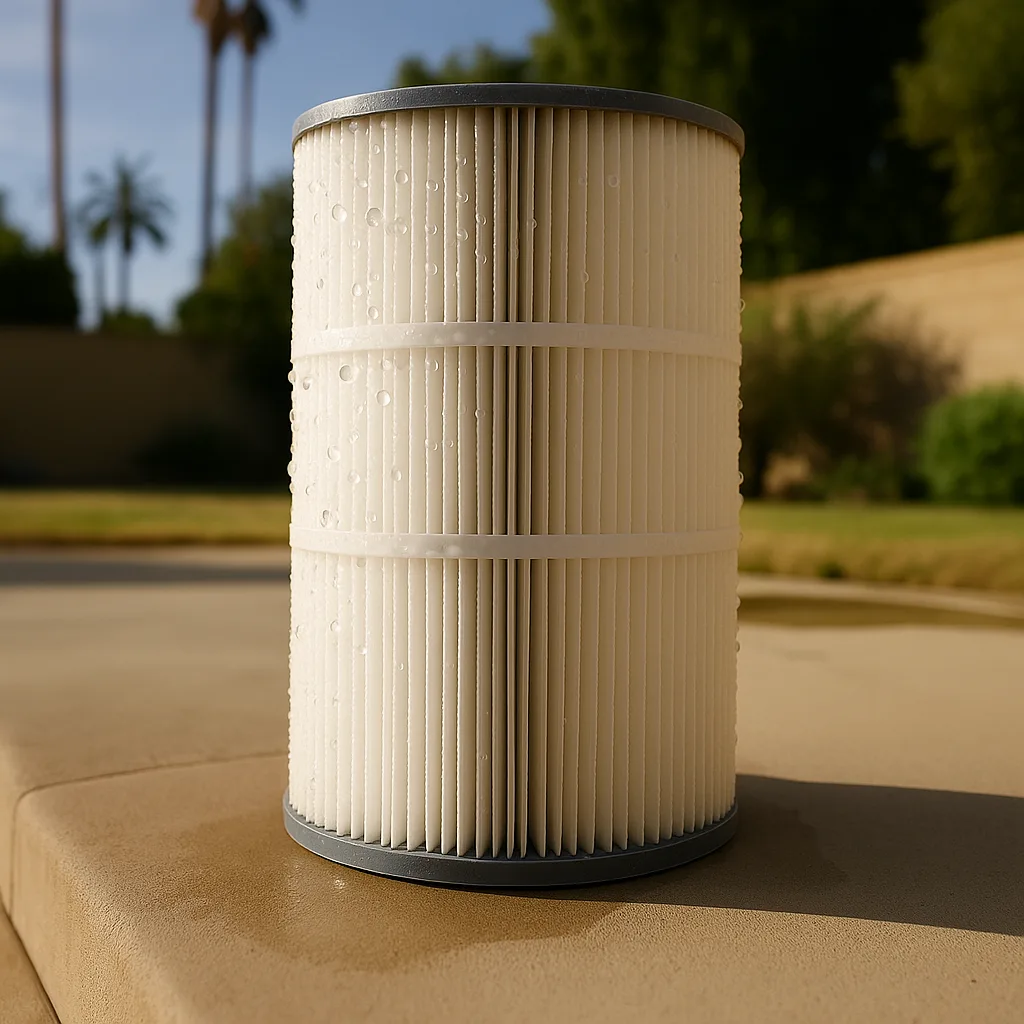
One detail that matters in LA's hard water: cartridge elements should be chemically soaked, not just rinsed, at least once per season to dissolve calcium from the pleats. Rinsing alone leaves calcium in place, stiffening the fabric until flow is permanently restricted.
Some filters can be restored. Others have reached the end of their service life.
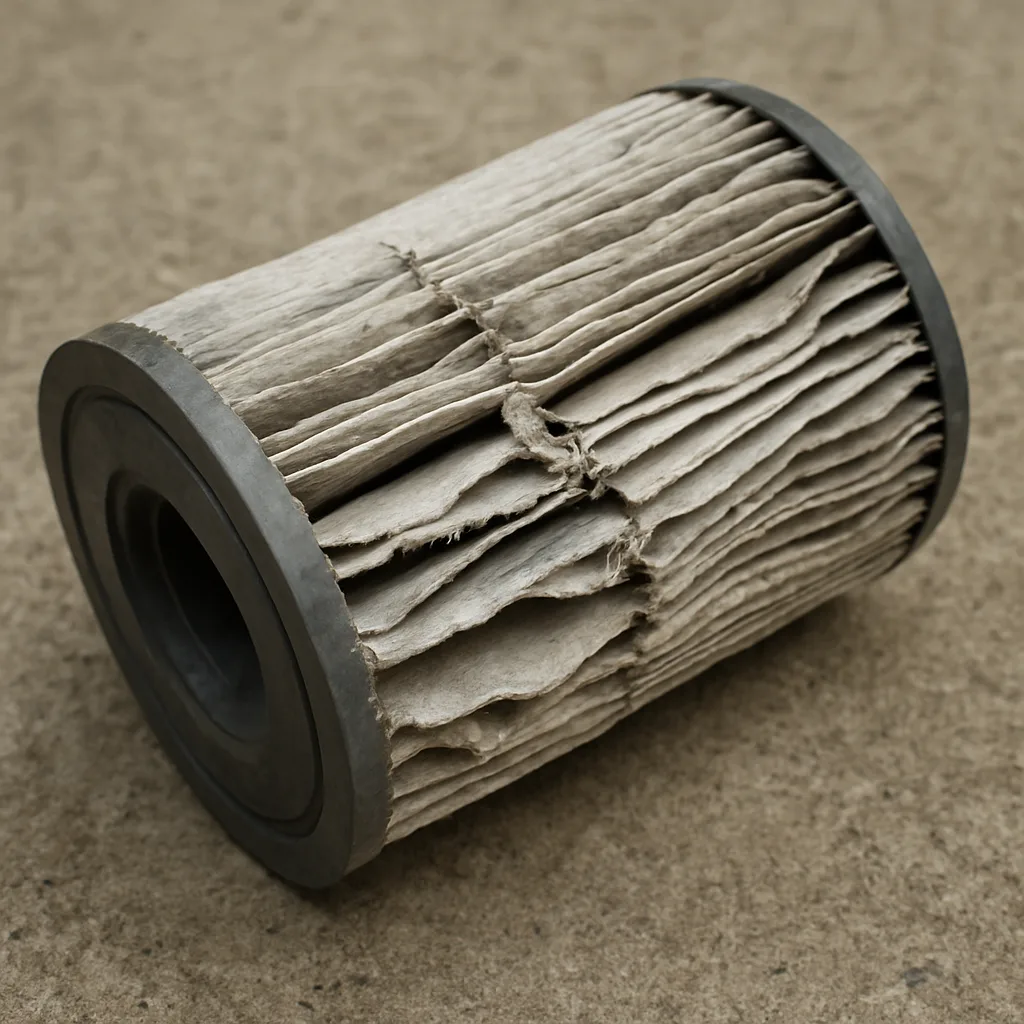
We assess pressure behavior, media condition, and housing integrity. Torn or calcium-locked cartridge fabric, cracked DE grids that let powder back into the pool, or channeled sand all point to replacement.
We carry common cartridge sizes for Pentair, Hayward, and Jandy. DE grids are replaced as a complete set, and sand is refreshed every 5 to 7 years with fresh #20 silica to spec. Replacements meet the NSF/ANSI 50 equipment standard.
We run a full cycle and re-check pressure at both the filter gauge and the pump, and verify the backwash valve seats correctly so it does not bypass unfiltered water back into the pool.
We serve Los Angeles, Beverly Hills, West Hollywood, Burbank, Glendale, Pasadena, Santa Monica, Culver City, Inglewood, Hawthorne, Torrance, Redondo Beach, Hermosa Beach, Manhattan Beach, El Segundo, Long Beach, Compton, Gardena, Carson, Lakewood, Cerritos, Downey, Norwalk, and surrounding communities. Our Thousand Oaks base supports regular routes into the San Fernando Valley and Conejo Valley as well.
Call 805-870-5019 to book an inspectionA filter running above baseline pressure is already costing you in pump strain, water quality, and equipment wear. If you have had a wind event, recent ash fall, or have not had your filter serviced this season, now is the right time.