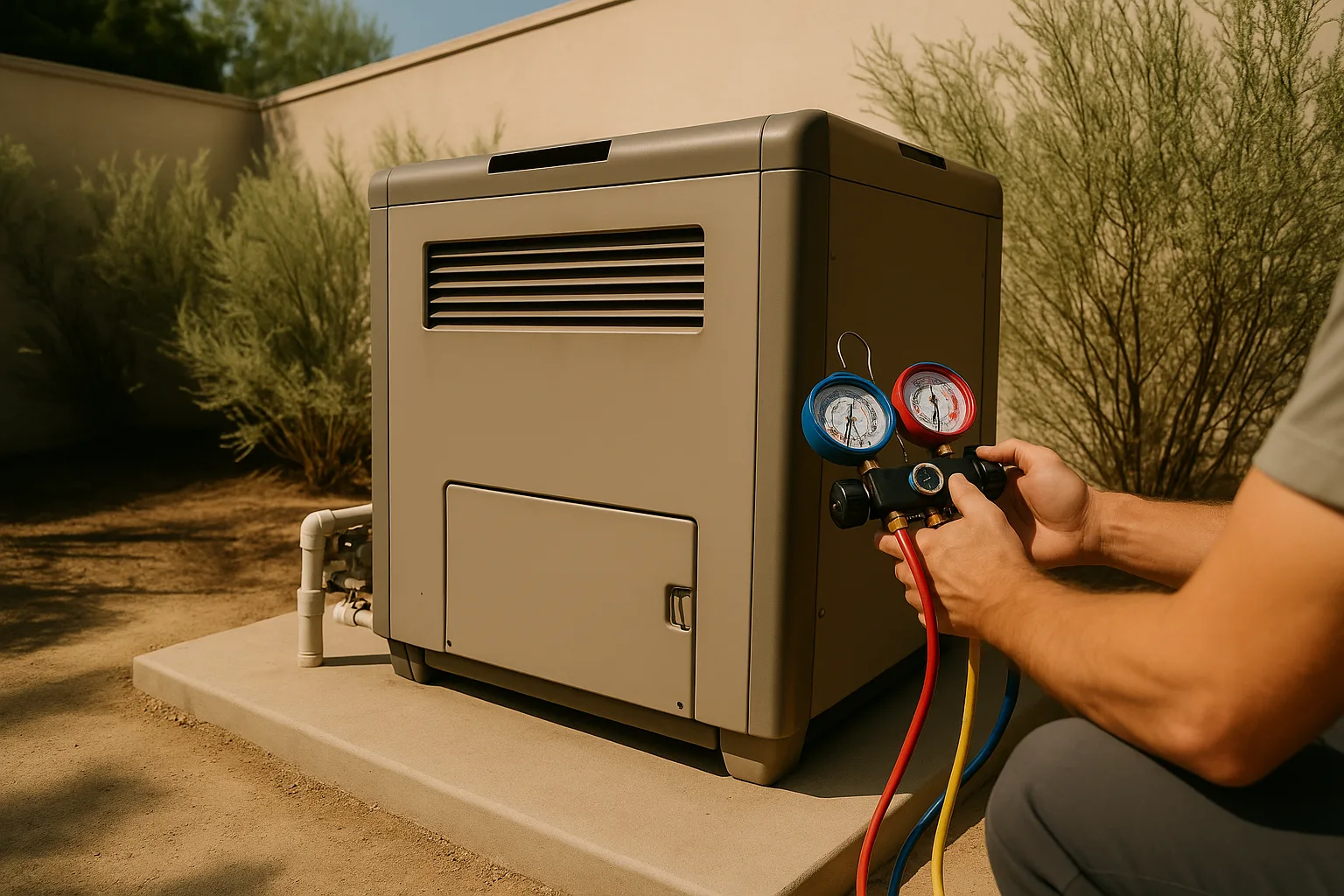
Gas, electric, or heat pump. We diagnose any fuel type in one visit and give you a clear repair-versus-replace answer.
Blue Line Pool repairs and installs all three pool heater types, gas, electric, and heat pump, in the Los Angeles area.
Most heater calls stall because the homeowner reaches a crew that only works on one fuel source, which means waiting days for a callback. We do not operate that way. One call covers every configuration, from a natural gas unit on the Westside to a heat pump in Pasadena to a propane setup in a hillside home above the Valley. The failure pattern here is almost never freeze damage. What actually takes out Southern California heaters is something quieter and slower.
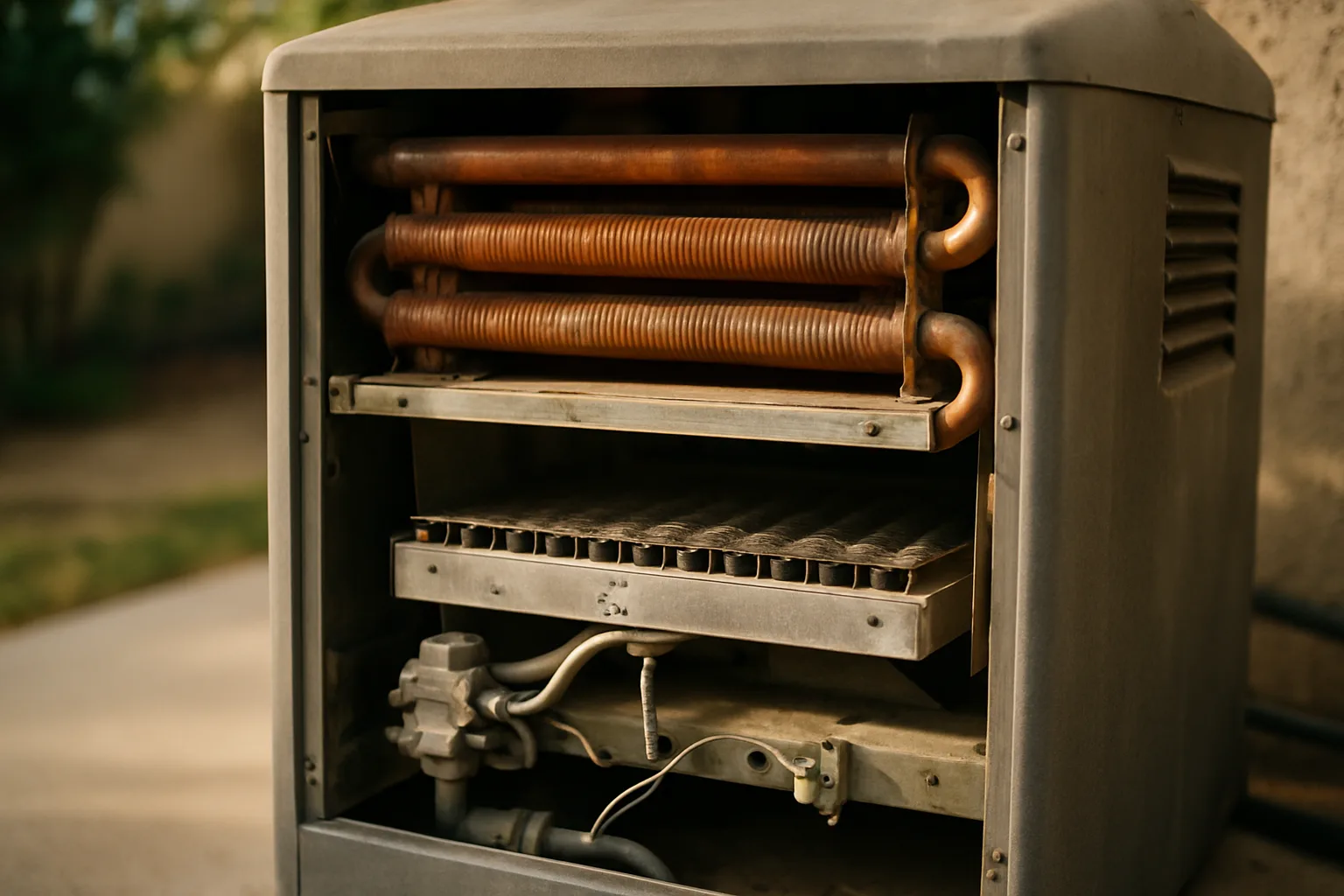
Los Angeles pool heaters wear out from the inside, not the outside, and hard water is the reason.
Los Angeles tap water consistently registers among the hardest in any major US city. Every gallon that passes through your heater carries dissolved calcium and magnesium. Those minerals drop out when water gets hot and coat the heat exchanger, the internal component where combustion heat transfers to pool water. That coating is calcium scale, and it builds up quietly every heating season. Learn more about how LA hard water damages pool heaters.
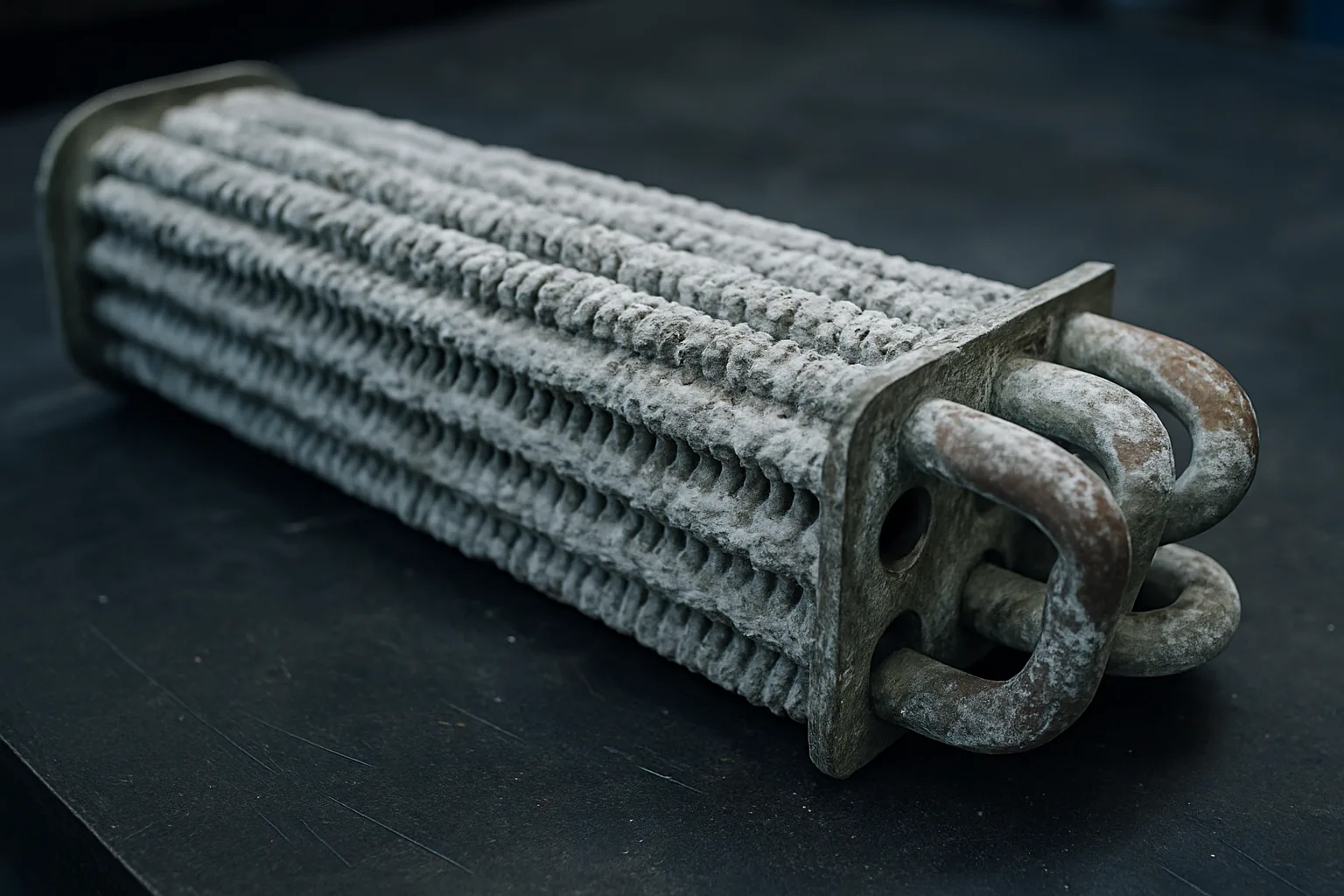
The timeline matters too. LA pools typically run without heat from April through September, so the heater sits idle. Then October arrives, temperatures soften, and the homeowner switches the unit on for the first time in six months. That is the moment scale-related restriction finally becomes a fault condition, a manufacturer-specific error code on the control panel.
Coastal Santa Monica and Manhattan Beach get additional mineral loading from the marine layer. Inland Pasadena, Burbank, and the San Fernando Valley deal with concentrated hard water plus heat cycling that accelerates scale. The geography changes the chemistry, and your heater service needs to account for both.
Every error code on a pool heater control panel points to something specific, and reading it correctly is the whole job.
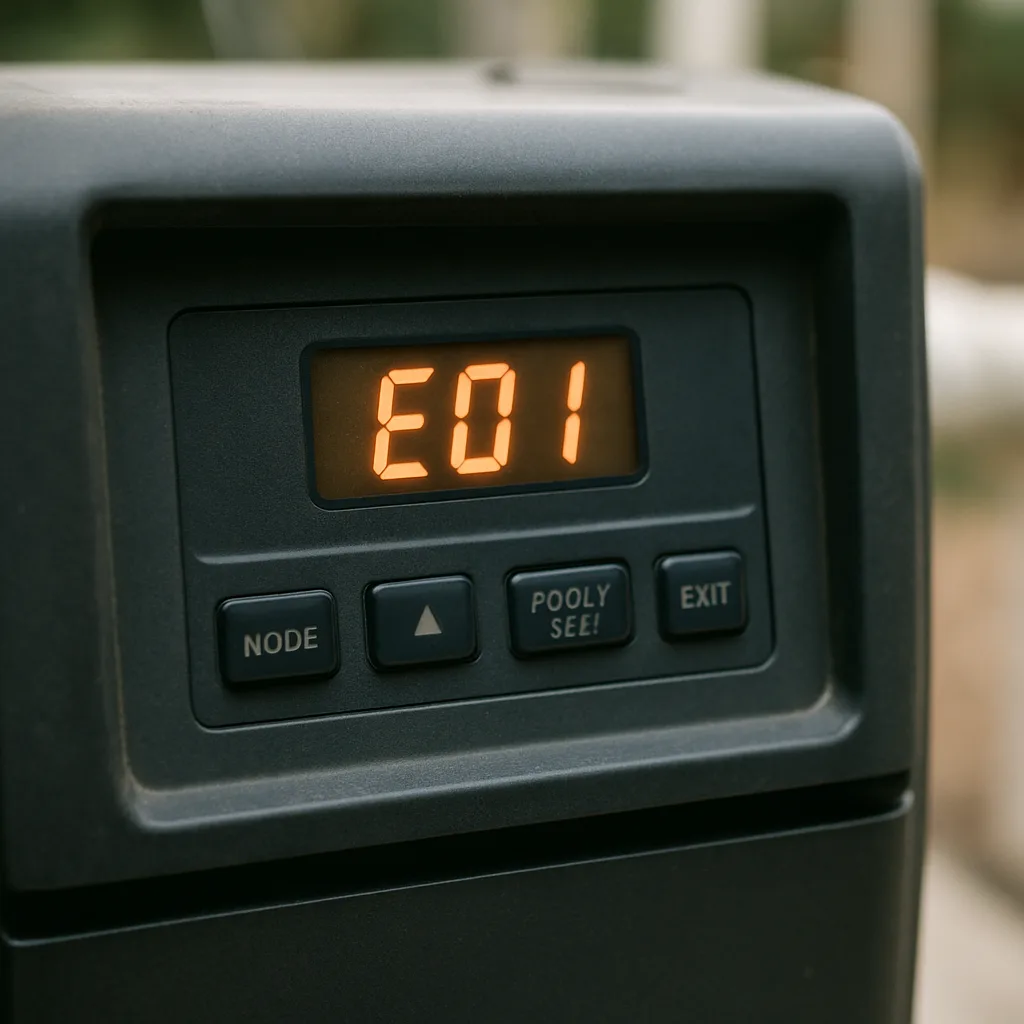
The same symptom, "it ignites for a second and then shuts off," could mean five different things. But reading the fault condition on the display narrows the diagnosis fast. One Beverly Hills natural gas unit had run fine for three seasons, then threw an HLS code, which on that brand indicates a high-limit switch trip. That switch is a safety device that shuts the heater down when the water temperature at the heat exchanger exceeds a safe threshold. The cause was calcium scale inside the heat exchanger restricting flow so severely that the water was overheating at the point of contact. The burner was fine. The gas line was fine. It was a descaling job, and the heater ran that same afternoon.
Not every code has an easy fix, but the code is information, and it tells you whether you are looking at a maintenance issue, a component failure, or a heater that has reached the end of its serviceable life.
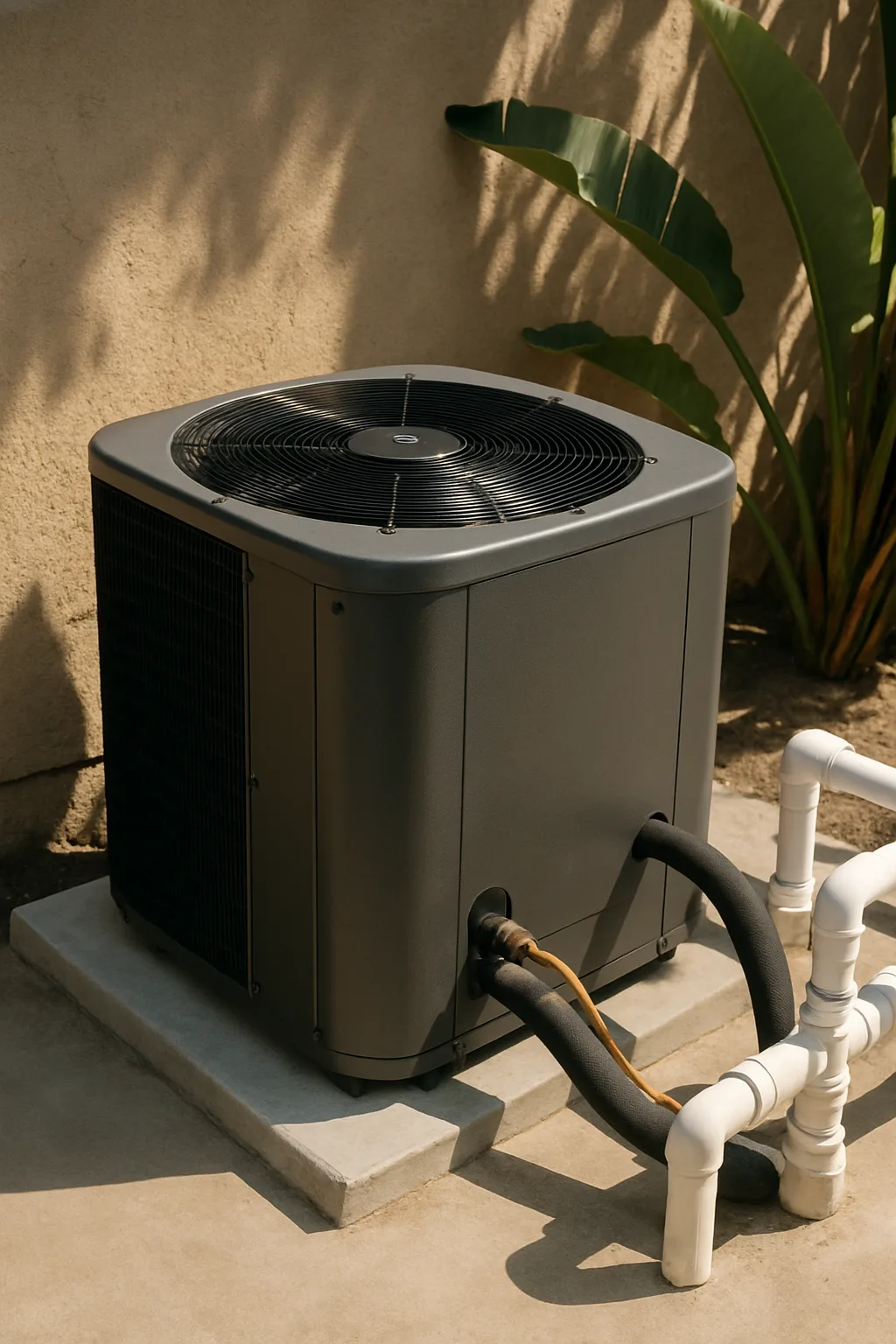
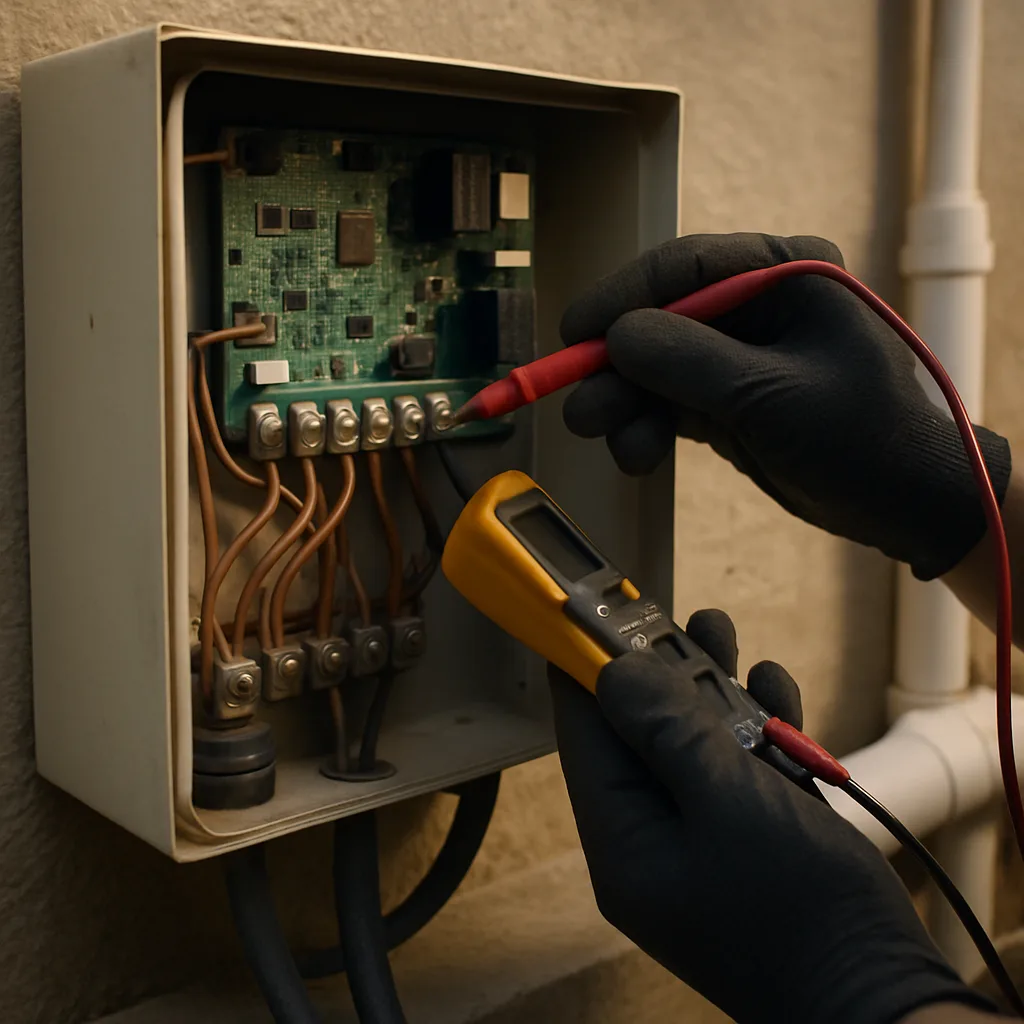
A heat pump heater, which extracts heat from ambient air rather than burning fuel, shows refrigerant pressure faults or defrost cycle errors. A gas heater throws ignition codes, pressure switch faults, or thermostat errors. Electric heaters have their own failure language. Reading those codes accurately, with the right manufacturer documentation, is where the real diagnostic work happens. Our crews come to the equipment pad with brand-specific knowledge across major manufacturers, which is what makes a same-day diagnosis possible.
You do not need to know your heater's fuel type before you call. We identify it and diagnose it on the same visit.
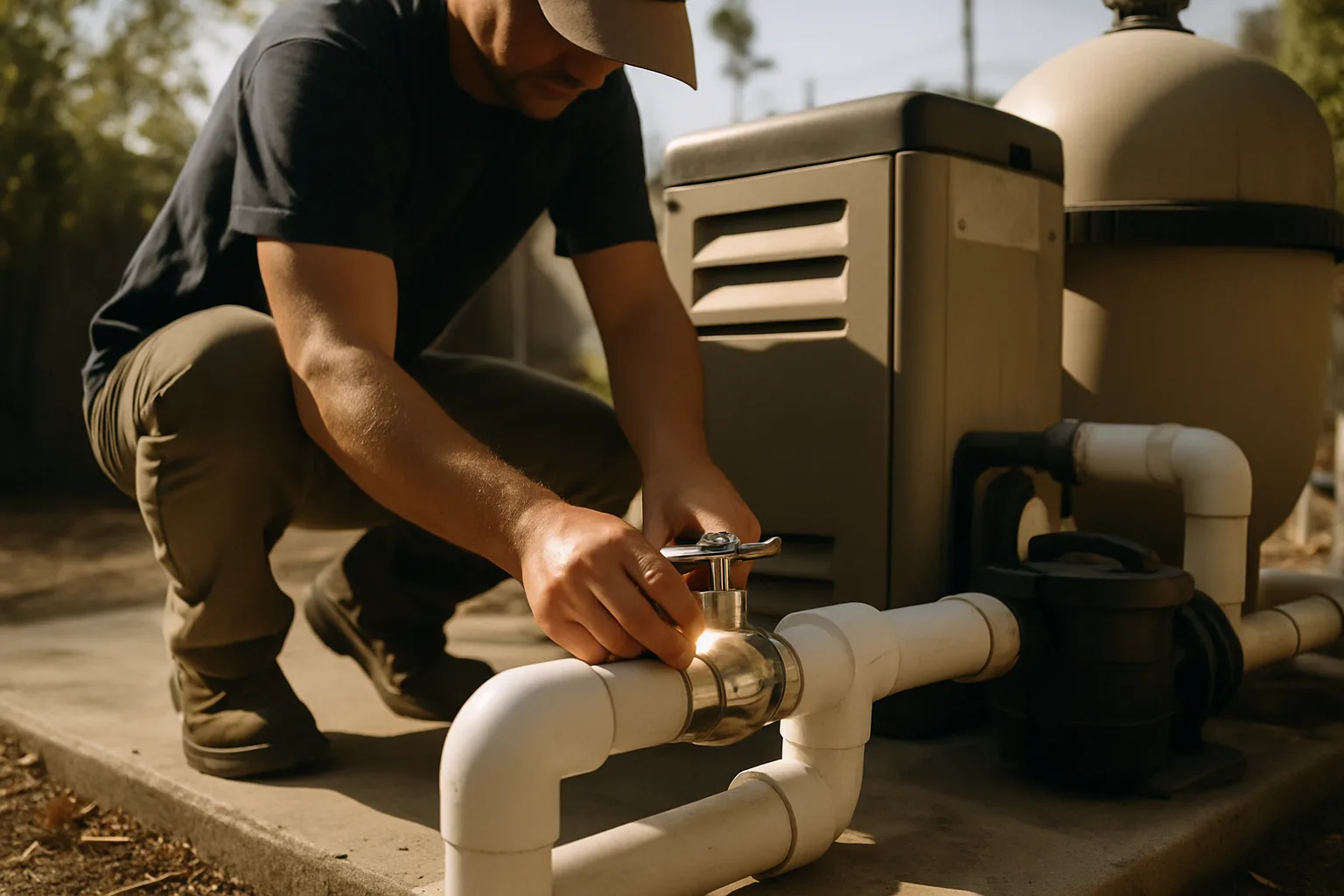
The BTU rating, the fuel source, the control system, that is information we gather when we arrive. The technician identifies the configuration, pulls any active fault conditions, and runs a physical inspection of the heat exchanger, bypass valve, and burner assembly. The bypass valve, a plumbing component that diverts water around the heater during maintenance, is one of the most commonly misadjusted parts after any nearby equipment work, so we check it every time. After that inspection you get a clear answer: what is wrong, what it takes to fix, and what replacement would cost if repair is not the better call. No work starts without your approval.
The repair-versus-replace decision comes down to one number: cost-per-remaining-year.
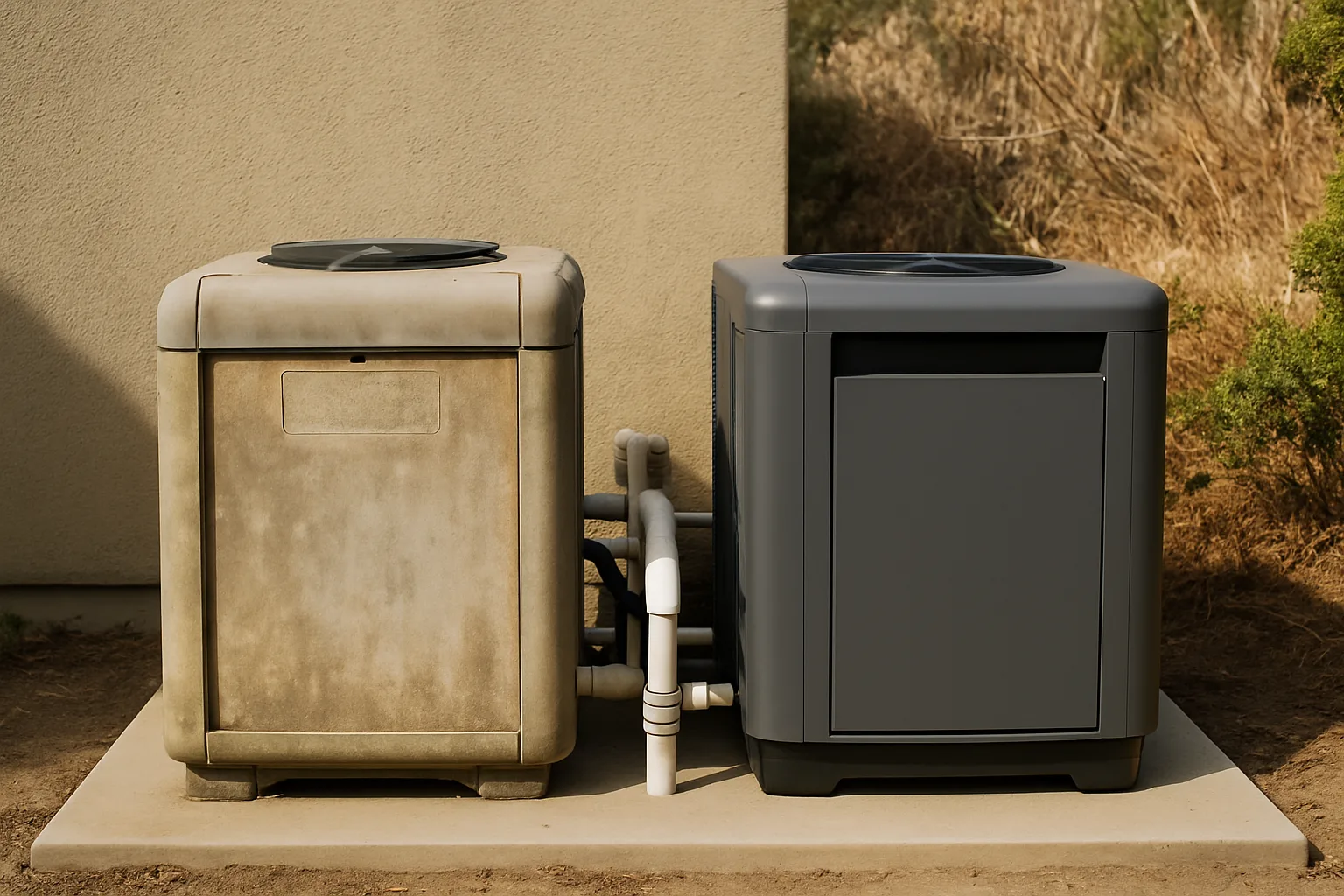
We put all of that in plain language before any work begins, as part of our full pool equipment repair and replacement service. All new equipment meets current California Title 20 energy standards where applicable. The goal is a decision you feel confident about, not one made under pressure.
Blue Line Pool follows a consistent three-phase repair process on every heater call.
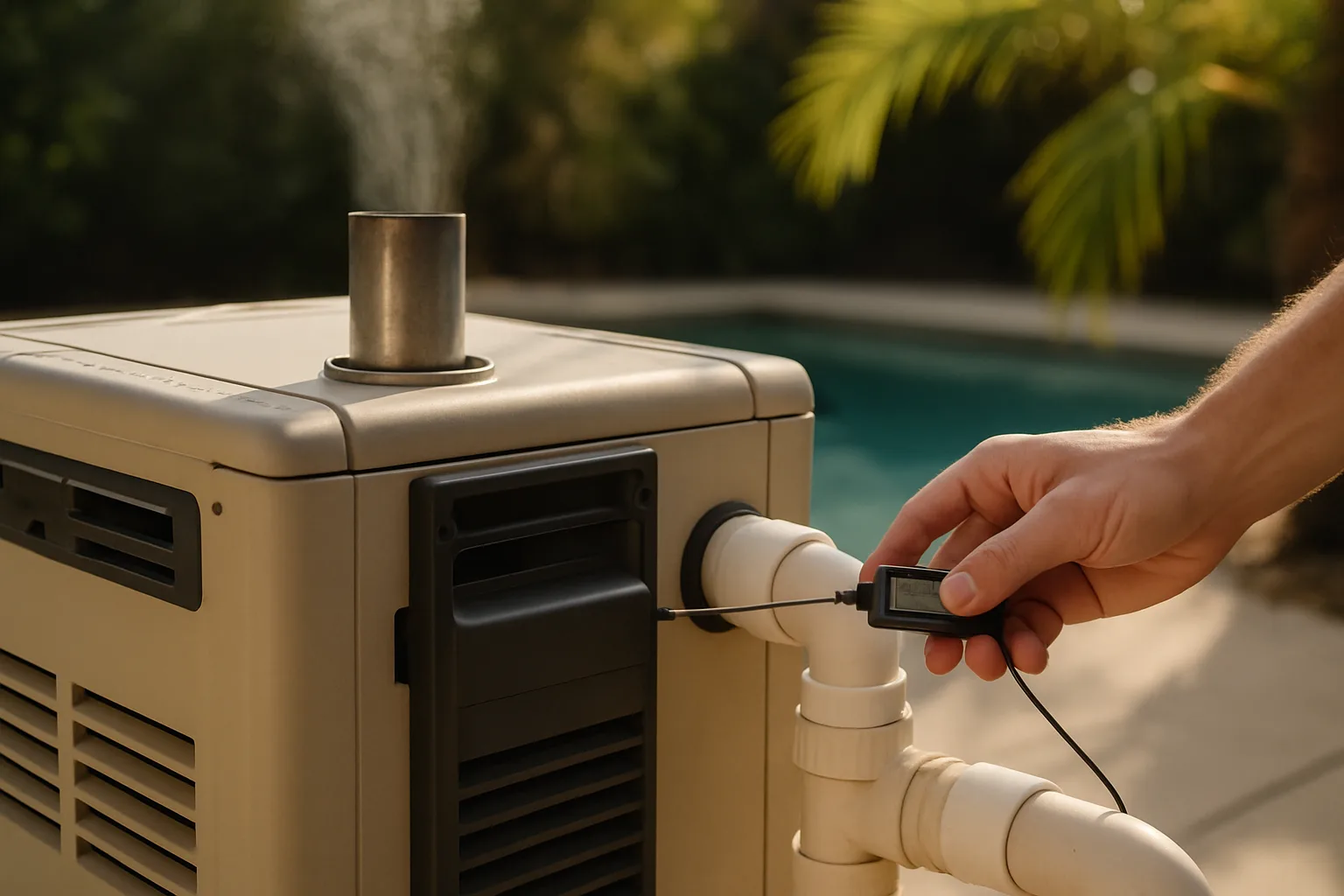
We read all active and stored fault conditions, test water flow through the heat exchanger, check gas pressure or electrical supply by fuel type, and inspect the bypass valve. We document everything before touching a tool.
Approved repairs happen at the equipment pad wherever possible: descaling, igniter replacement, pressure switch work, bypass valve adjustment, thermostat recalibration. New installs are coordinated with plumbing, gas or electrical verification, and control integration.
We run a full heat cycle on-site, confirm target temperature, verify no fault codes return, and check for leaks. For finer control, we also offer pool automation for heater control. You see the pool heating before we leave.
From our Beverly Hills location, our crews reach West Hollywood, Culver City, Santa Monica, and the South Bay quickly. We also serve Burbank, Glendale, Pasadena, and the San Fernando Valley corridor, with Ventura County coverage in Thousand Oaks, Simi Valley, and Oxnard, and Orange County and Inland Empire clients in Anaheim, Riverside, Corona, and Rancho Cucamonga. Homeowners dealing with calcium scale often also benefit from our pool filter service, and we provide spa and hot tub heater repair throughout the same area.
Call 805-870-5019 to scheduleA pool heater that will not fire in October does not have to mean a cold pool all season. We handle gas, heat pump, and electric heater repair and installation across the region. For general pool safety, see the CPSC pool and spa safety center.