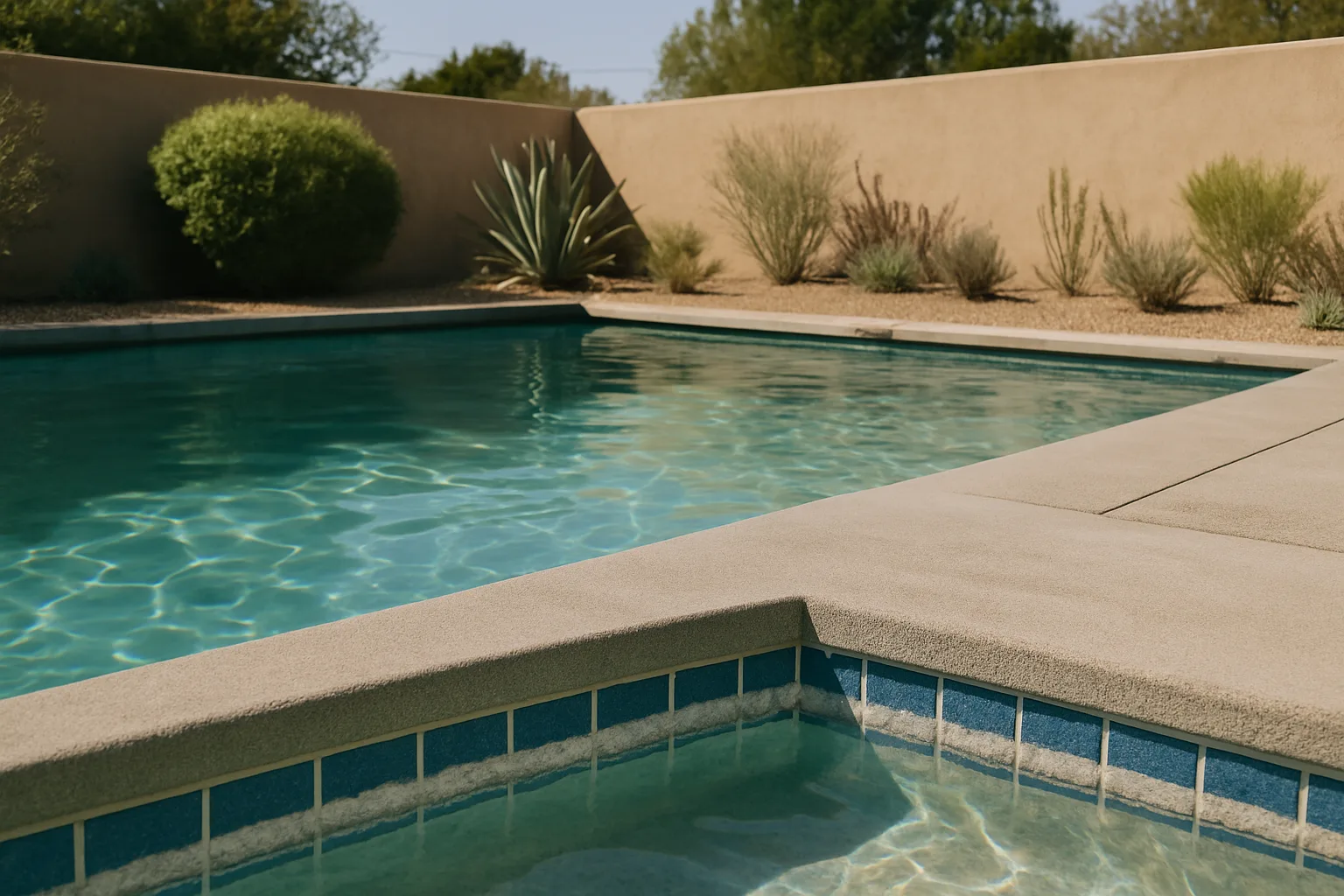
That white waterline ring is calcium scale, and it is fully removable. We match the removal method to your tile and slow the return with the right chemistry.
Calcium scale at the waterline is the most common tile problem in Los Angeles pools, and it is fully treatable.
That chalky white or gray ring is not mold, algae, or a cleaning failure. It is calcium carbonate scale, the dissolved calcium in your water leaving itself behind every time the surface evaporates. In Los Angeles, where tap water arrives from the Colorado River and the State Water Project already loaded with calcium, this happens fast and without pause. The good news is it comes off. The key is knowing what type of scale you have and which method matches your tile.
Los Angeles tap water is among the hardest in any major American city, and that is the root of every waterline stain.
Scrubbing does not fail because you are not trying hard enough. Calcium carbonate scale does not dissolve with physical friction. It bonds to the tile surface through a chemical process, and only a chemical or abrasive removal method breaks that bond.
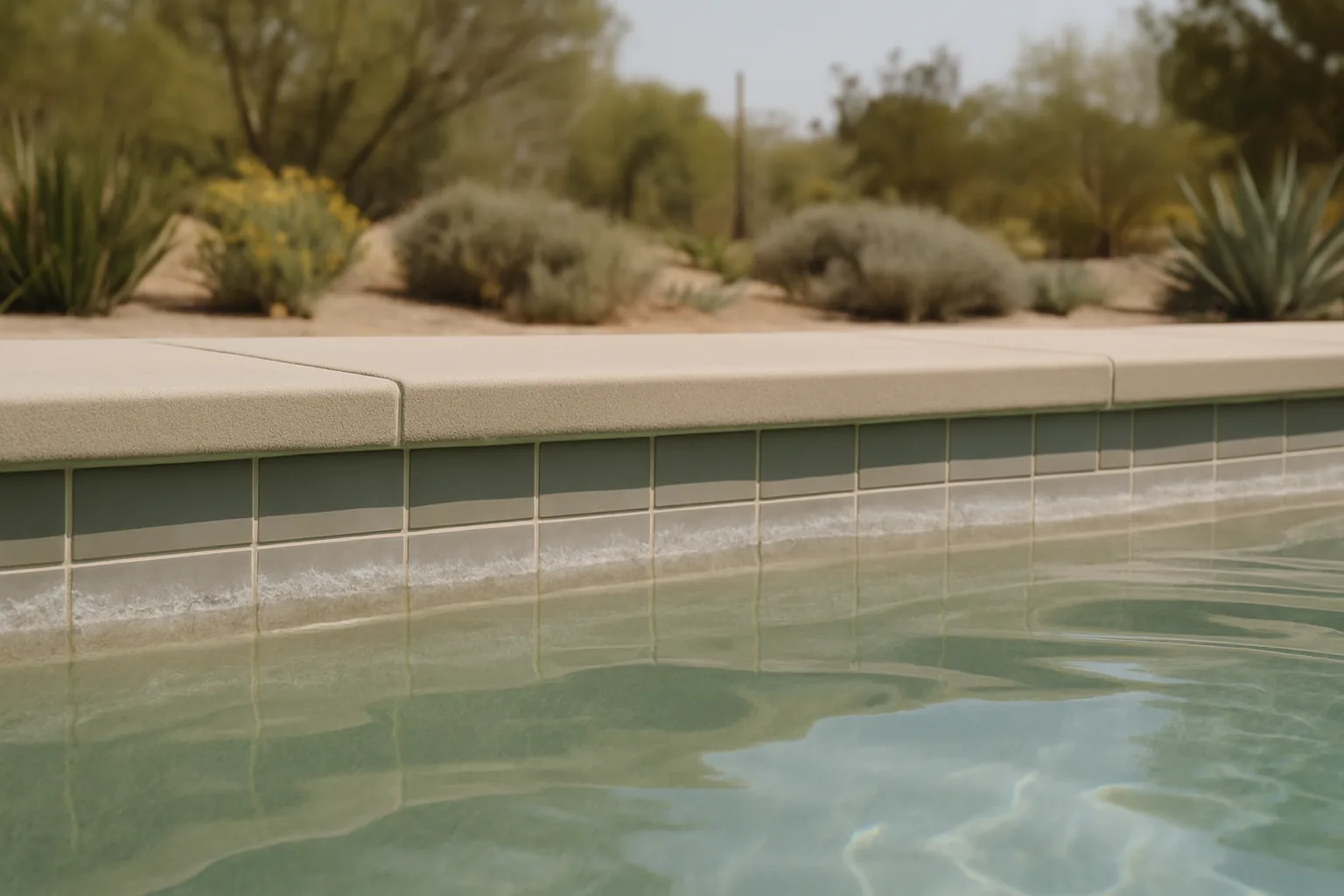
The mechanics are simple. Your pool loses water to evaporation, especially during LA's long, sunny summer. You refill from the tap, fresh calcium enters, the water evaporates again, and the calcium stays. Calcium hardness, the measure of dissolved calcium ideally at 200 to 400 ppm, climbs with every cycle, and LA source water regularly delivers above that hardness threshold, which LADWP's own water quality data reflects. You can read more about why LA pool water is so hard. Inland areas like Ontario, Pomona, and Riverside see source calcium even higher. The ring keeps coming back unless the water chemistry and the tile are both addressed, which is why our pool water chemistry balancing is built to manage calcium hardness.
The type of scale on your tile determines the removal method, and getting that wrong can damage the surface permanently. Standing at the waterline, the first question is not how long it has been there. It is what color is it.
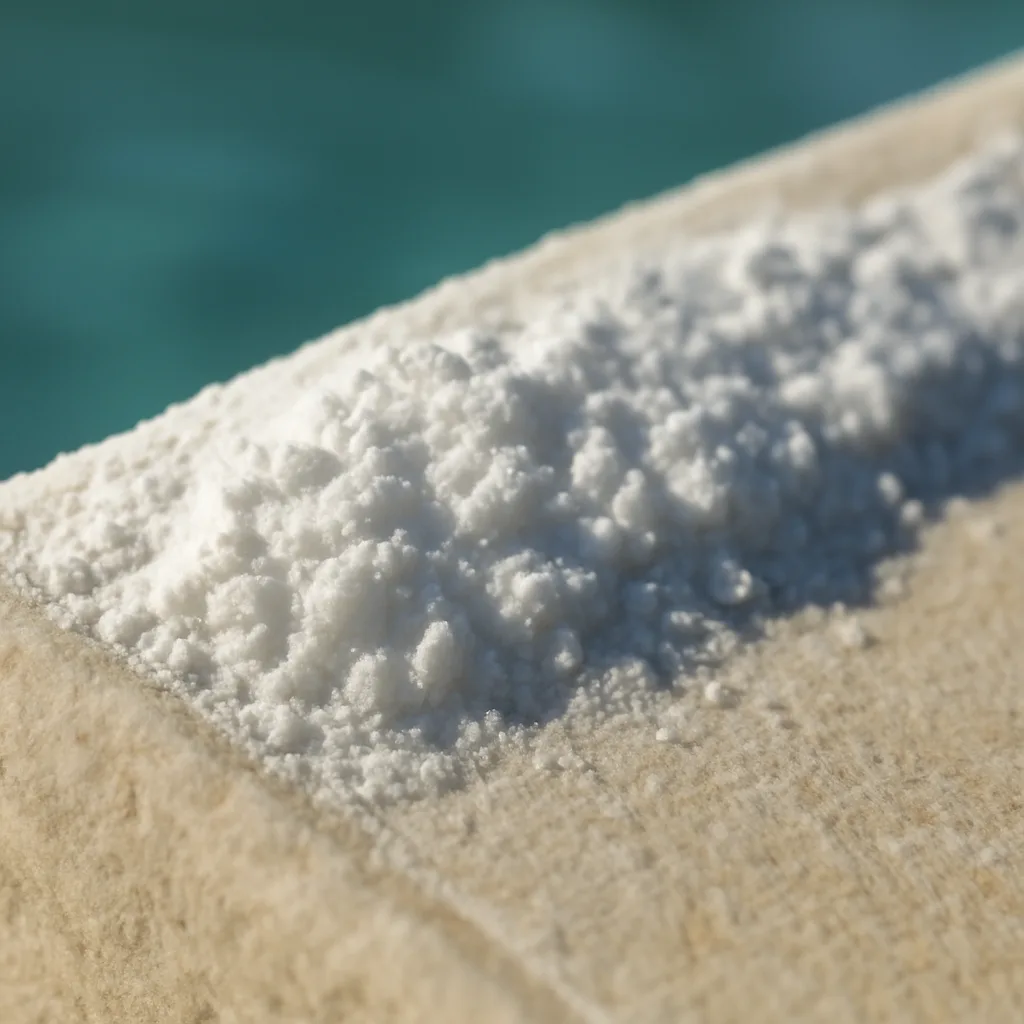
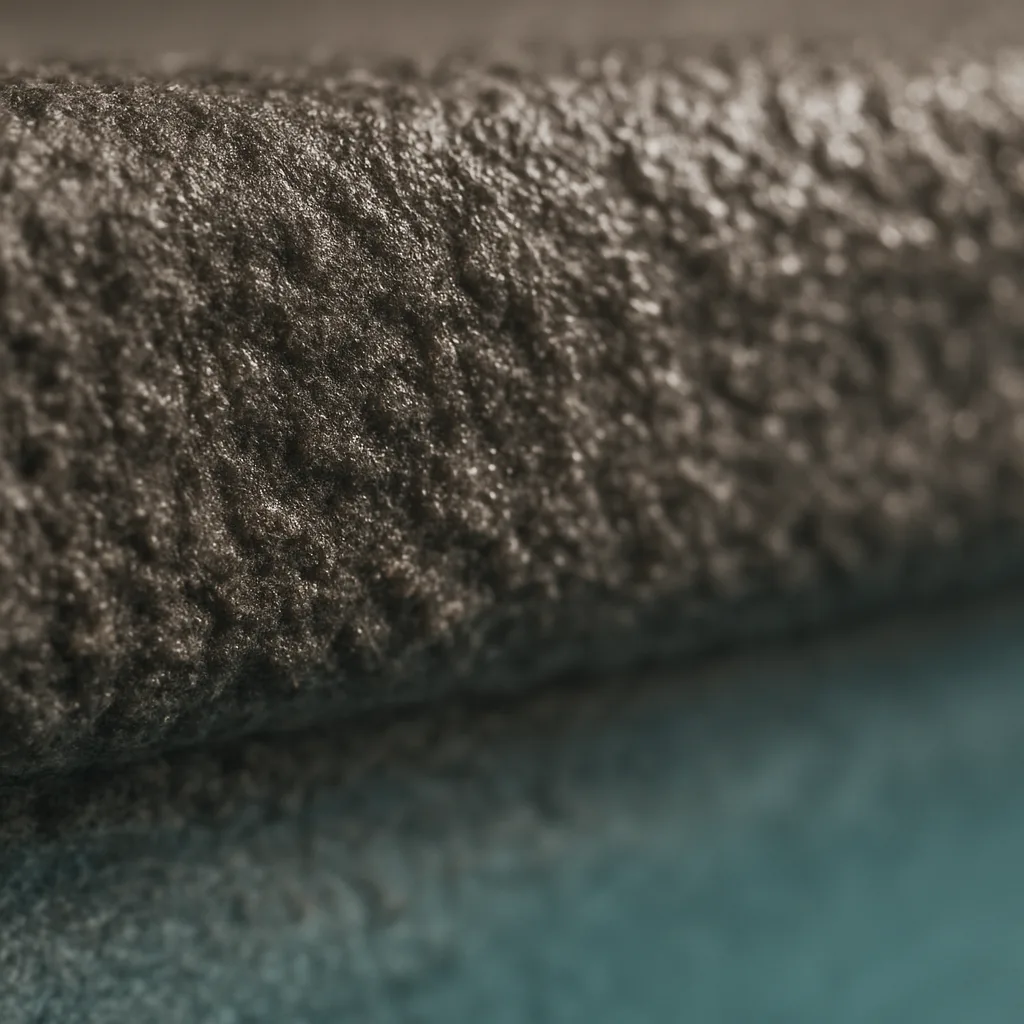
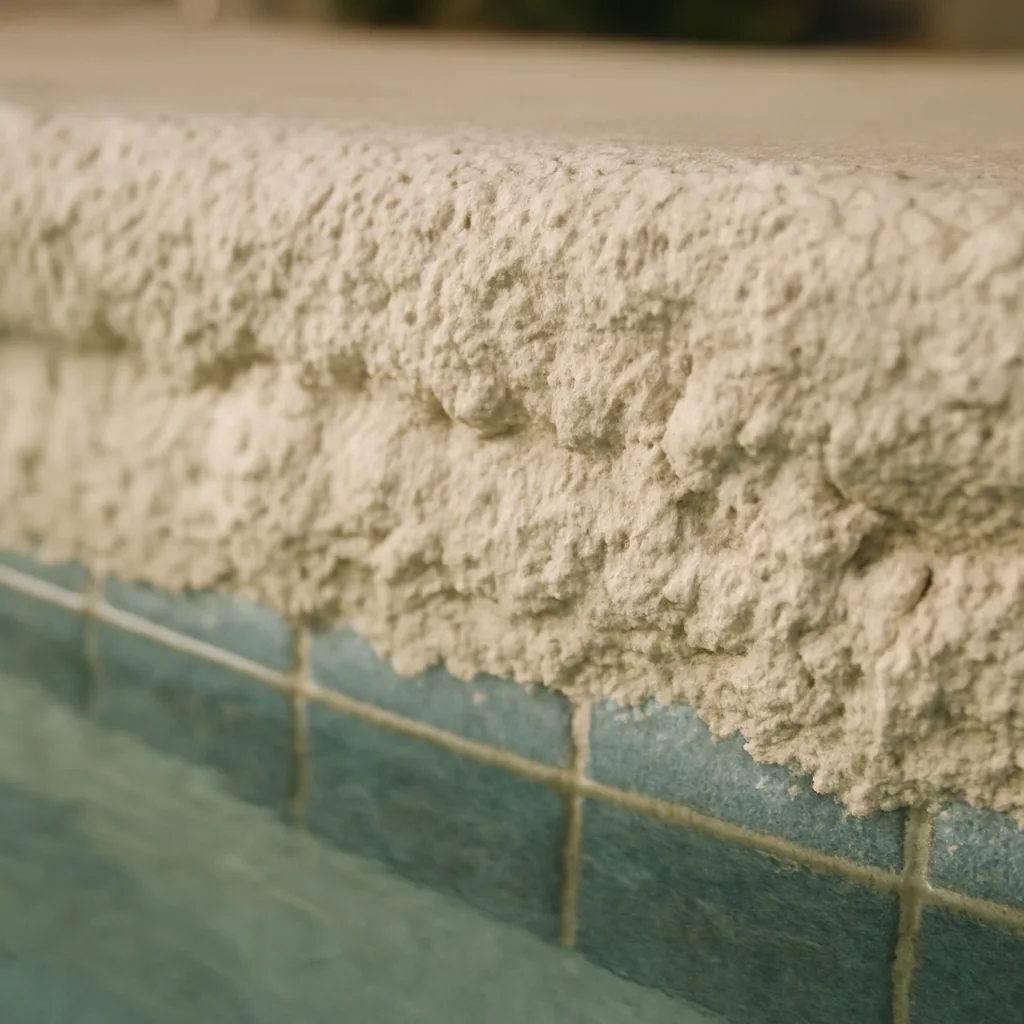
Calcium carbonate is the most common type. It is white or off-white, powdery or chalky to the touch, and forms relatively quickly, often within one season. It is still porous enough to respond well to bead blasting or a carefully applied acid solution. Caught early, it comes off cleanly.
Calcium silicate is a different situation. It is darker, gray with a brownish tint, and hard to the touch. This is what happens when carbonate scale is left untreated for multiple seasons and the calcium reacts with silica into a much denser crystal. It does not respond to light acid, and bead blasting alone may require multiple passes.
A practical test: wet your finger and press it against the deposit. If it smears slightly or you can chip small pieces with a fingernail, it is likely carbonate. If it is smooth, hard, and unmoved, it is likely silicate. Either way it is removable, but the method and timeline differ significantly, which is why we assess before touching anything.
The wrong removal method on the wrong tile causes permanent damage, so we assess first, every time.
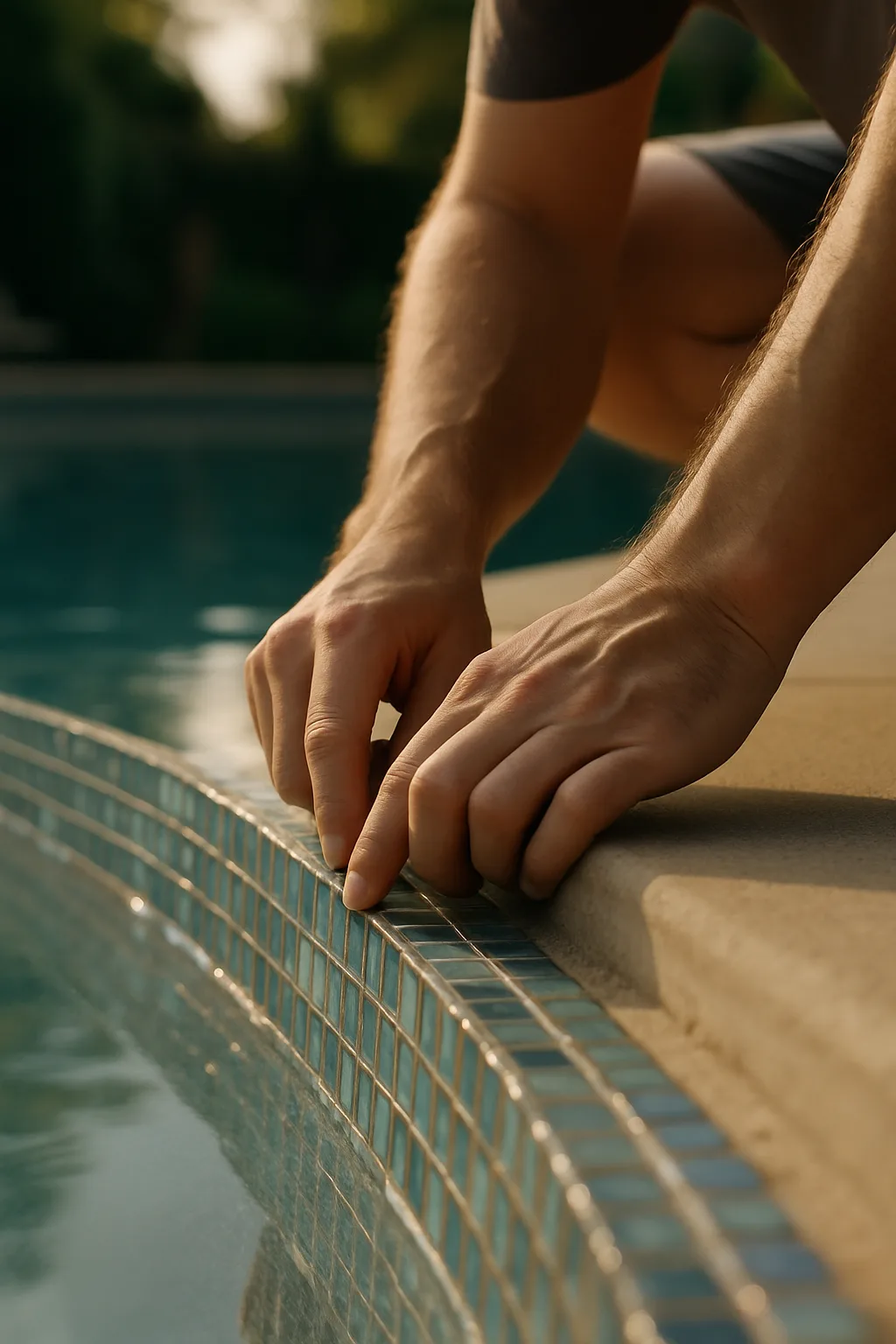
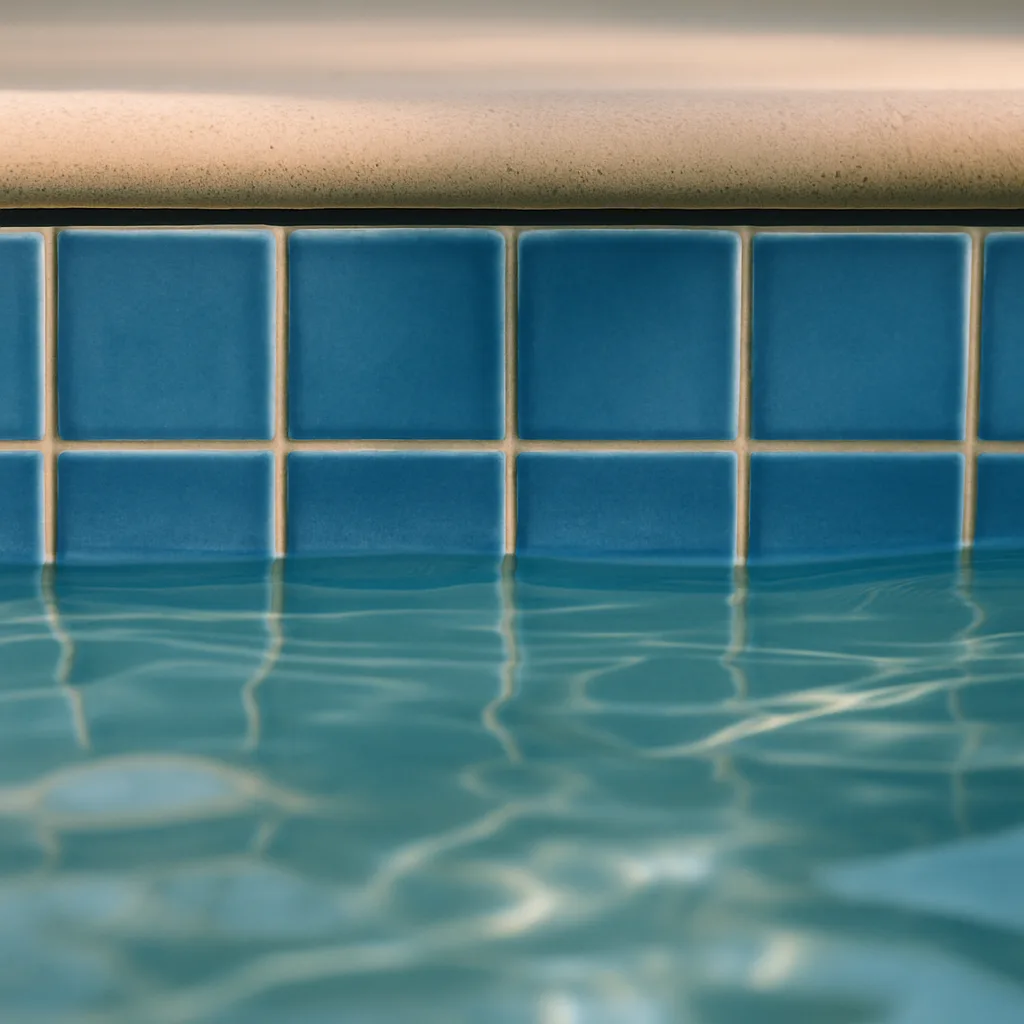
Glass tile is particularly vulnerable. It scratches at a much lower pressure than ceramic, so bead blasting on glass requires finer bead media and lower PSI settings that differ measurably, not marginally. Natural stone, common on higher-end Westside and Beverly Hills properties, can etch and lose its finish if acid pH is not precise.
On arrival, the first step is always tile identification and scale density assessment: tile material, glazed or unglazed surface, scale color and hardness, and grout condition. Grout is often the first casualty of an aggressive acid wash applied without that assessment, etching out and requiring repointing at significant additional cost. Protect the tile finish, remove the scale completely, in that order.
Each method has a purpose. The tile and scale type determine which one we use.
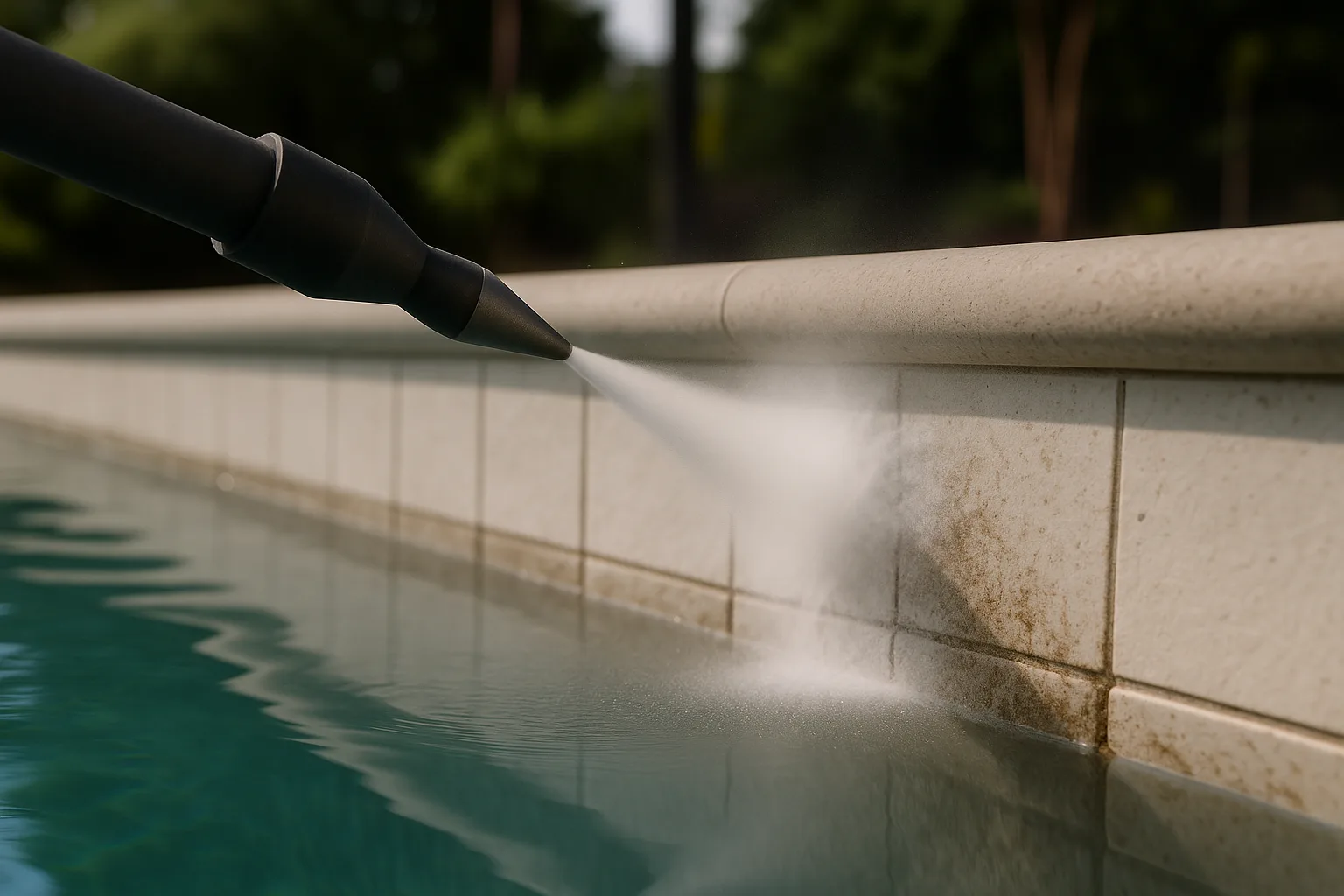
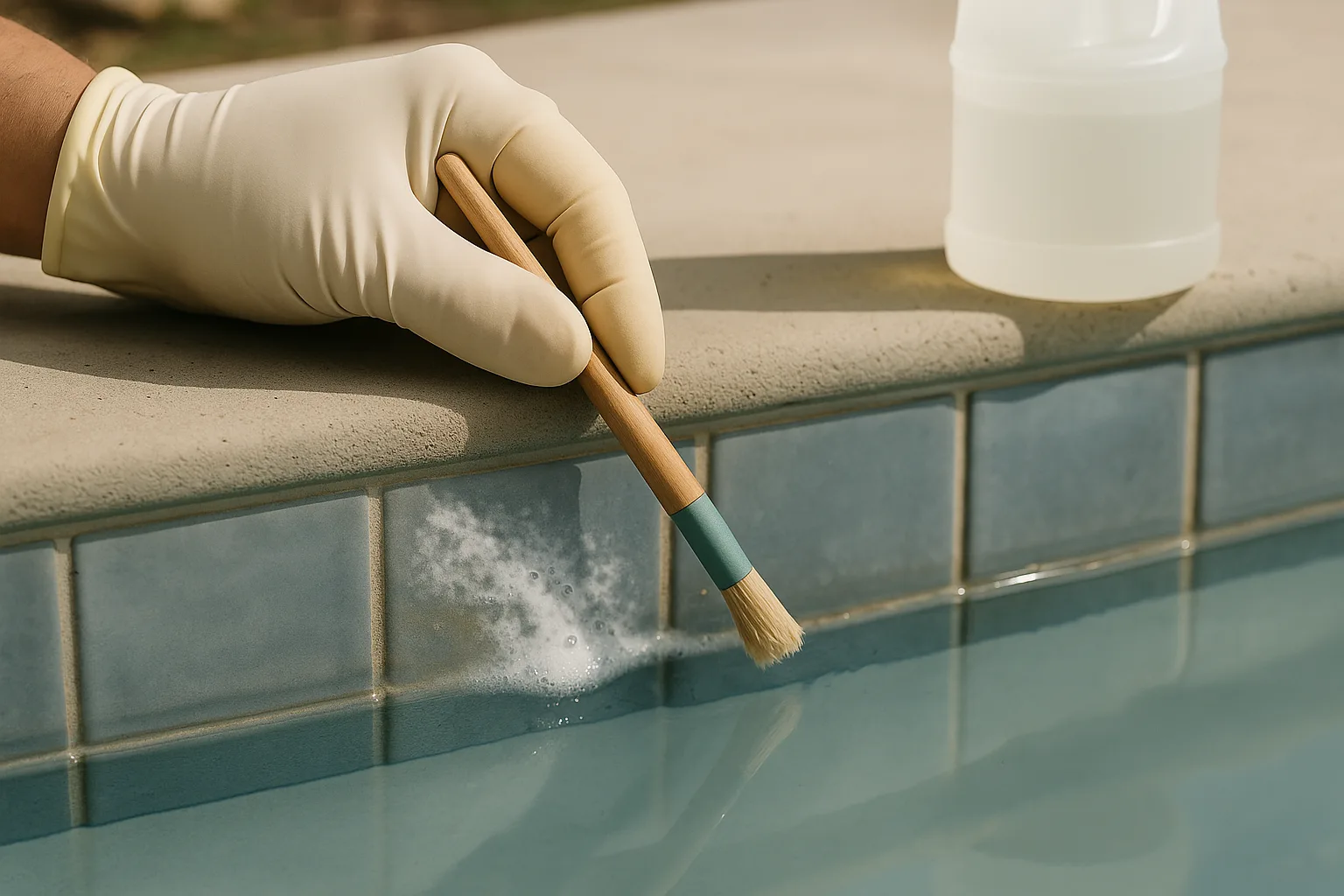
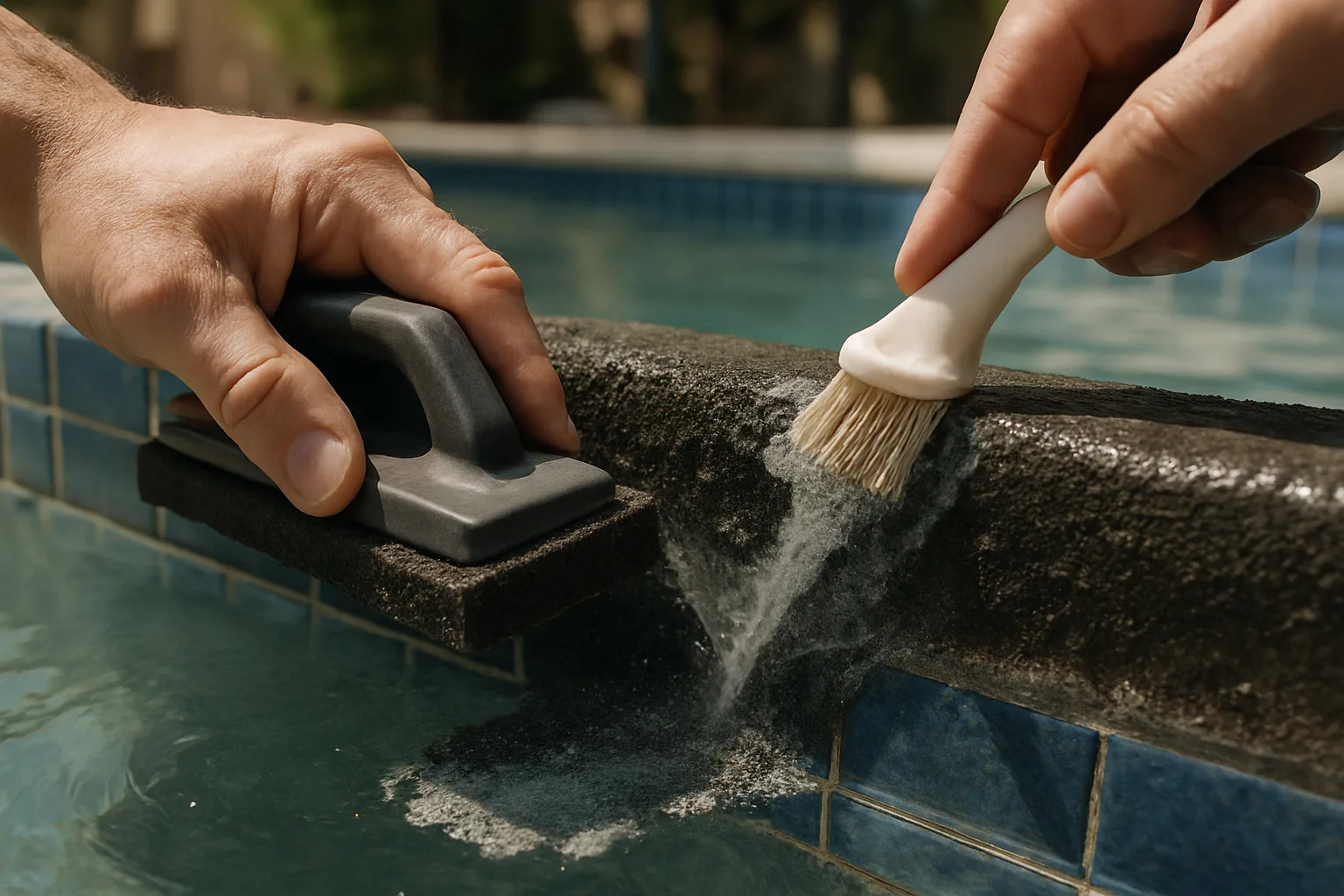
Post-cleaning neutralization is always performed. Acid residue left on tile or in the water will spike your chemistry and undo a full service visit. The method is not chosen on preference, it is chosen on what is actually on the tile.
Removing the scale is step one. Slowing its return is step two, and most pool owners skip it entirely. Once the tile is clean, the chemistry that caused the buildup has not changed. LA tap water keeps delivering calcium and evaporation keeps concentrating it. In this climate, deposits can begin reappearing within six to eight weeks of a cleaning if nothing interrupts the cycle.
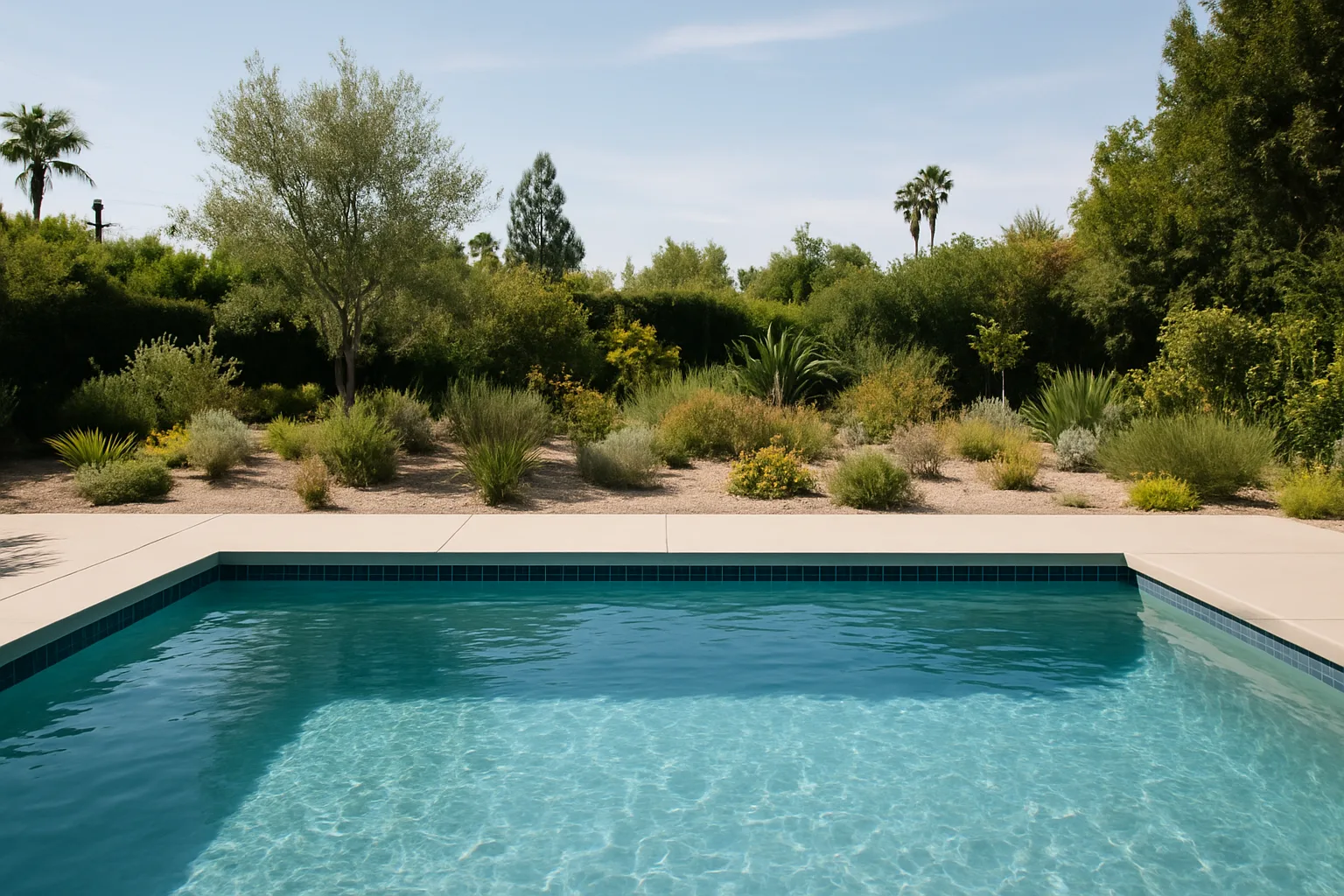
A sequestrant, also called a scale inhibitor, binds dissolved calcium ions and keeps them suspended instead of depositing on tile. It does not remove calcium, it keeps it moving. Applied consistently after a cleaning, it measurably slows the return of carbonate scale.
We recommend tile cleaning once per season, roughly every 12 months for moderate buildup, combined with monthly sequestrant dosing between visits. Inland pools in Pomona, Riverside, or Corona may need more frequent attention, while coastal pools in Santa Monica or Manhattan Beach fall closer to annual. Our ongoing weekly maintenance keeps sequestrant levels consistent and tile buildup from getting ahead of you, and well-maintained filtration supports balanced water that slows deposits. For a longer-term option, saltwater conversion can make hard water easier to manage over time.
We cover Santa Monica, Manhattan Beach, and Redondo Beach on the coast, Pasadena, Arcadia, and Monrovia in the San Gabriel Valley, and Ontario, Pomona, and Riverside in the Inland Empire. We also serve Long Beach, Torrance, Inglewood, Burbank, Glendale, Thousand Oaks, Simi Valley, and communities throughout Orange County including Anaheim, Irvine, Newport Beach, and Huntington Beach.
Call 805-870-5019 for an assessmentIf the calcium ring has been building for more than one season, the sooner we assess it the easier the removal. We follow established pool safety and maintenance standards in every service we perform.