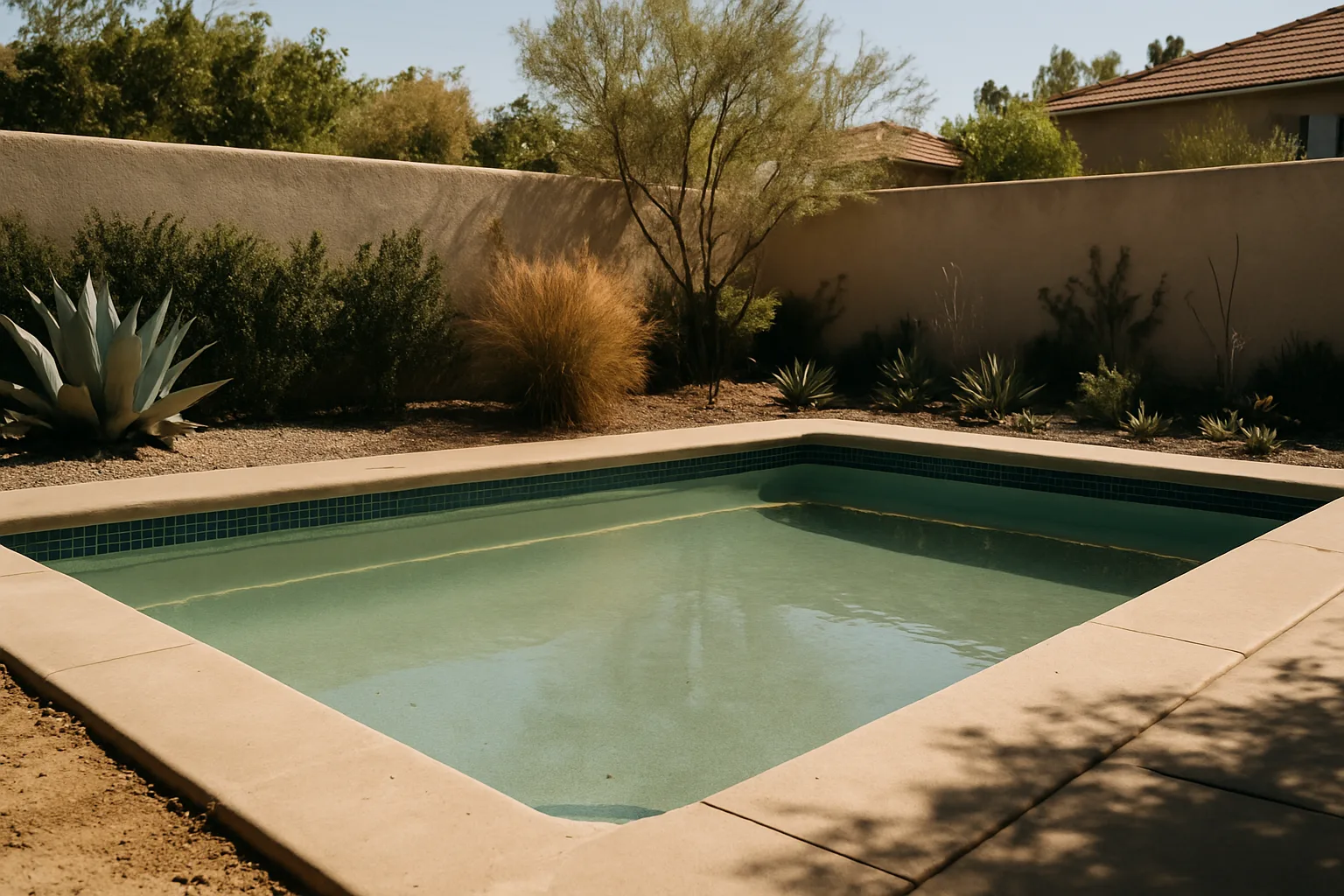
Find exactly where water is escaping before anyone touches a shovel. We use pressure testing and dye testing for a real finding, not a guess.
Pool leak detection means finding exactly where water is escaping, before anyone touches a shovel.
You have watched the water drop and added water twice this week, and you are not sure if something is wrong or if this is just summer in Southern California doing what it does. The honest answer is that both are true sometimes. Los Angeles pools lose real water to evaporation every single day, which is exactly why an actual leak can go unnoticed for months. Blue Line Pool uses pressure testing and dye testing to give you a real finding: a specific location and a clear repair path based on what the diagnostic actually shows.
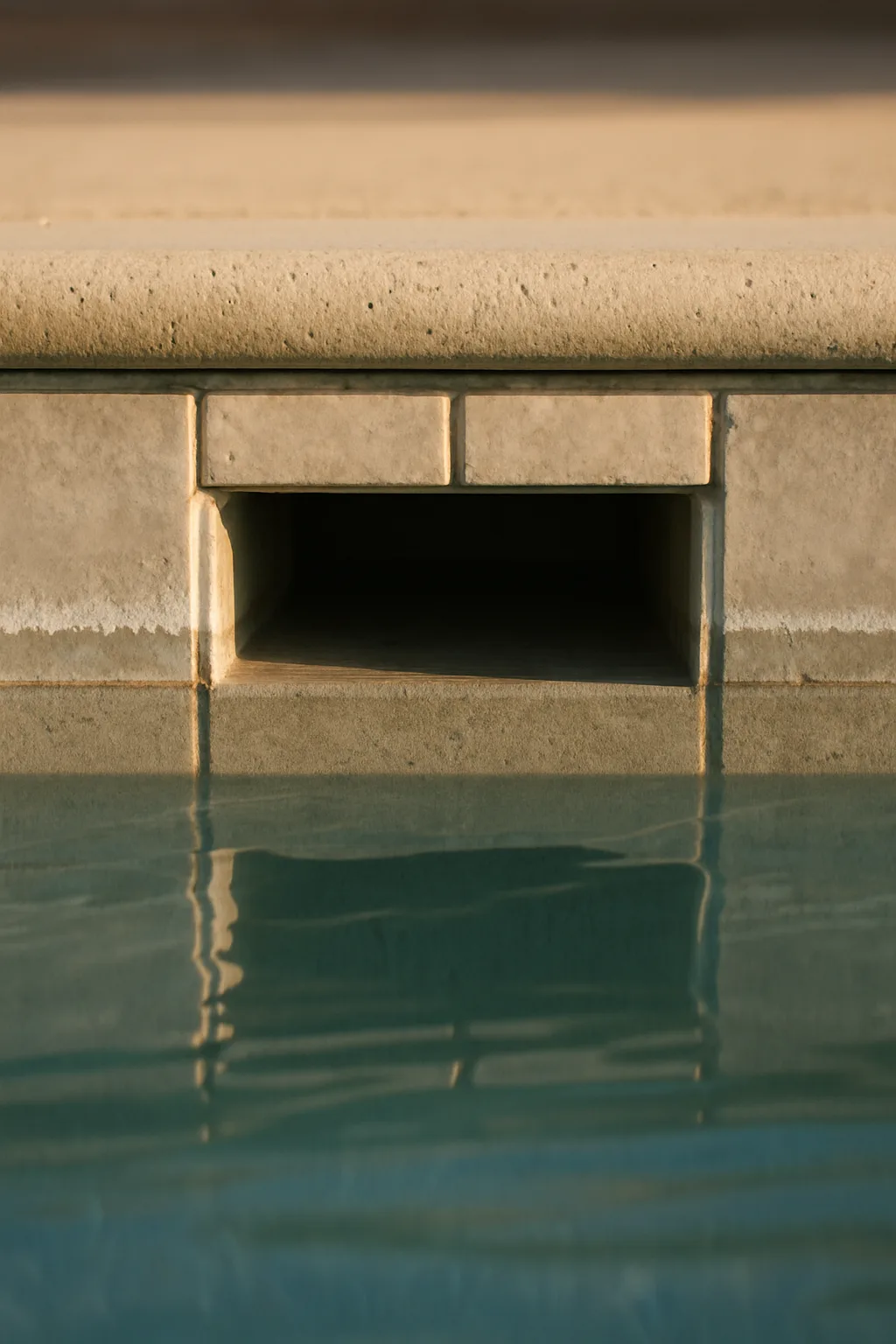
In LA's climate, evaporation alone can explain a lot, and that is the problem.
Southern California's combination of intense UV, low humidity, and persistent wind means an uncovered pool can lose a quarter-inch of water per day during summer, nearly two inches per week. In the Inland Empire, Pomona, Ontario, and Riverside, where temperatures regularly push past 100F, that rate climbs even higher.
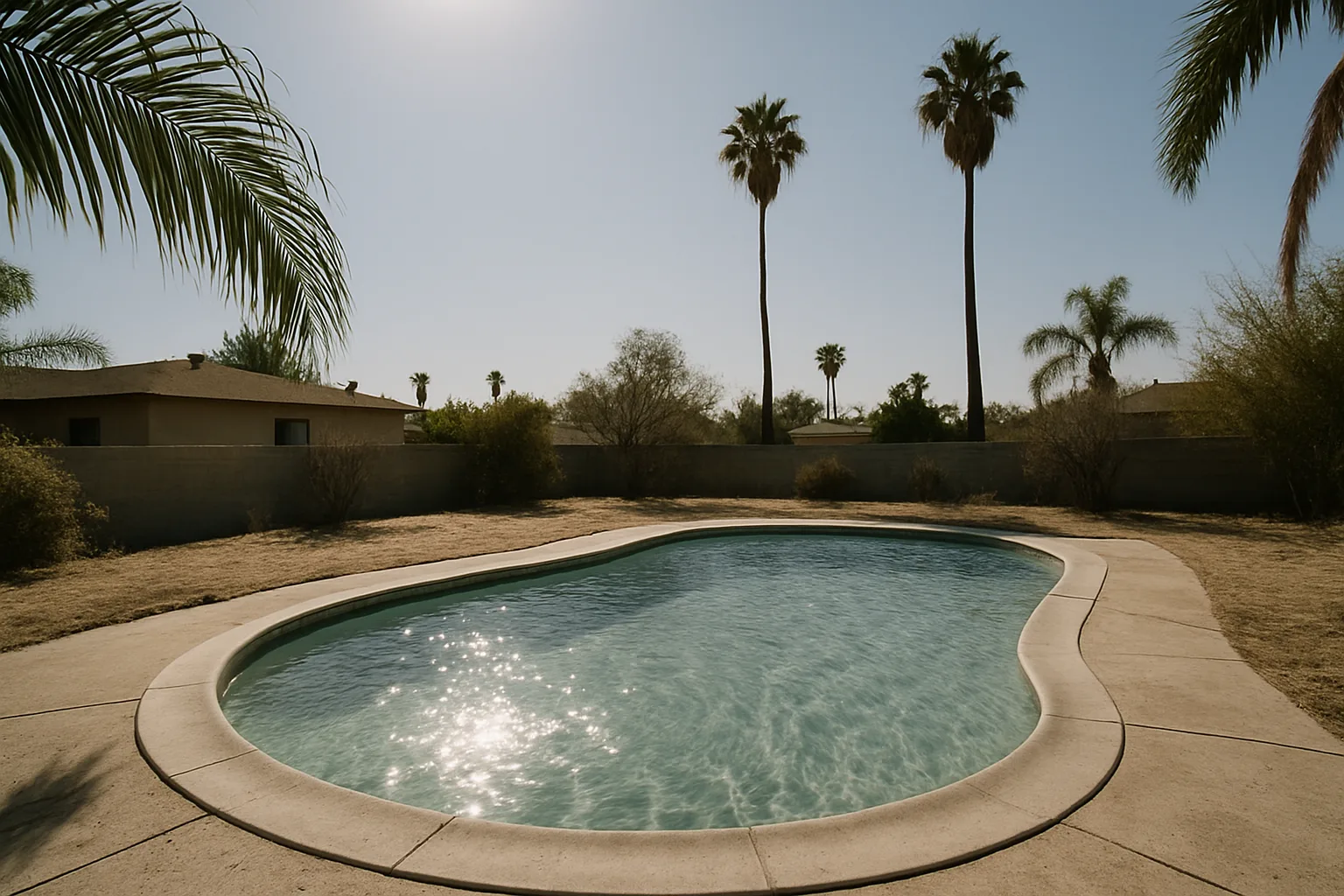
Evaporation rate, the expected daily loss from an uncovered pool, varies significantly with your microclimate. A shaded Pasadena yard loses far less than an exposed Burbank hilltop with afternoon wind. That variability makes self-diagnosis unreliable. An August water-bill spike looks identical whether the cause is summer heat or a slow return-line leak. Getting a clear answer requires a structured test, not a visual check. The Metropolitan Water District of Southern California has long emphasized regional water conservation, and an undetected leak works against those efforts month after month, one reason the EPA highlights pool water efficiency.
We dispatch technicians from our Thousand Oaks location, reaching pools across the San Fernando Valley, the Westside, South Bay, and into the Inland Empire.
The bucket test is a 24-hour homeowner check that separates evaporation from a real leak.
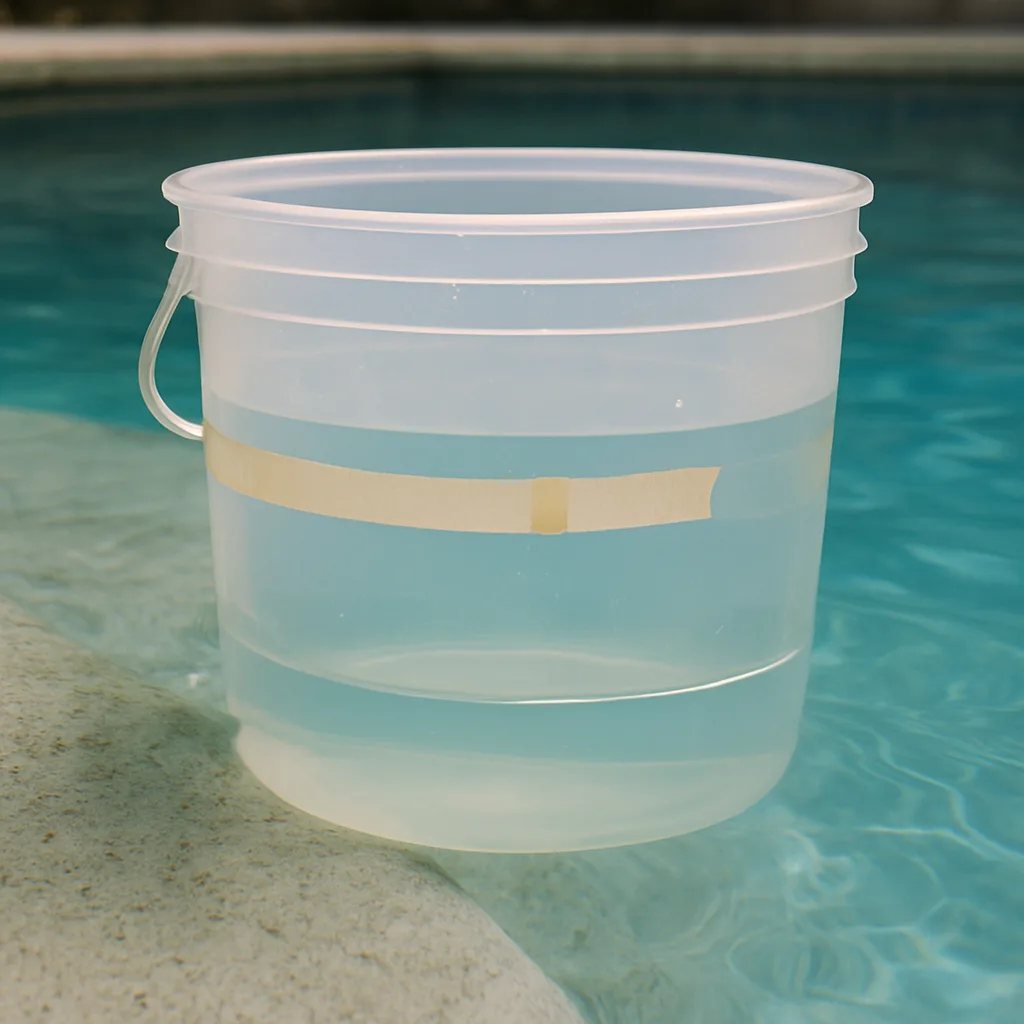
If both levels dropped the same amount, what you are seeing is evaporation. If the pool level dropped more than the bucket, a leak is likely present, and that gap is the diagnostic signal. Run it once with the pump on, then repeat with the pump off. Some leaks only appear under pressure when water is circulating, others only when the system is static. A difference between the two runs tells a trained technician a great deal about where to start looking.
Blue Line Pool finds the leak first. The repair conversation comes after, never before.
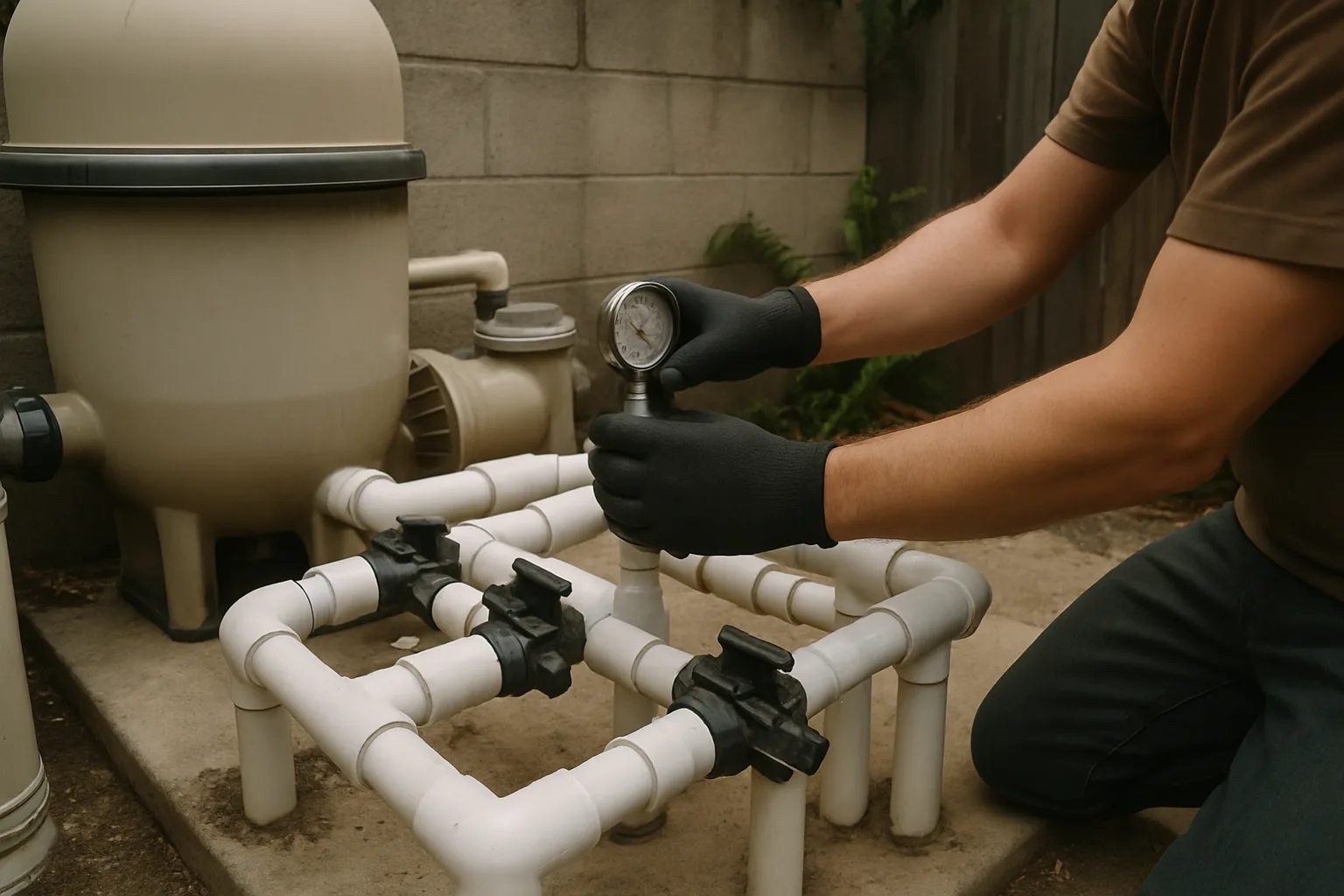
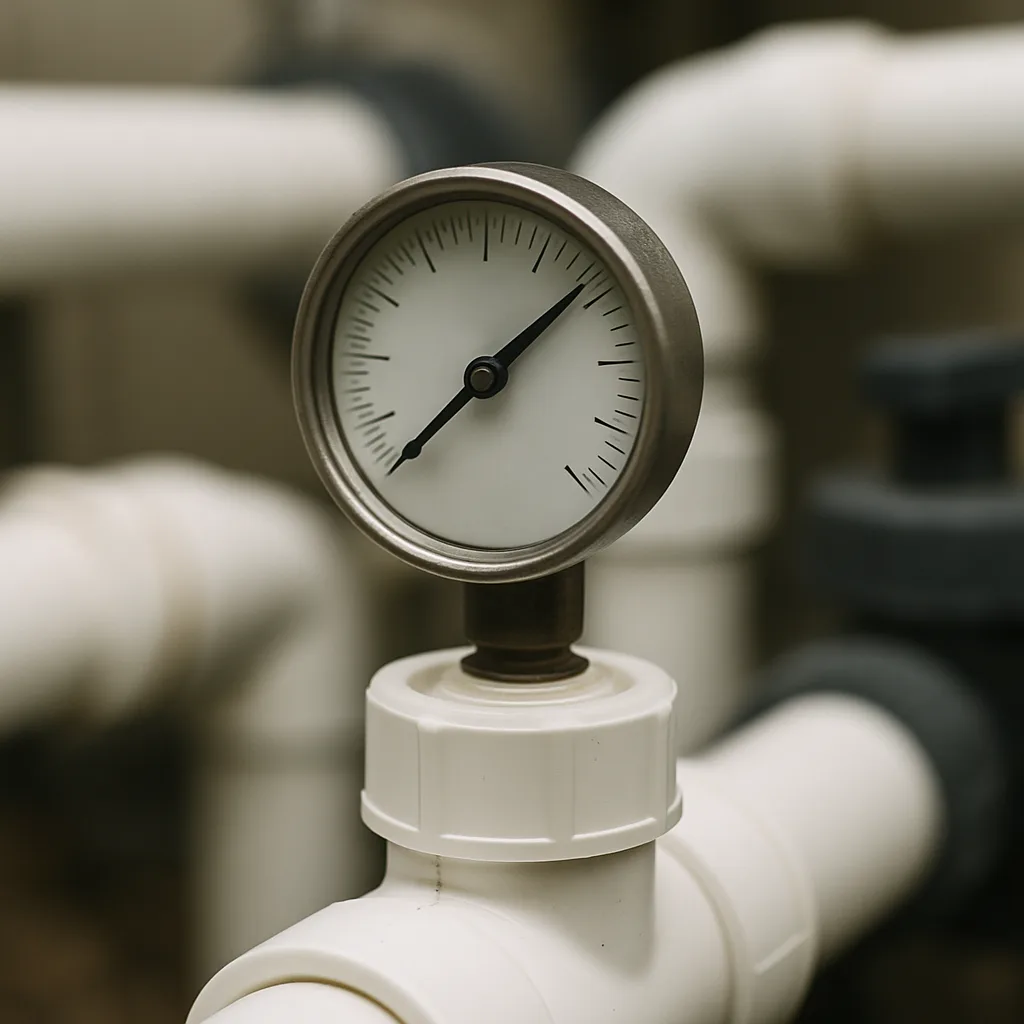
A concern we hear regularly is "I do not want anyone digging up my yard before they know what they are doing." That is fair. Every leak detection visit starts with a full diagnostic. We pressure test the plumbing lines, apply dye testing at suspected points, and document what the tests reveal. No excavation happens on speculation. If pressure testing, a method where plumbing lines are isolated and pressurized to detect a pressure drop over time, confirms a leak in a specific line segment, we know exactly where to focus before any ground is broken. Soil saturation and hydrostatic pressure, the upward force waterlogged soil can exert against a pool shell, are real concerns in Los Angeles, especially on hillside properties and older neighborhoods with shifting soil.
Two tests together are more accurate than either one alone.
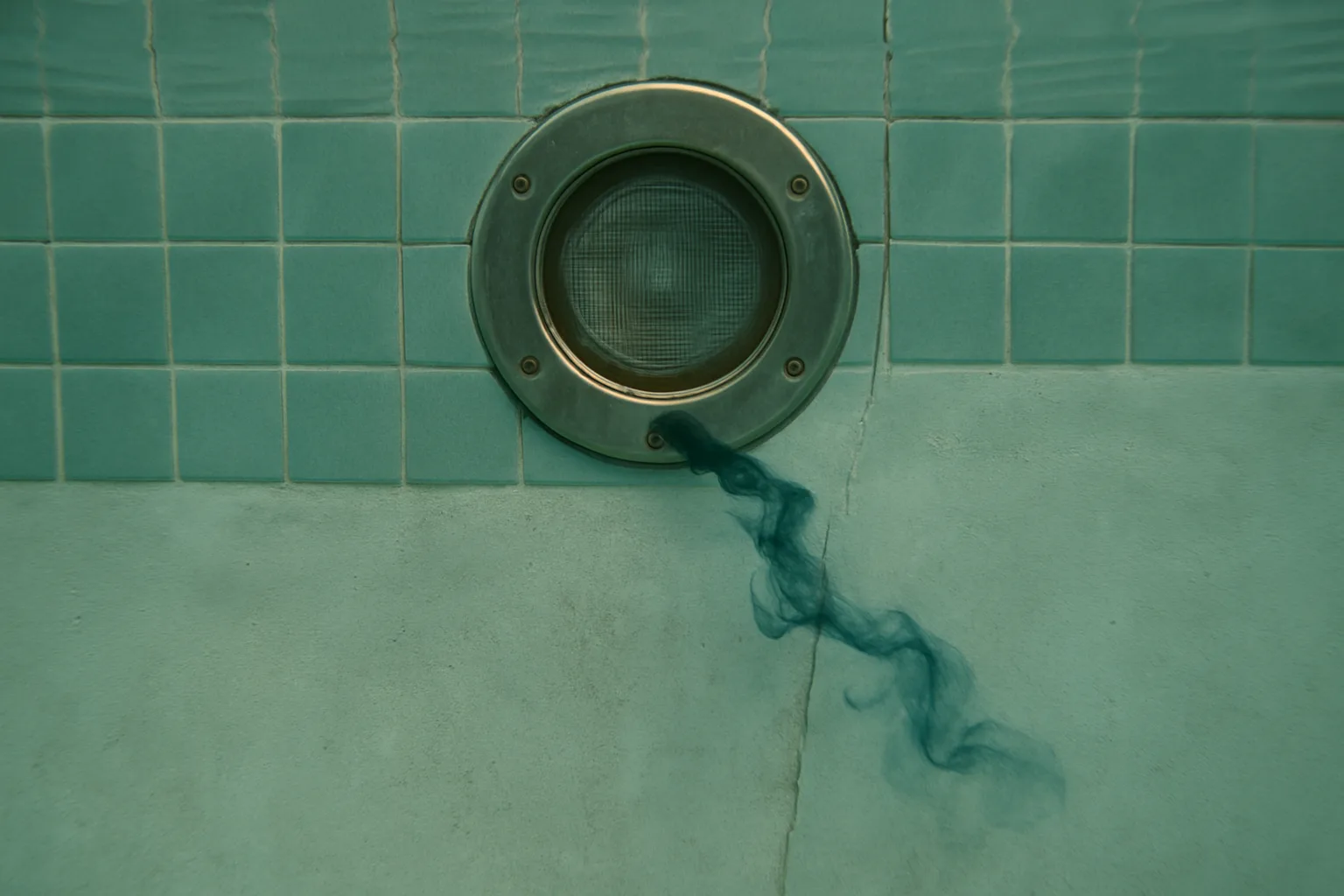
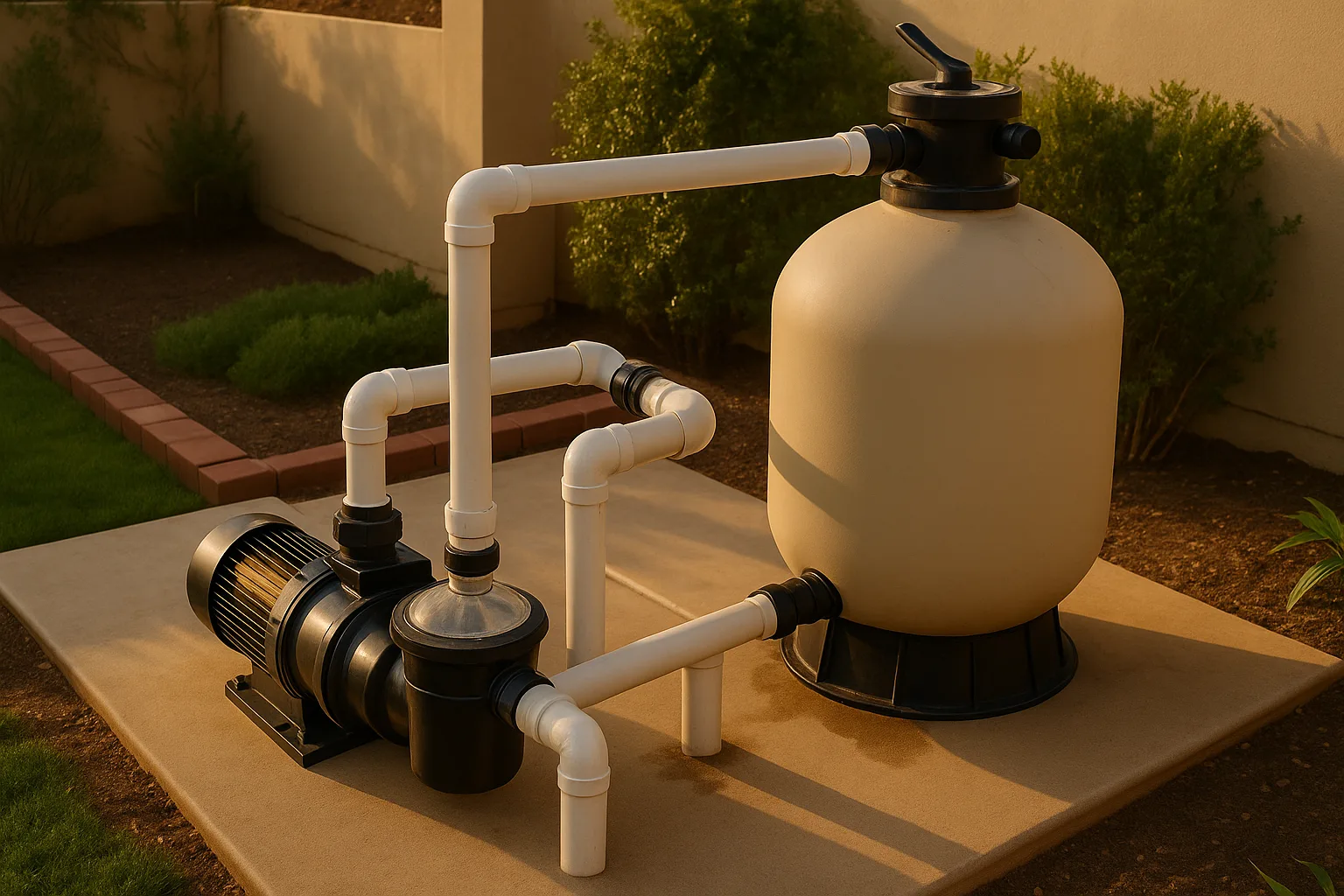
Used together, these methods produce a specific finding rather than a range of possibilities. That specificity changes the repair cost conversation entirely.
A clear diagnostic leads directly to a clear repair plan, no ambiguity.
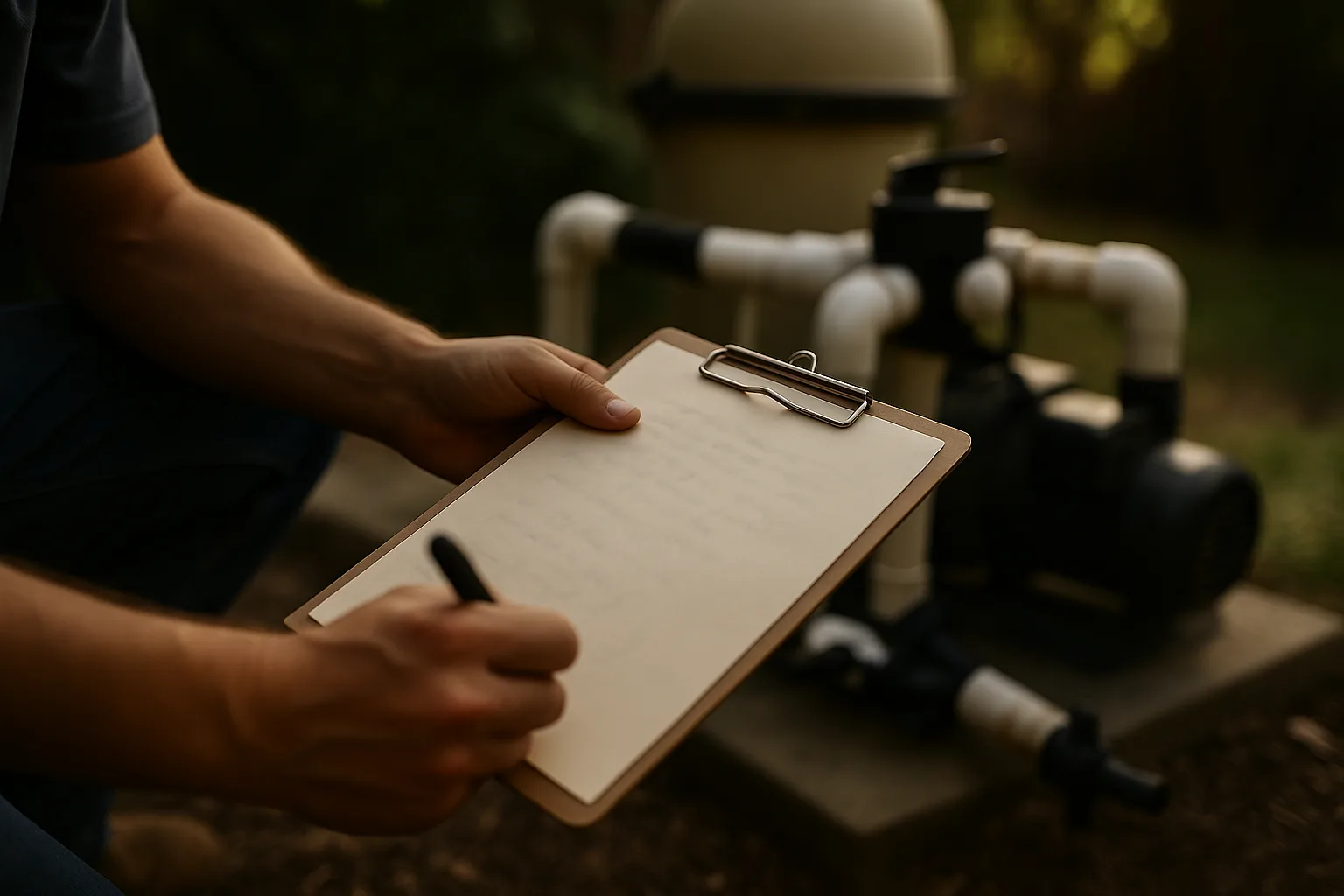
We isolate each plumbing circuit individually. Drops in the return lines versus the skimmer lines tell us different things. We document baseline pressure, hold time, and observed drop rate for every segment tested.
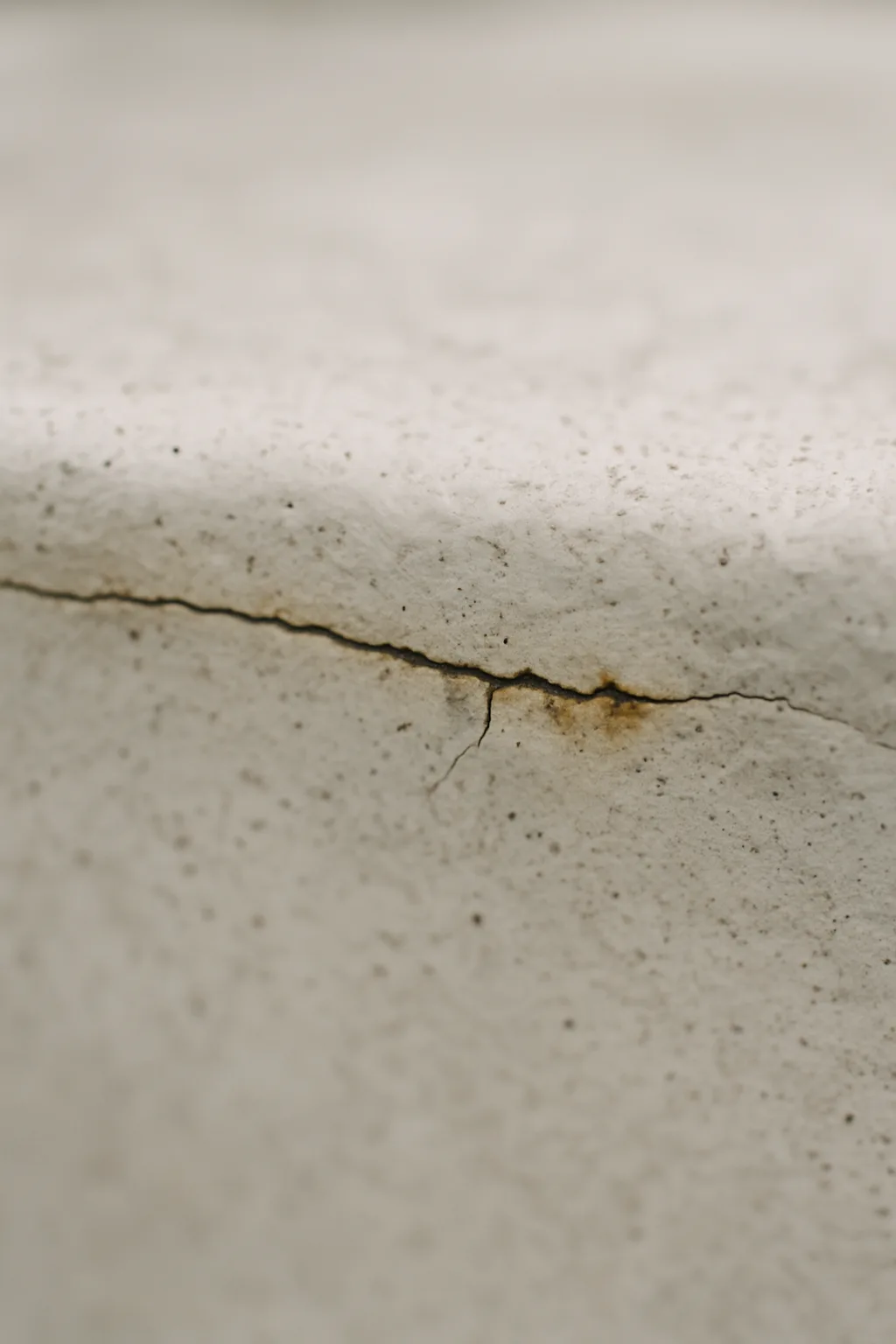
We explain the finding in plain language. A return-line leak in one segment means targeted work, not a full re-pipe. A shell crack may be repairable with epoxy injection. If the leak is at equipment or hardware, we move directly into equipment repair without a separate call.
We re-run pressure testing on the affected lines to confirm the fix held, then check chemistry. A pool that leaked for weeks often has altered hard-water chemistry, so we rebalance the water before regular use.
We serve residential and commercial pools throughout Los Angeles, Beverly Hills, West Hollywood, Santa Monica, Burbank, Glendale, Pasadena, Torrance, Long Beach, Redondo Beach, Manhattan Beach, Hawthorne, Inglewood, and Culver City. Coverage extends into Orange County, Anaheim, Irvine, Newport Beach, and Huntington Beach, and across the Inland Empire including Ontario, Rancho Cucamonga, Riverside, and Corona. Thousand Oaks, Simi Valley, and Santa Clarita are also within our regular zone. Once your leak is resolved, many clients stay protected with ongoing weekly maintenance.
Call 805-870-5019 for a diagnosticMore answers are on our common pool service questions page.
Run the bucket test. If it points to a leak, we will schedule a diagnostic and give you a real answer, not a best guess. Buying a home and unsure about the pool? We also offer a full pool inspection before you buy.