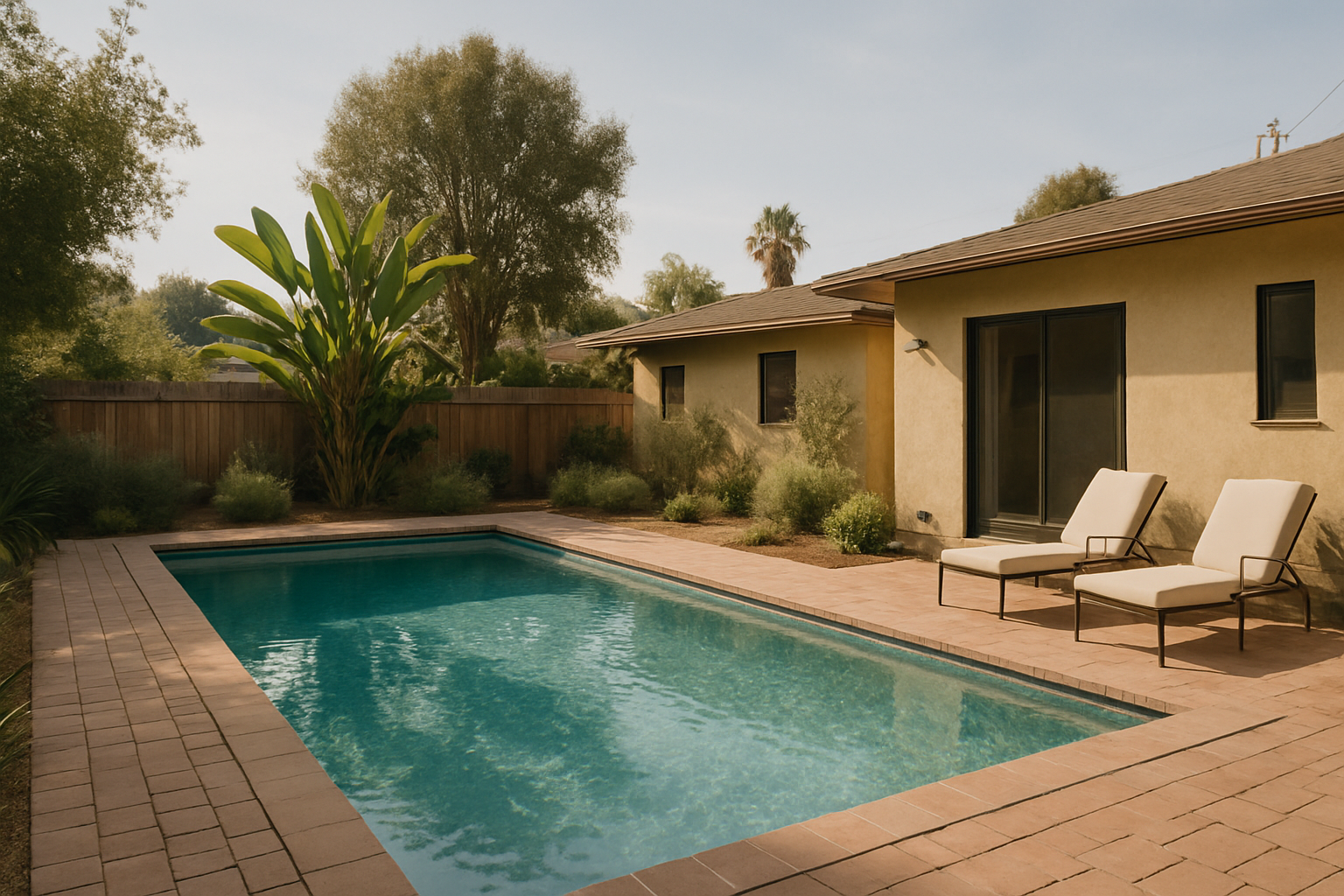
A general home inspector looks at the pool. We actually run it. Full equipment, chemistry, and surface inspection with a written photo report, delivered inside your escrow timeline.
A general home inspector looks at the pool. A pool inspection actually runs it.
You found the house, the pool looks clean, the water is blue, and the general inspector noted "pool present, recommend specialist evaluation" and moved on. That is standard, and it is not enough. The pool section of a general inspection is a visual walkthrough: equipment does not get turned on, water does not get tested, and the pump, filter, heater, and automation are noted as present, not evaluated as functional. Even the American Society of Home Inspectors acknowledges that pool systems require specialized evaluation beyond a standard home inspection.
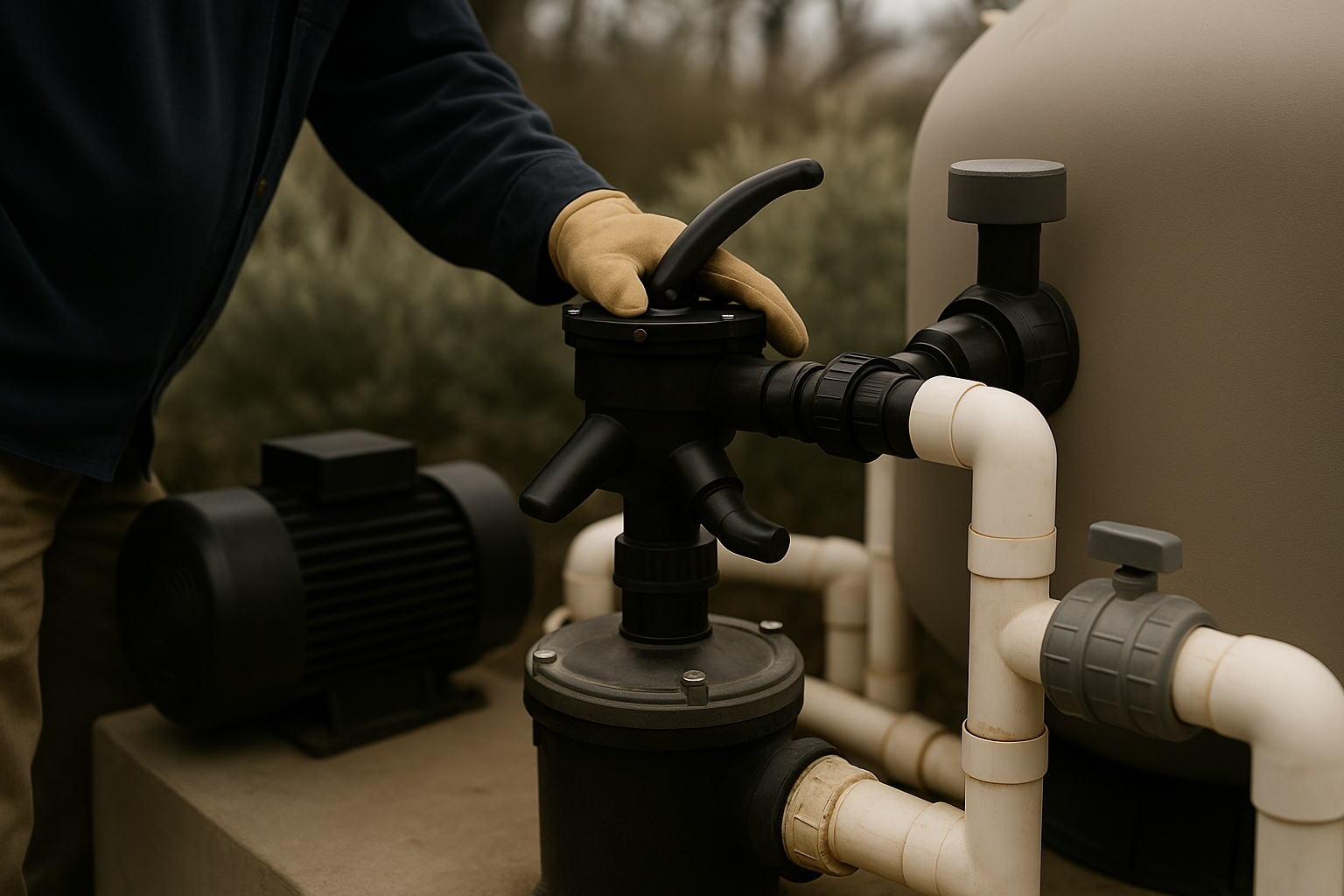
A pre-purchase pool inspection, a specialized assessment of a pool's physical condition, equipment function, and water chemistry performed before a transaction closes, covers what that two-line report misses entirely. Our process runs the equipment, tests the chemistry, evaluates the surface, and documents everything in a written report with photographs. You get a specific picture of current condition and near-term service needs, not a pass or fail, a real answer.
In Los Angeles, a pool adds real value and real complexity to any transaction.
LA pools run year-round, which is a maintenance history waiting to be revealed. A pool in Pasadena or Sherman Oaks might have been in daily use eleven months a year for two decades, and equipment cycles harder here than in markets with true off-seasons. LA's water supply creates a specific problem too: it consistently ranks among the hardest in major US cities, and high calcium hardness accelerates scaling on tile, inside heater heat exchangers, and on pump seals. Equipment that looks fine can be quietly degraded by years of hard-water chemistry, invisible to a visual walkthrough and visible in a proper inspection.
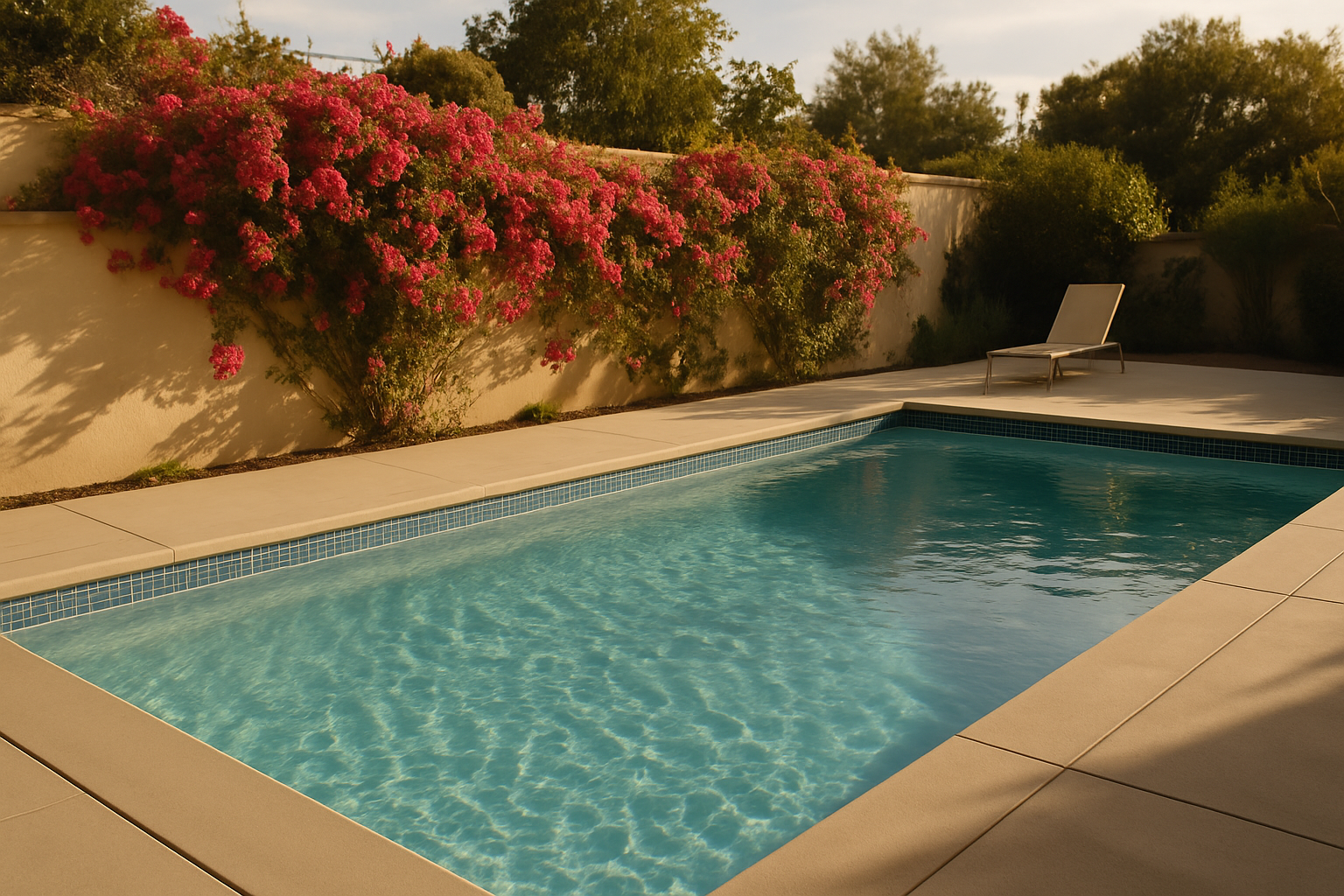
You are making a seven-figure decision, and the pool might be a $5,000 tune-up or a $50,000 rebuild. The only way to know before you close is a dedicated inspection. In California, escrow timelines and inspection contingency windows are governed by transaction standards overseen by the California Department of Real Estate, which means the clock on acting on findings starts the moment your offer is accepted.
A pool's chemistry tells you exactly how it has been cared for, even when records are not available.
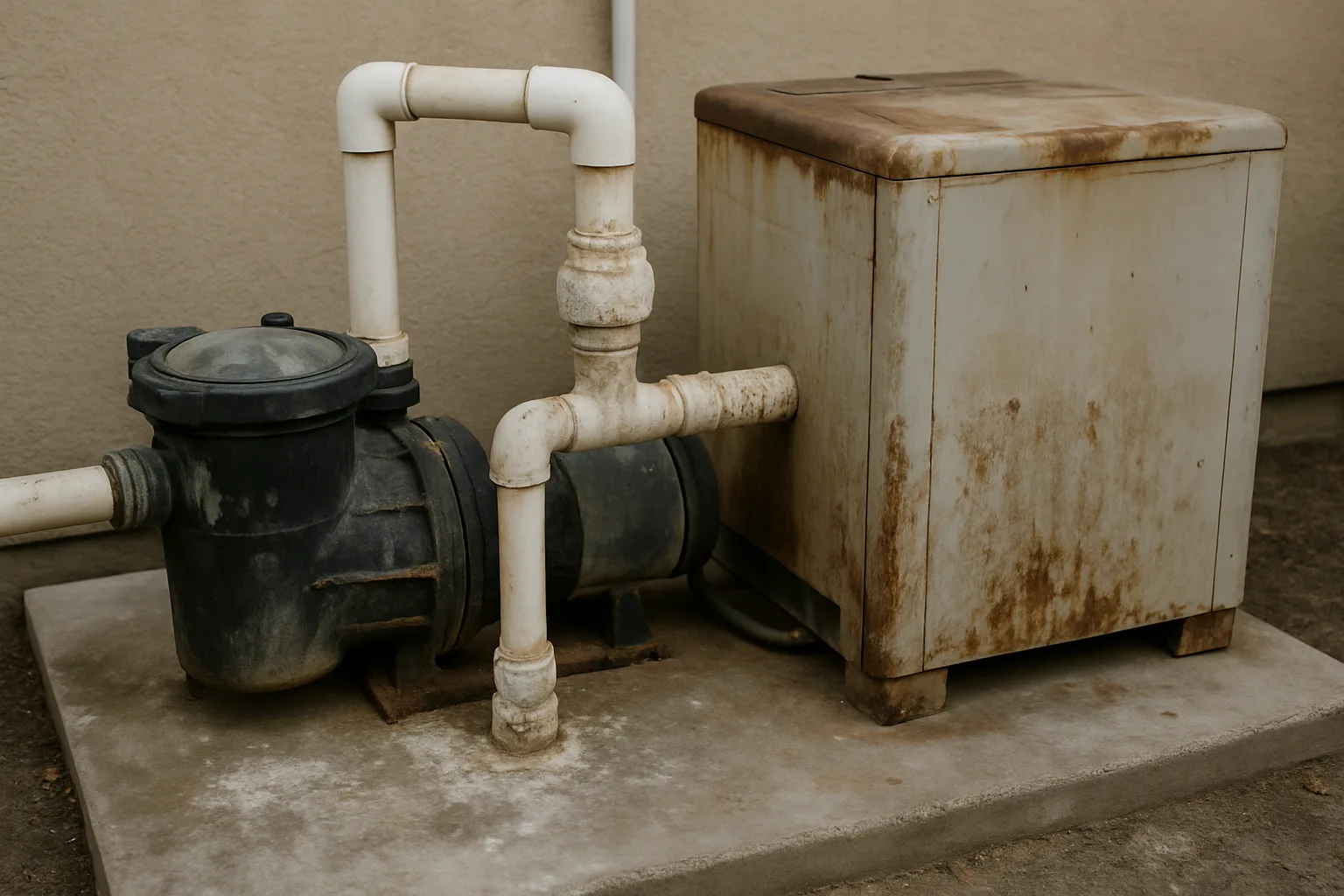
Our team has walked into inspections where the pool looked immaculate and found a pump bearing two months from failure, and heaters with calcium-clogged heat exchangers running at maybe 40 percent output, still technically on. Surface appearances do not tell the mechanical story. When we identify failing or end-of-life components, those findings inform our recommendations for equipment repair and replacement.
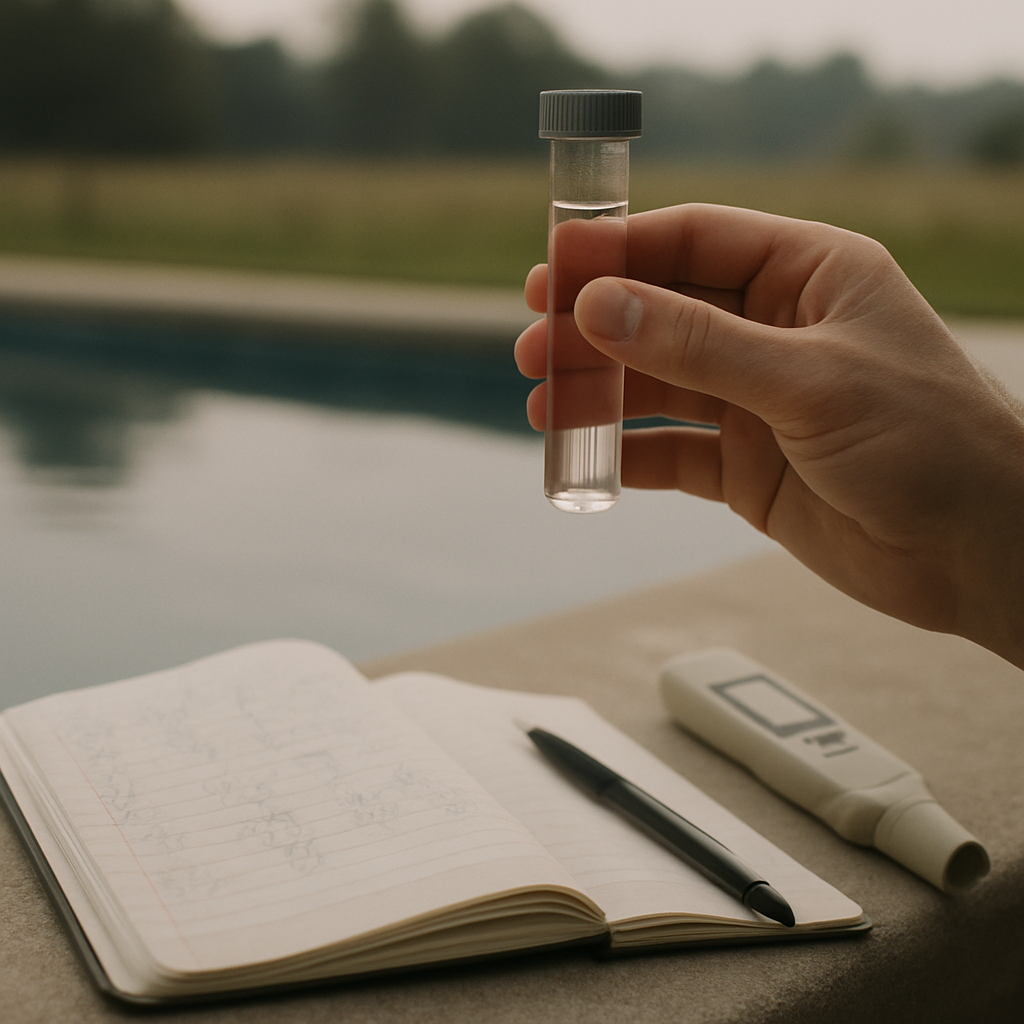
The water chemistry baseline, pH, free chlorine, alkalinity, calcium hardness, CYA, and TDS, tells a story. CYA that is sky-high usually means the pool was over-stabilized for years, and TDS above 2,500 ppm in a non-saltwater pool suggests the water has not been exchanged in a long time. The equipment audit includes an approximate remaining service life estimate for each component based on age, condition, and run hours. Surface assessment covers the interior finish for staining, delamination, etching, and structural damage, and resurfacing in Los Angeles runs $10,000 to $25,000 depending on size and finish. Coping and deck condition is checked for cracking, settling, or separation, which in LA's expansive soil can indicate movement beneath the shell, a structural conversation rather than a cosmetic one. Every finding goes into the written report with photographs.
Escrow in Los Angeles moves fast and inspection contingencies have firm deadlines. We schedule to fit within your contingency window and deliver the written report promptly so you and your agent have time to act. The report is photo-documented: every component evaluated, every surface concern flagged, every chemistry parameter recorded, with an image attached. Your agent can attach it to a repair request or disclosure addendum, and your attorney can cite specific findings with specific documentation.

Buyers often ask whether we coordinate with the general inspector. We do not need to. Our inspection is a standalone document covering scope the general inspection does not touch, so the two reports work together without overlapping. Sellers preparing a listing also use our report for pre-listing disclosure accuracy, which lets them price correctly and avoid renegotiation surprises after an offer arrives.
Every inspection covers four distinct categories, none of them skipped, in alignment with Pool and Hot Tub Alliance standards.

The written report gives your agent specific language for repair credits and disclosure requests.

You receive the report before your deadline. Your agent identifies items currently failing or at end-of-life, which become the basis for a repair credit request or seller repair obligation. Deferred-maintenance disclosure of components that are functional but showing wear matters just as much, so you know a pump with three years left before you write a check.
Equipment near end-of-life, surfaces needing resurfacing, and chemistry indicating poor maintenance history are the three most common negotiation points. A heater replacement runs roughly $3,000 to $6,000, a variable-speed pump upgrade $1,200 to $2,000, and full resurfacing $10,000 to $25,000. Real numbers that belong in your negotiation, not surprises after close. If you need follow-up work, see what to ask a pool company before hiring.
We work directly with buyer's and listing agents to schedule fast, communicate findings clearly, and deliver documentation formatted for a transaction. After close, buyers who inspected with us have a complete picture and a direct line to the team that created it, so transitioning into a weekly maintenance program is straightforward.
We serve buyers and sellers in Beverly Hills, Santa Monica, Pasadena, Long Beach, Burbank, Glendale, Culver City, Manhattan Beach, Redondo Beach, Hermosa Beach, Torrance, El Segundo, West Hollywood, and throughout the San Fernando Valley. We also serve Orange County communities including Anaheim, Irvine, Newport Beach, and Huntington Beach, as well as Inland Empire cities including Ontario, Rancho Cucamonga, Riverside, and Corona. Inspections are built around escrow timelines.
Call 805-870-5019 to scheduleBook early enough to act on the findings, not after your contingency expires. Give us your contingency deadline and we will work backwards from it. The written photo report goes to you and your agent as soon as the inspection is complete, and inspection slots during active escrow periods fill quickly.