
Spa chemistry moves faster than pool chemistry: smaller volume, higher heat, faster shifts. We service your spa on its own scope, not as an add-on to the pool visit.
Spa water chemistry is a different challenge: smaller volume, higher heat, faster shifts.
Your spa might hold 400 gallons. Your pool holds 15,000. That size difference changes everything, and adding water at 100F or above moves the chemistry at a pace weekly pool schedules cannot match. Spa water chemistry, the management of pH, free chlorine or bromine, total alkalinity, and calcium hardness, must stay within tighter ranges than pool water. One heavy-use evening can throw your readings off before the next visit is even scheduled.
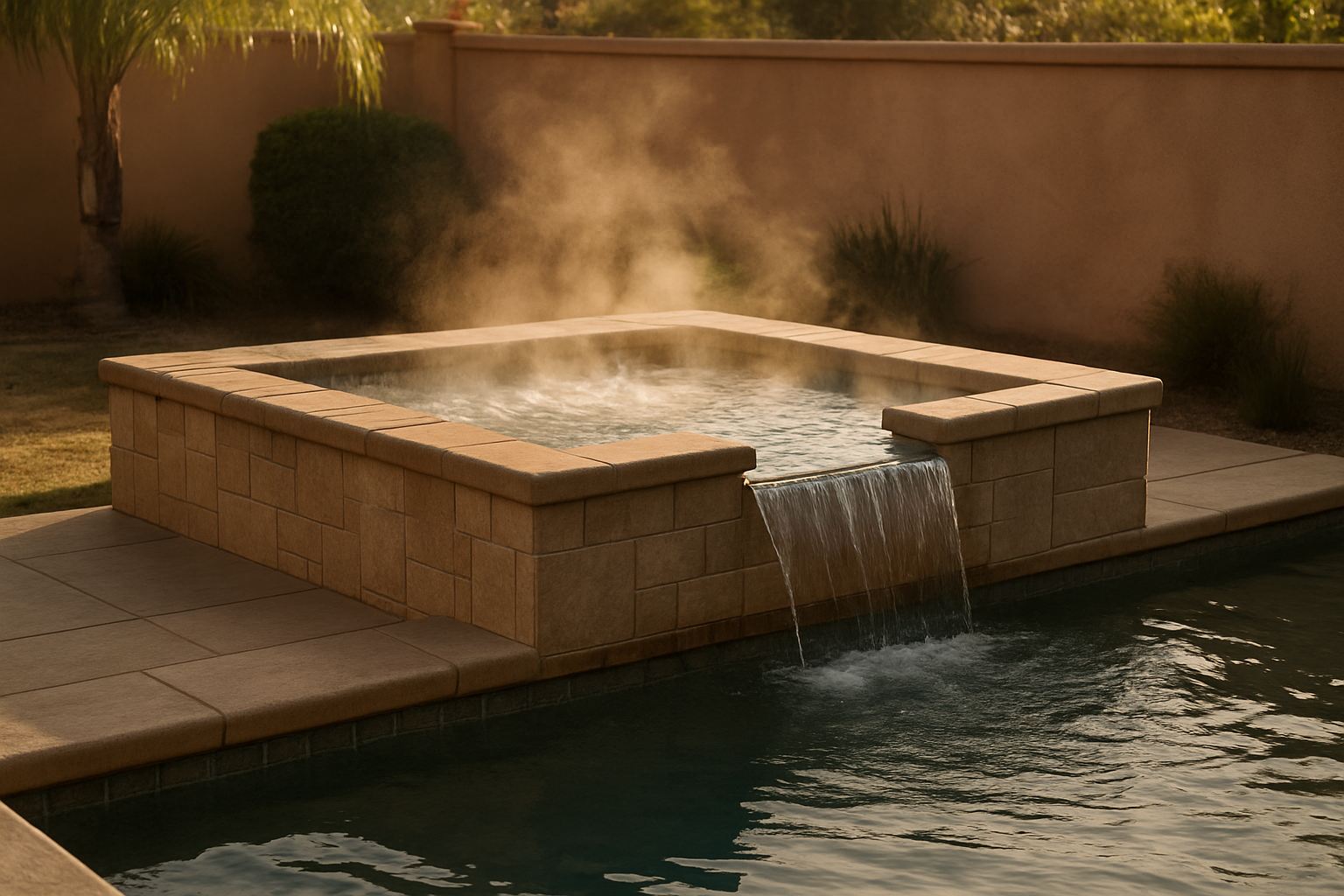
Heat breaks down chlorine faster than sunlight does, which is why many spa owners switch to bromine, a sanitizer that stays effective above 85F where chlorine's power drops. We manage your spa on the right chemistry program for how you actually use it. For the full picture of keeping water safe and balanced, our chemical balancing service covers both systems under one program, following the same sanitation targets the CDC recommends for pools and hot tubs.
Los Angeles homeowners use their spas year-round, and that changes the service math.
Pools get seasonal use. Spas do not. From hillside homes in Pasadena to coastal neighborhoods near Manhattan Beach and Redondo Beach, we see spas running every week of the year. That is good news for the homeowner, and a reminder that spa maintenance cannot run on a quarterly schedule.
Homes along the Ventura Freeway corridor, Thousand Oaks, Simi Valley, and Woodland Hills, deal with Santa Ana wind debris that loads spa filters fast. Those winds introduce phosphates and dust that would take a pool weeks to show, but in a spa those contaminants concentrate quickly. Our spa filter cleaning and replacement keeps up with that accelerated debris loading. A spa in Torrance behaves differently from one in Glendora, with different water hardness, debris loads, and usage. Understanding how LA hard water affects spa surfaces and equipment keeps our crews calibrated across neighborhoods.
Foam, cloudiness, and low jet pressure each point to a specific and fixable problem.
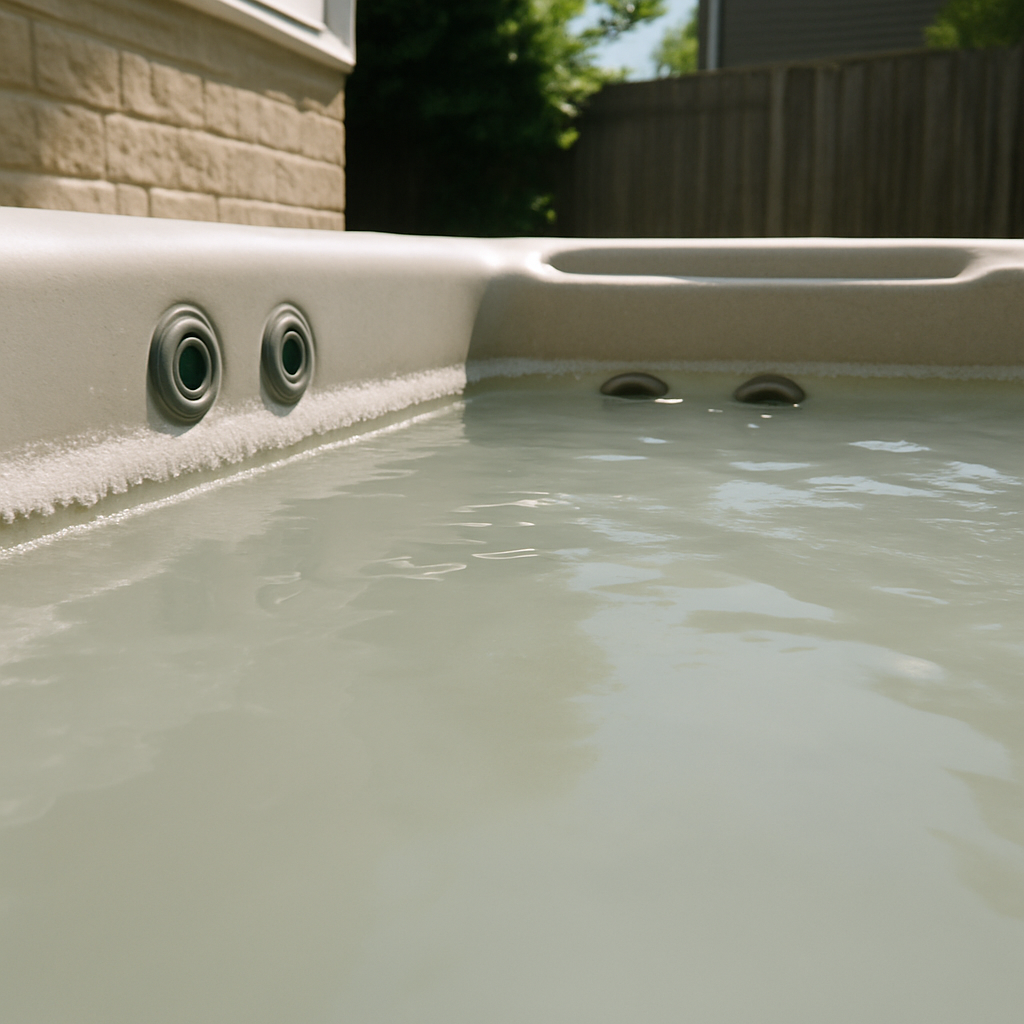
One Burbank spa had been running fine for months when the water went cloudy overnight after a family gathering. Jets were still running but pressure felt lower than usual, and surface foam had developed by morning. That combination told our tech three things immediately.
First, the foam, persistent surface foam caused by elevated dissolved organics like body oils, lotion, and detergent, confirmed the water had been pushed past its bather load. The chemistry had not failed, it was overwhelmed. Second, the cloudiness pointed to alkalinity drift, high-temperature water plus a sudden organic load shifting pH faster than the chemicals could buffer. Third, the weak jet pressure was not the pump, it was a partially clogged jet manifold, calcium buildup from LA's hard water blocking flow through the nozzles.
The fix was straightforward. We drained and refreshed the water, since spa water should be exchanged every 90 days under heavy use, not annually, adjusted the chemistry fresh from the refill, and cleared the manifold. When low jet pressure turns out to be equipment rather than a blockage, our jet pump and equipment repair handles it in the same visit, and when heating is in question, our spa and pool heater repair resolves it before it escalates. Within one visit, the spa was back to full function.
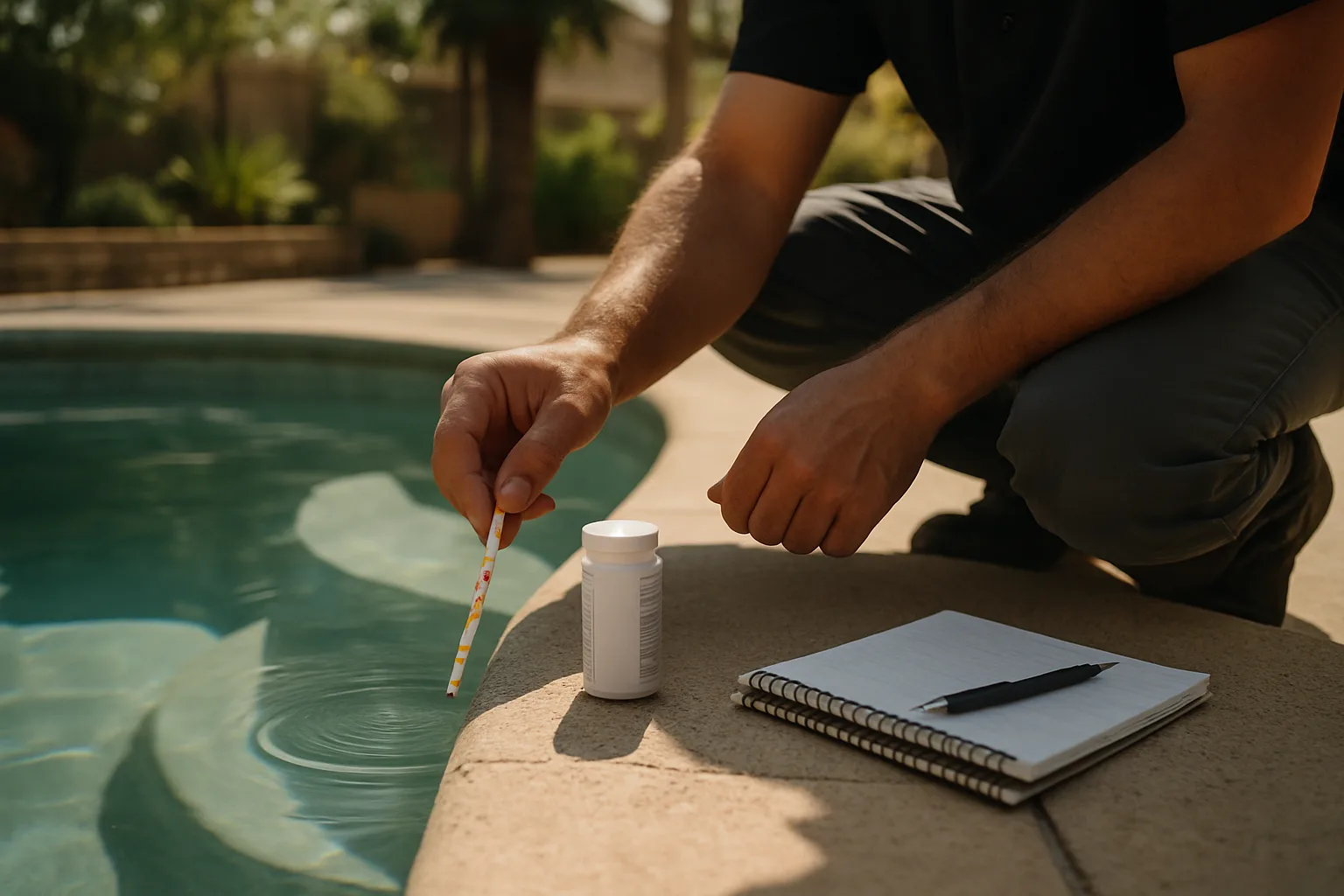
Your spa gets its own evaluation, not five minutes left over after the pool is done. Spa water chemistry, jet function, blower operation, and heater performance each get checked against their own standards. The combined pool-spa system, an integrated setup where pool and spa share a pump and heater but operate on separate valves, requires a technician who understands both sides of the plumbing layout. That is what our crews are trained to handle. If you have a standalone hot tub with no pool, that works just as well: one account, one scheduled visit, no coordinating separate vendors.
Every spa service visit covers chemistry, surfaces, equipment, and water flow.
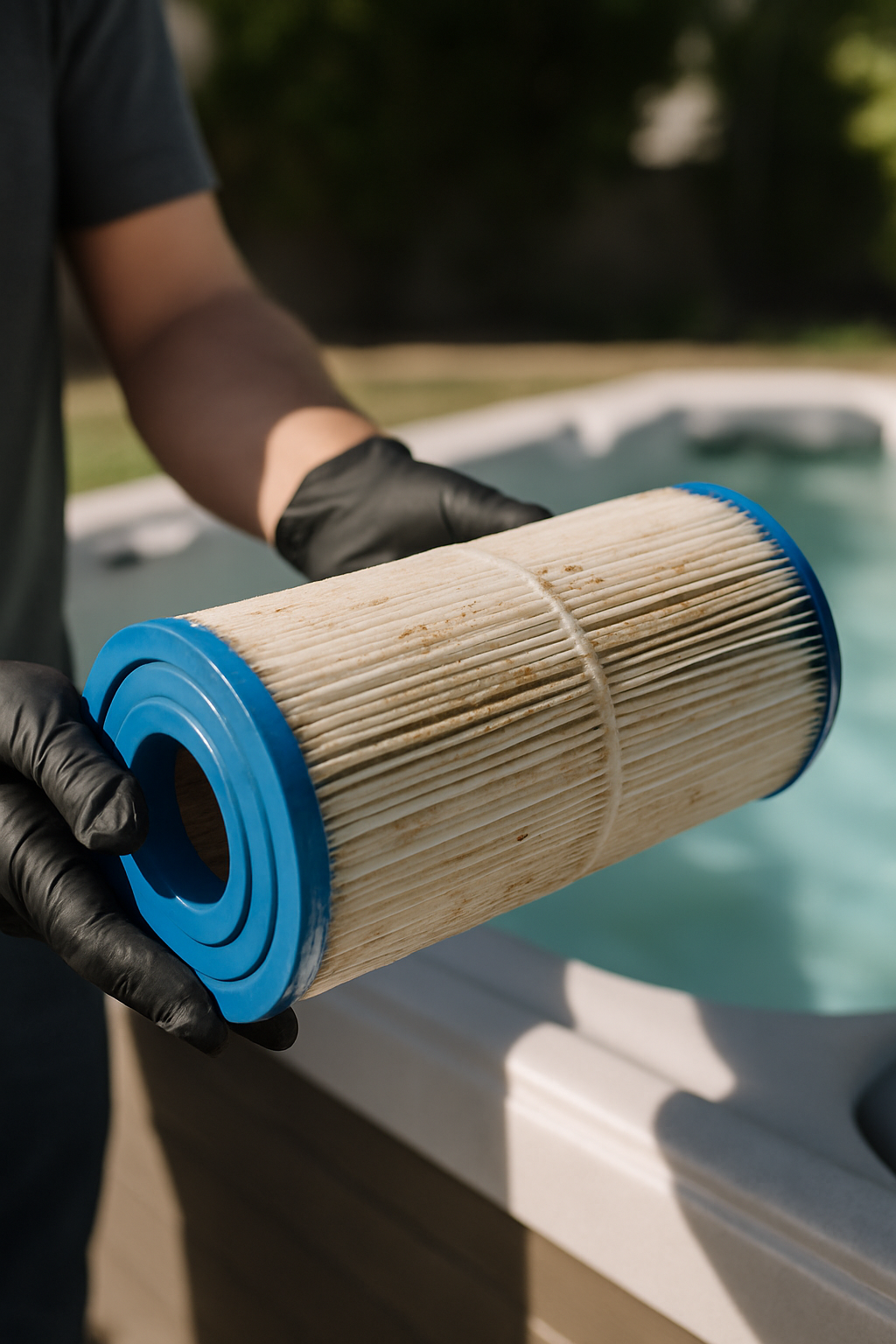
We document findings after every visit and flag any items that need attention before the next scheduled service.
Spa equipment failures are diagnosable and repairable. Most do not require full replacement.
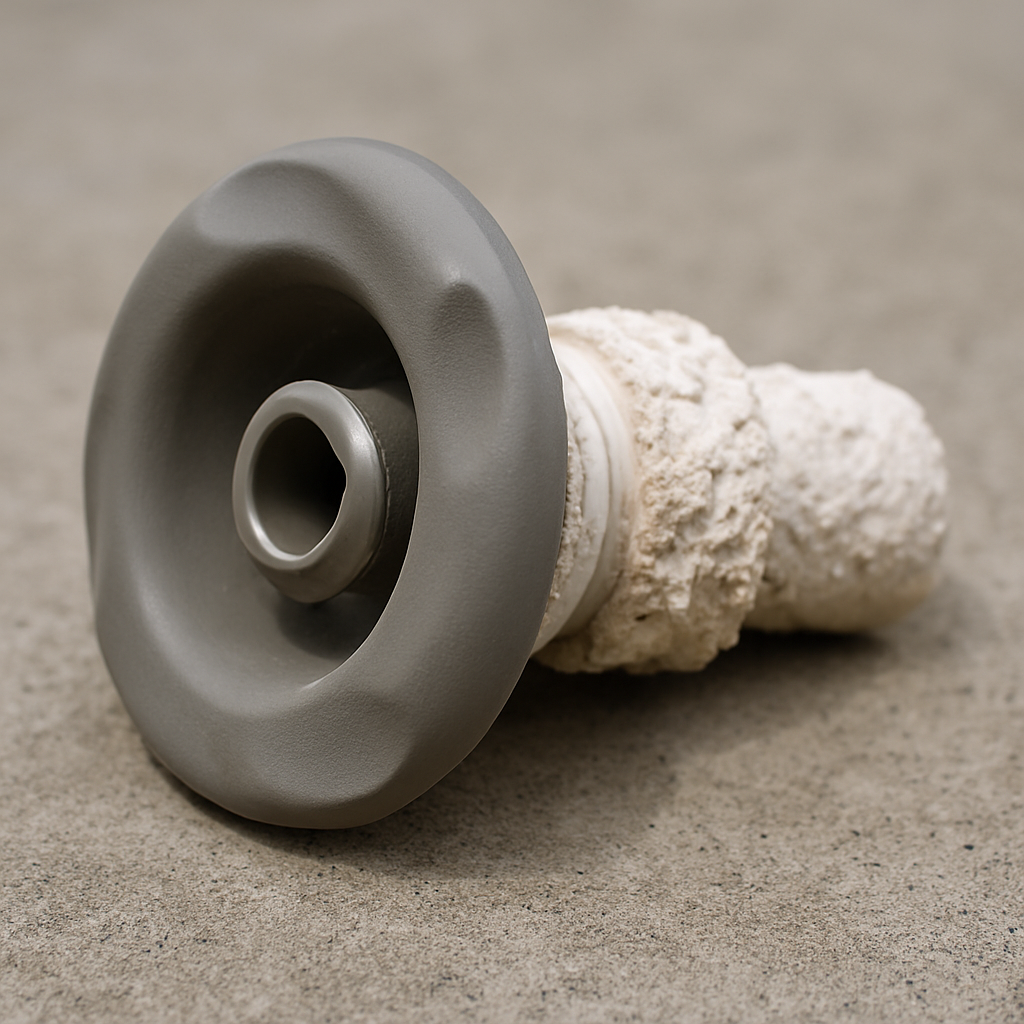
The network of nozzles, manifolds, and plumbing that delivers pressurized water is a common source of calls. Jets lose pressure from calcium deposits, cracked nozzle bodies, or manifold debris. We clean, clear, and replace jet components as needed.
The blower injects air into the jets and is separate from the water pump, so blower failure is often misdiagnosed as a pump problem. We test each component separately. The circulation pump moves water through jets and filter, and we evaluate flow rate and motor condition before recommending repair or replacement.
The thermostat maintains your set temperature. When it fails you get a spa that will not heat or one that overheats and triggers the safety shutoff. We diagnose thermostat and heating element issues and replace components rather than defaulting to a full unit swap when the problem is isolated.
We serve spa and hot tub customers across Los Angeles including Beverly Hills, West Hollywood, Burbank, Glendale, Santa Monica, Pasadena, Torrance, Long Beach, and the South Bay. Orange County service covers Anaheim, Irvine, Newport Beach, and Huntington Beach. Inland Empire coverage includes Ontario, Rancho Cucamonga, Riverside, and Corona, and we also serve Ventura County communities including Thousand Oaks, Simi Valley, and Oxnard. We follow CPSC pool and spa safety practices on every visit.
Call 805-870-5019 to scheduleIf you have a combined pool-spa system or a standalone hot tub in the Los Angeles area, we will confirm your service area, talk through your spa's current condition, and get you on the schedule.